The Feb. 8 Thai general election pits the progressive People's Party against Pheu Thai and Bhumjaithai in a three‑way race. Polls put People's Party in the lead, but no party is expected to win an outright majority, making coalition talks decisive. Legal probes and institutional resistance pose risks to People's Party, while Bhumjaithai's pragmatic leader Anutin could assemble a counter‑coalition. The parliamentary vote for prime minister may be protracted if no side secures a clear majority.
Thailand Votes Feb. 8: How the Three‑Way Race Could Shape the Next Government
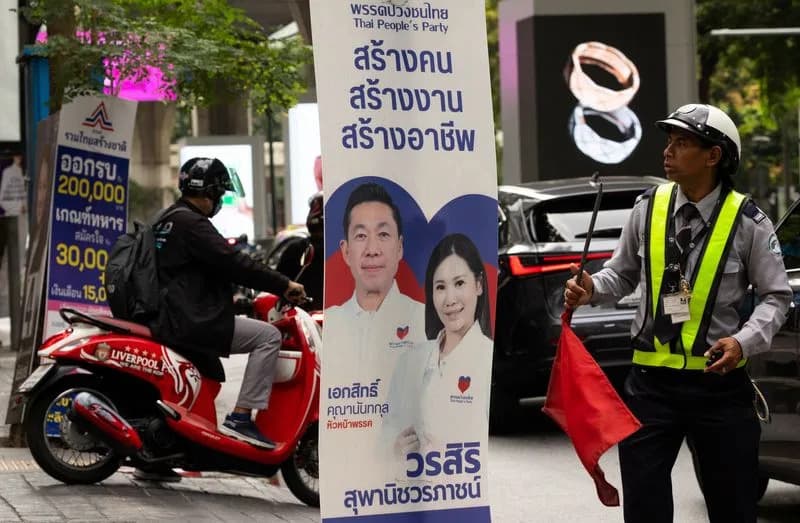
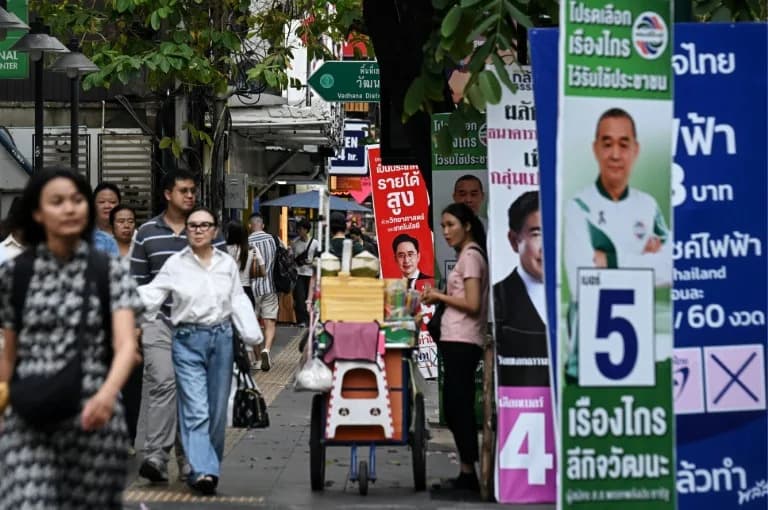
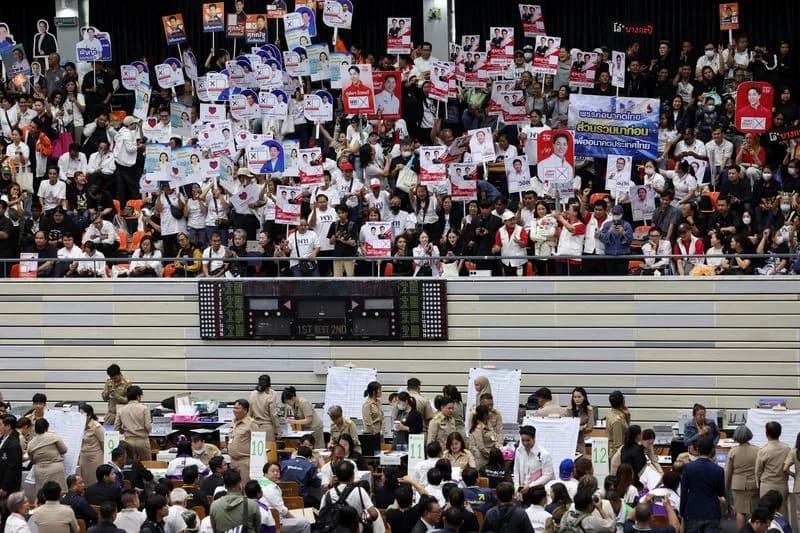
A security officer looks on next to the People's Party electoral campaign posters, before Thailand general elections on February 8, in Bangkok, Thailand, February 4, 2026. REUTERS/Maxim Shemetov
BANGKOK, Feb 6 — Thailand goes to the polls on Feb. 8 in a three‑way contest that will determine whether progressive, populist or conservative forces control the next government.
Who Is Best Placed To Win?
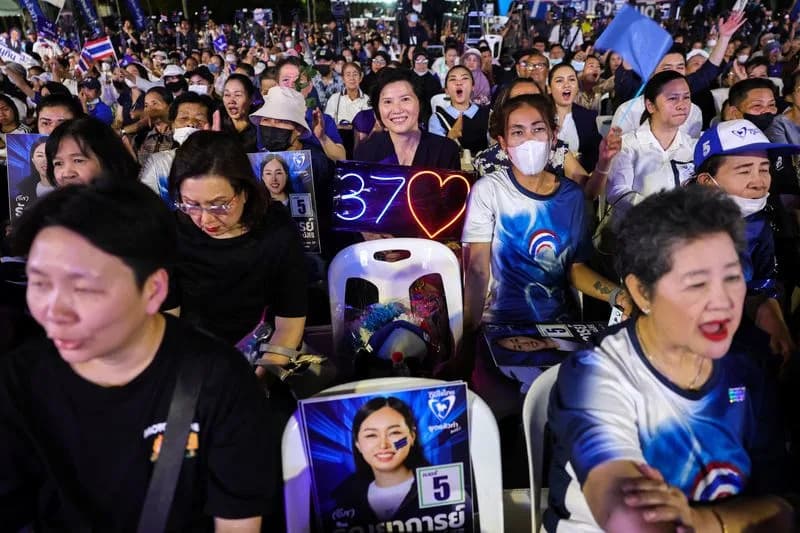
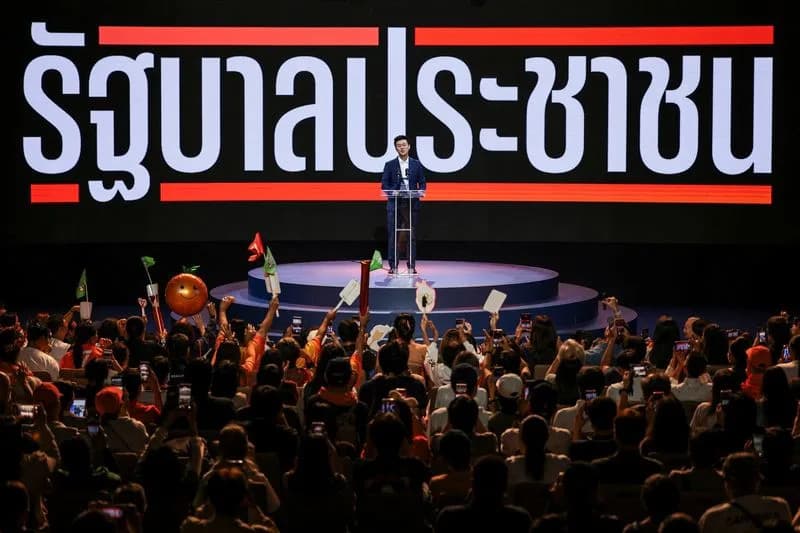
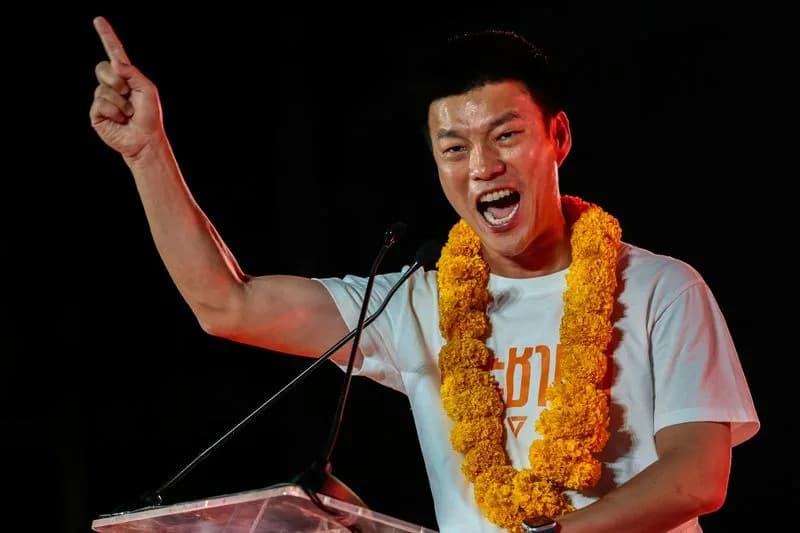
Opinion polls consistently place the progressive People's Party (the successor to Move Forward) ahead of its rivals. With a bold reform agenda and strong social‑media reach, it resonates especially with younger and urban voters and is widely viewed as the election's front‑runner.
Move Forward dominated the 2023 vote in many urban areas — winning all but one of Bangkok's 33 seats and making inroads into conservative provinces — but was unable to form a government despite an alliance with Pheu Thai.
Recent polls show the People's Party retaining momentum: a Suan Dusit University survey (Jan. 16–28, 26,661 respondents) put the party at 36%, with Pheu Thai on 22.1% and Bhumjaithai at 18.9%. A National Institute for Development Administration (NIDA) poll (Jan. 23–27, 2,500 respondents) recorded 34.2% for People's Party, 22.6% for Bhumjaithai and 16.2% for Pheu Thai. At the 2023 election, the People's Party's predecessor won 151 of 500 seats, Pheu Thai 141 and Bhumjaithai 71.
Will the Winner Be Able to Form a Government?
An outright majority for any single party is unlikely, so coalition building will be decisive. Deep ideological differences, recent betrayals and bitter fallout among parties make alliances unpredictable; winning the most seats on election day will not automatically translate into control of government.
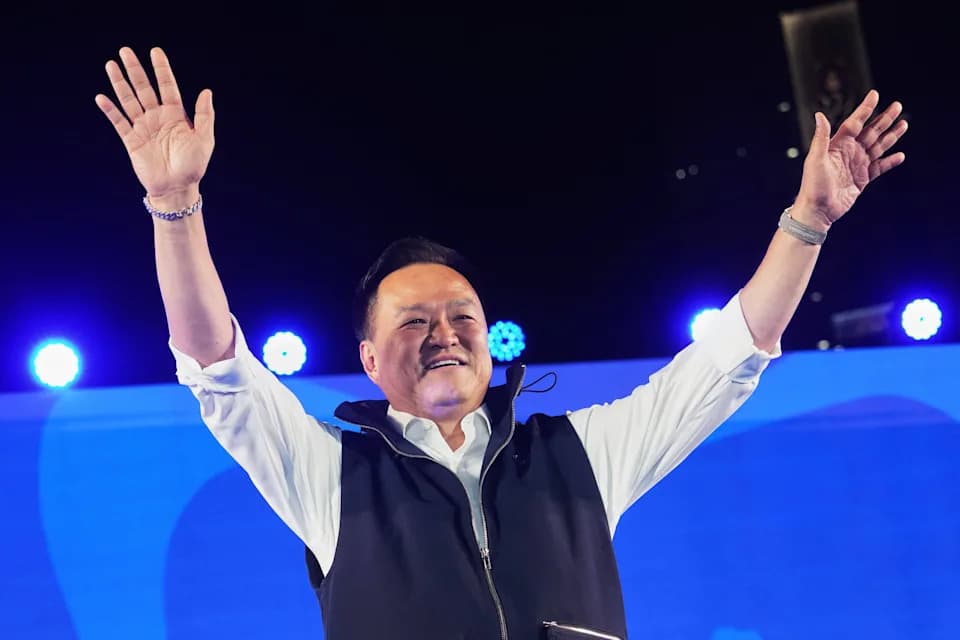
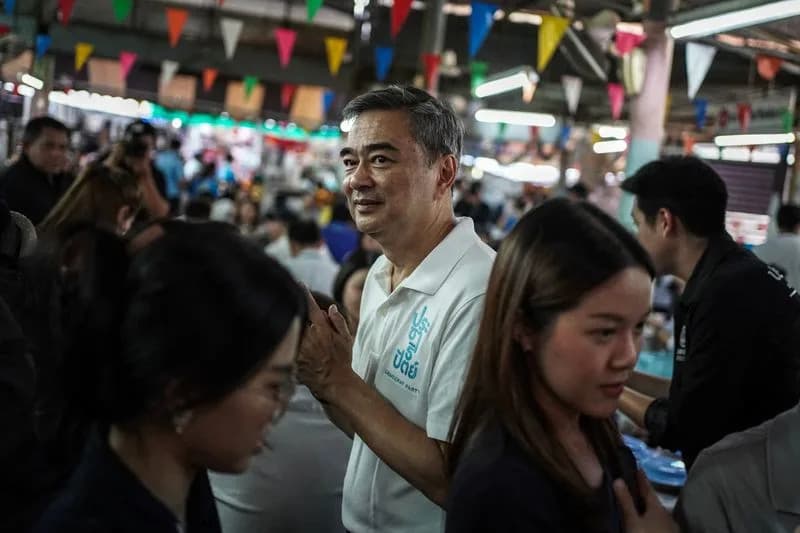
People's Party's advantage is its electoral strength, but its reform agenda could make potential partners wary. Bhumjaithai's leader, Anutin Charnvirakul, is a seasoned dealmaker who has shown a willingness to work across the spectrum and may attract support from conservative figures outside formal politics. Pheu Thai, historically dominant and closely associated with the Shinawatra family, still retains resources and could again partner with Bhumjaithai to assemble a majority.
What Challenges Face the People's Party?
The People's Party faces legal and institutional obstacles that could impede its path. Its platform — including measures to tackle monopolies and reform the military and judiciary — threatens entrenched interests in business, the bureaucracy and the royalist establishment.
The party's political lineage includes legal setbacks: Future Forward was dissolved by a court in 2020; Move Forward won the most votes in 2023 but was blocked from forming a government and later faced dissolution after campaigning to amend laws protecting the monarchy. The movement has since relaunched as the People's Party (Khana Ratsadon in Thai).
Now the National Anti‑Corruption Commission (NACC) is investigating 44 former Move Forward lawmakers for alleged ethics breaches related to a 2021 attempt to amend the royal insult law; 15 of those under investigation are current People's Party members. Among them are two of the party's three nominated prime ministerial candidates — leader Natthaphong Ruengpanyawut and deputy leader Sirikanya Tansakun — who could face political bans if cases are referred to the Supreme Court.
Can Anutin and Bhumjaithai Prevail?
Anutin Charnvirakul, 59, leads Bhumjaithai and is widely regarded as a pragmatic operator. His party's previous showing (71 seats in 2023) gives him leverage in coalition talks and the ability to bargain for key ministries. Anutin's tactical maneuvering last September — persuading several parties to abandon a rival coalition after a court removed a prime minister — underscores his skill at building alliances.
To block the People's Party, Anutin would need to expand his party's seat count and marshal support from other parties and establishment figures to form a pro‑status‑quo coalition.
How Is a Prime Minister Chosen?
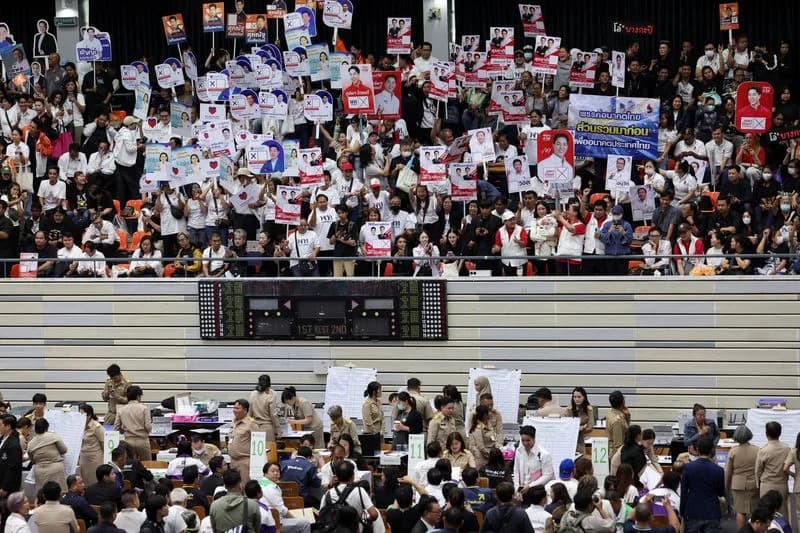
Parties may nominate up to three prime ministerial candidates; any party with at least 25 seats can nominate a candidate to be voted on by parliament. A nominee needs the support of more than half of the lower house's 500 members to become prime minister (a majority of at least 251 votes). If no candidate reaches that threshold, the lower house reconvenes and votes again; the process repeats until a premier secures a majority, with no statutory time limit on how long this could take.
(Reporting by Martin Petty; additional reporting by Panarat Thepgumpanat; editing by Raju Gopalakrishnan)
Help us improve.