New mitochondrial DNA from museum skulls and teeth confirms that the now-extinct Seychelles crocodiles were saltwater crocodiles (Crocodylus porosus), not Nile crocodiles or a separate species. The genetic match implies C. porosus once ranged roughly 7,500 miles (12,000 km) across the Indo-Pacific. Researchers suggest founders drifted at least 3,000 km to reach the Seychelles, and note human settlers in the late 18th century exterminated the island population. Future nuclear DNA studies could reveal additional regional differences.
DNA Confirms Saltwater Crocodiles Reached the Seychelles — Long Before Humans Eradicated Them
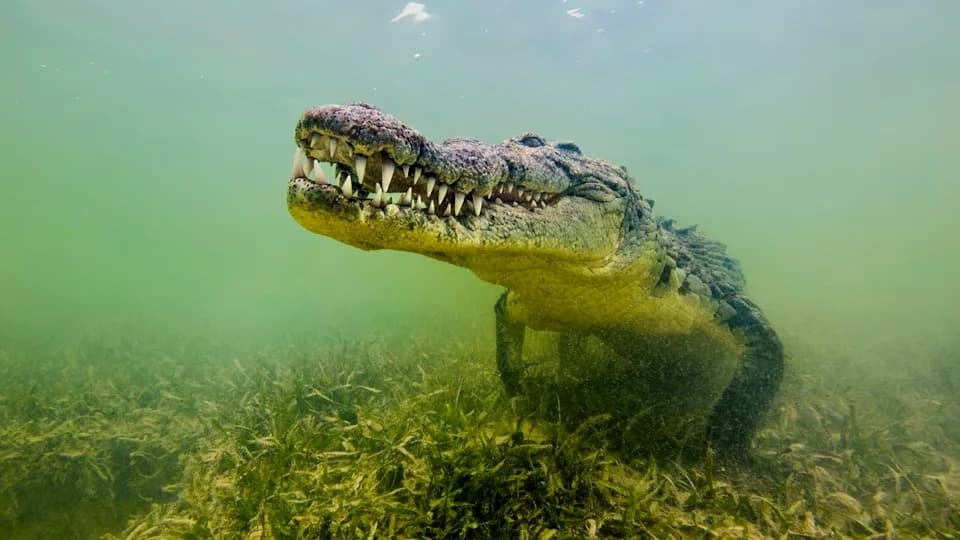
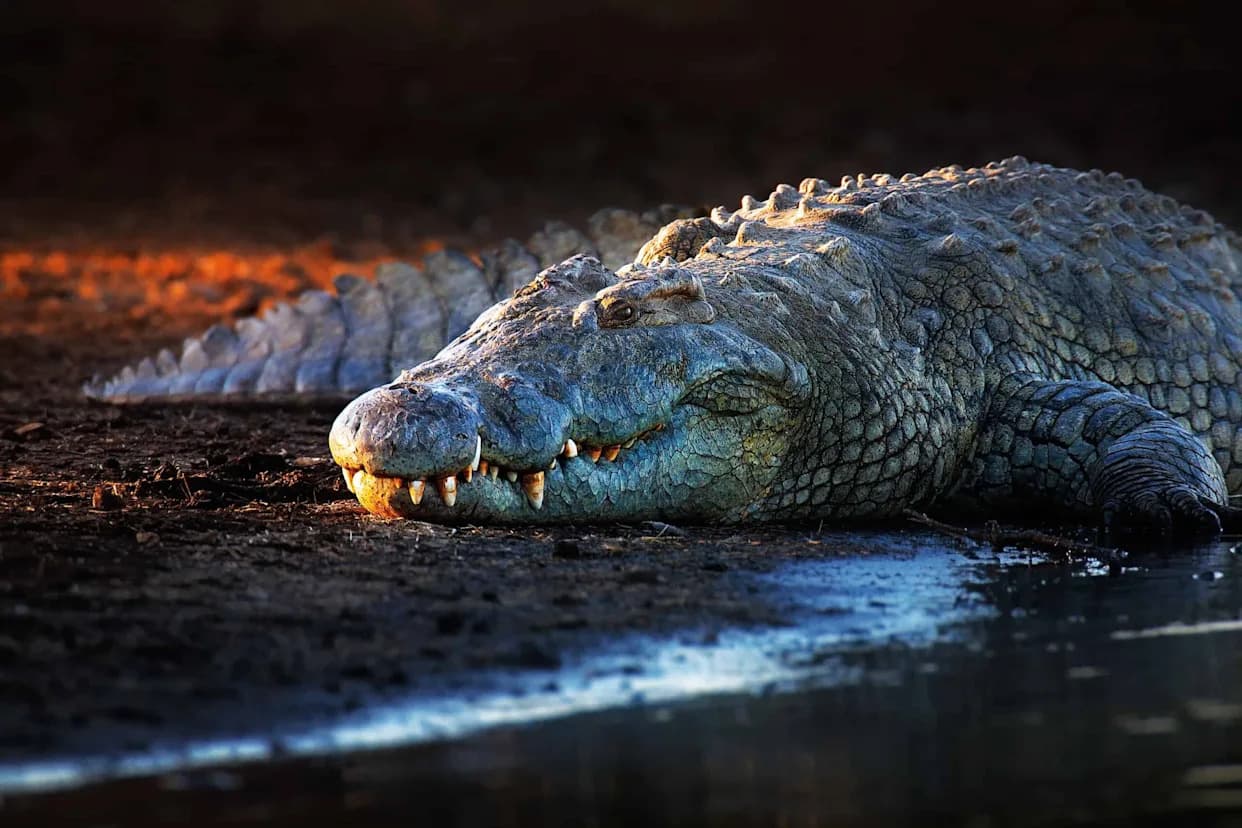
New study finds saltwater crocodiles used to be in a lot more places than they are today. . | Credit: Getty Images
New genetic analysis of museum specimens shows that the crocodiles that once lived in the Seychelles were saltwater crocodiles (Crocodylus porosus), not Nile crocodiles or a distinct species. The study, published in Royal Society Open Science on Jan. 28, uses mitochondrial DNA from skulls and teeth to place the extinct island population within the wide-ranging C. porosus lineage.
Genetic Evidence and a Remarkable Voyage
Researchers extracted mitochondrial DNA from older museum skulls and teeth and compared those sequences with tissue from modern museum specimens and living crocodiles. The Seychelles samples matched closely with C. porosus, indicating that saltwater crocodiles once spanned roughly 7,500 miles (about 12,000 km) across the Indo-Pacific.
'The founders of the Seychelles population must have drifted at least 3,000 kilometers [1,864 miles] across the Indian Ocean to reach the remote archipelago, perhaps even much further,' said study co-author Frank Glaw of the Bavarian State Collections of Natural History.
Historical Context
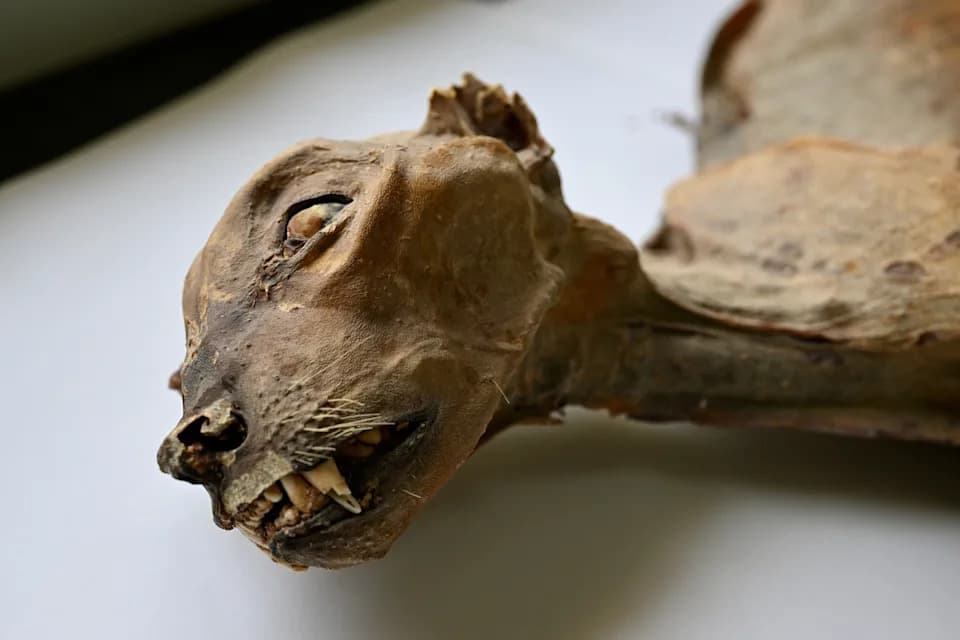
Contemporary expedition notes from more than 250 years ago describe large numbers of crocodiles in the Seychelles. Human settlers arrived in the late 18th century and subsequently exterminated the island population. A handful of specimens were preserved and are now curated in museums in the Seychelles, London and Paris — the very specimens used for the DNA work.
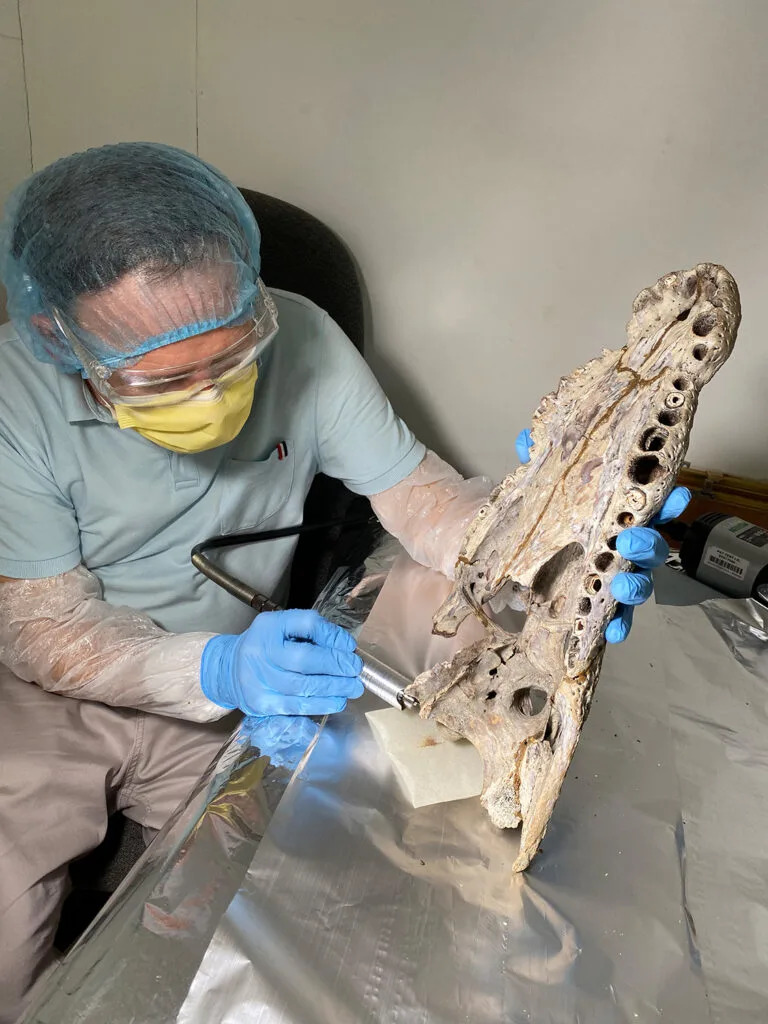
Sampling the Seychelles crocodiles. Three incomplete skulls from the Seychelles National Museum are among the few preserved remains of the Seychelles crocodiles. | Credit: Kathrin Glaw
How Saltwater Crocodiles Made It That Far
Saltwater crocodiles are surprisingly well adapted to long-distance ocean travel. Special salt glands help them tolerate seawater, making it plausible that individuals or small groups could drift or swim thousands of kilometers across open ocean to colonize remote islands like the Seychelles. That high mobility may also have limited deep genetic divergence among widely separated populations.
Limits Of The Study And Future Directions
The study relied on mitochondrial DNA, which is inherited maternally and can miss genetic variation shaped by male-mediated gene flow. The authors recommend follow-up studies using nuclear DNA from preserved and modern specimens to detect finer-scale, potentially male-driven regional differences between populations.
'The genetic patterns suggest that saltwater crocodile populations remained connected over long periods and across great distances, pointing to the high mobility of this species,' said co-author Stefanie Agne, an evolutionary biologist at the University of Potsdam.
Bottom line: Museum specimens and modern genetic techniques reveal that the Seychelles once hosted saltwater crocodiles that likely dispersed across vast stretches of ocean — a dramatic natural history erased by human activity in the 18th century.
Help us improve.