UNESCO recently inscribed Kamal-ud-Din Behzad's miniature-painting tradition on its Intangible Cultural Heritage list, a move that has lifted spirits among artists in Herat. Local practitioners, including women working in small workshops, say the recognition brings moral support amid severe restrictions since the Taliban's return in 2021. Many original Behzad manuscripts remain in overseas collections, and artists are calling for international exhibitions, financial aid and easier travel to sustain the craft.
UNESCO Recognition of Behzad's Miniatures Rekindles Hope for Artists in Herat
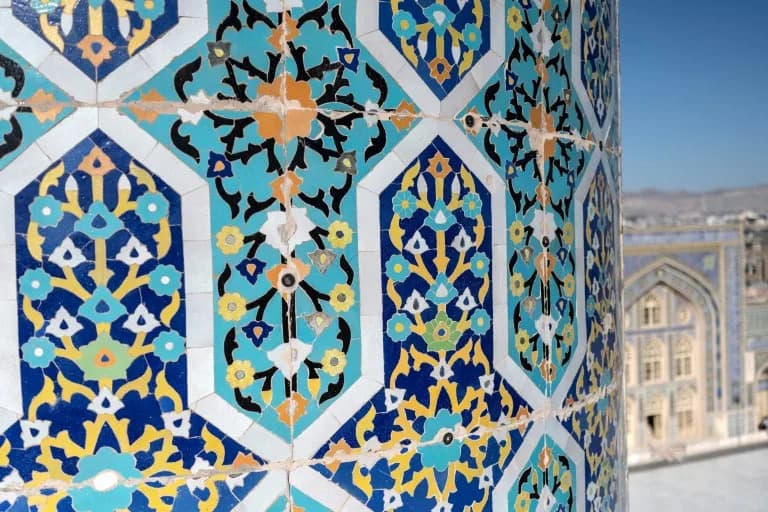
Herat's central mosque is decorated with delicate floral and geometric motifs created by famed Afghan artist Behzad (Wakil KOHSAR)(Wakil KOHSAR/AFP/AFP)
Centuries after the celebrated painter Kamal-ud-Din Behzad walked Herat's streets, the city's artists say UNESCO's recent inscription of his miniature-painting tradition has brought renewed pride and a modest spark of hope amid growing restrictions.
Tradition, Technique and Local Devotion
Sitting cross-legged on a red carpet, Mohammad Younes Qane, 45, steadies an ultra-fine brush to delineate a horse's mane or the tiny beads of a necklace. "When I paint, I'm taken back 500 years, to the streets of Herat back then," he said, recalling the Timurid era when rulers patronised artists such as Behzad. Qane has practised Behzad's delicate miniature technique since his teens; the style later influenced artists such as Henri Matisse.
UNESCO Listing and Its Meaning
In December, UNESCO inscribed Behzad's miniature-painting tradition on its List of Intangible Cultural Heritage of Humanity, praising the form's "vibrant cultural expression." For many in Herat the recognition is more than symbolic: it is an international affirmation of a local craft now practised under difficult conditions.
Artists Working Under Constraint
Since the Taliban returned to power in 2021 and imposed a strict interpretation of Islamic law, many artists have fled and cultural life has been curtailed. Qane has closed his gallery and now paints at home; clients are rare and exhibitions virtually non-existent. Local reports say authorities have banned music in public spaces and increasingly restrict visual depictions of living beings, including human faces—an important feature of many Behzad-style works.
"It's very sad, because we are proud of Behzad in Herat," a resident said on condition of anonymity.
Herat's Cultural Heritage and the Challenge of Repatriation
Behzad's influence is visible across Herat — from delicate floral and geometric motifs on the city's blue-tiled mosque to details in the citadel. Yet many of his most ornate manuscripts are held in foreign collections, including the Metropolitan Museum of Art in New York, the British Library in London and Istanbul's Topkapi Palace Museum. Michael Barry, a specialist in miniature art, has called the denial of cultural patrimony "the height of injustice," while noting the practical conservation challenges of returning fragile manuscripts.
In 2017 Barry reproduced and enlarged Behzad works for an exhibition at Herat's citadel to give locals access to the images. Today, however, visitors can no longer view some displays — the citadel's wooden door is padlocked and panels showing faces have reportedly been painted over.
Continuity and Resistance: Women Artists and Workshops
Despite restrictions, Behzad's legacy continues to inspire young Afghans. Around a dozen women meet in workshops to paint miniatures on glass or paper and sell pieces through social media or to acquaintances. For many, the practice is both an economic lifeline and a source of personal solace.
"When I sit and work, I feel completely released," said Asia Arnawaz, 22. "I come to understand how pure Allah's creation is: that He created me free, and in that moment, I truly feel that freedom."
Calls For Support
Artists in Herat say they need international exhibitions, financial backing and mobility—many find it practically impossible to obtain visas for scholarships or shows abroad. Parisa Narwan, 24, called UNESCO's recognition motivating but stressed the urgent need for concrete support so that the tradition can survive and practitioners can share their work more widely.
Behzad's miniature tradition now serves as both a reminder of Herat's rich cultural past — once described as the "Florence of the Islamic world" — and as a focal point for the city's artists striving to keep that heritage alive under severe constraints.
Help us improve.