Representative Jake Auchincloss has pressed the FDA for details about its Commissioner’s National Priority Voucher program, which promises one‑to‑two‑month reviews for drugs deemed to serve national interests. He says the agency has not published financial disclosure forms for eight senior officials who vote on vouchers and questions whether the FDA had the legal authority to create the program without Congress. The move follows reports of internal resistance from senior staffers and unanswered congressional requests for information.
House Lawmaker Demands Answers on FDA’s ‘Priority Voucher’ Fast‑Track Program, Cites Ethics and Legal Concerns
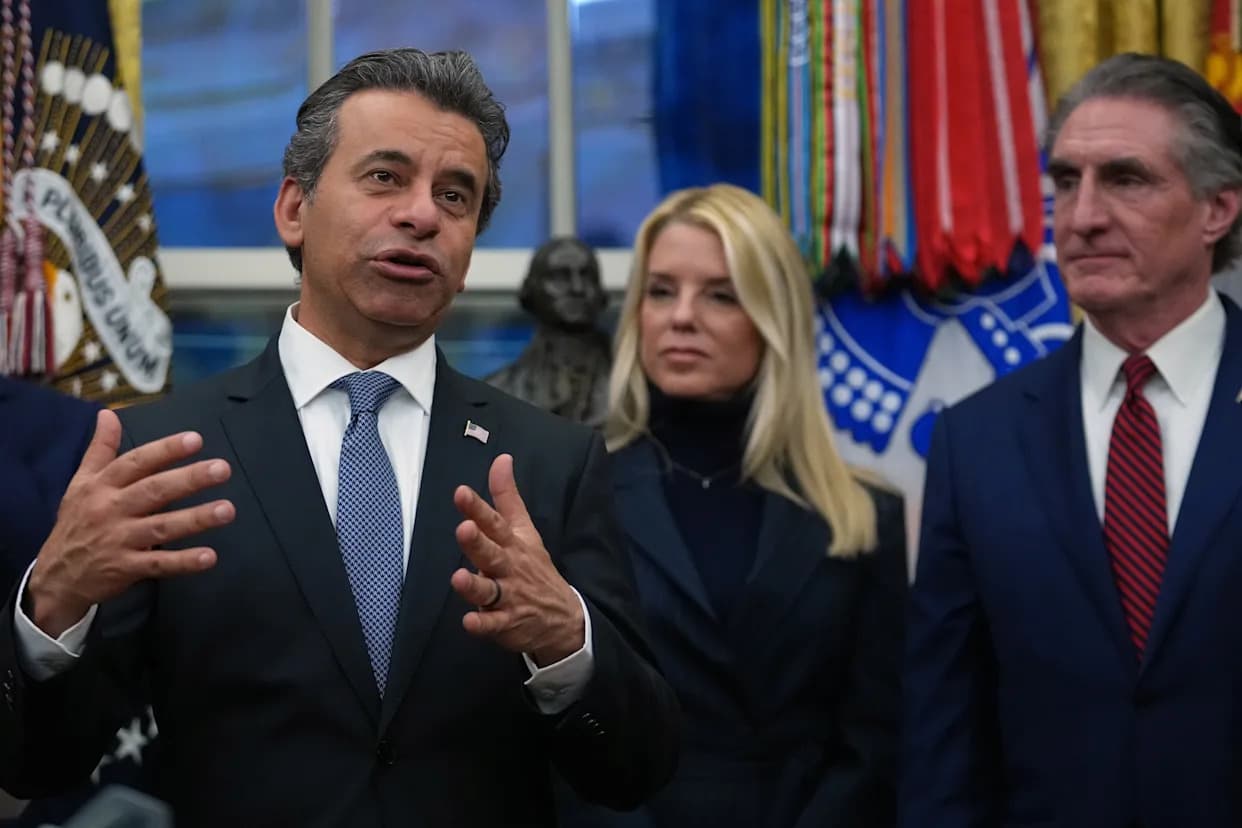
Dr. Marty Makary, commissioner of the Food and Drug Administration speaks at an event on addiction recovery in the Oval Office of the White House, Thursday, Jan. 29, 2026, in Washington, as Attorney General Pam Bondi and Interior Secretary Doug Burgum listen. (AP Photo/Allison Robbert)(ASSOCIATED PRESS)
WASHINGTON — A Democratic member of Congress has raised fresh questions about a new Food and Drug Administration initiative that aims to dramatically shorten review times for certain medicines, and he is asking whether senior officials involved in the effort are complying with federal ethics rules.
In a letter sent Tuesday, Representative Jake Auchincloss of Massachusetts criticized the agency’s handling of the Commissioner’s National Priority Voucher program and challenged its legal basis, saying Congress never approved the plan. The program, championed by FDA Commissioner Marty Makary, promises drugmakers expedited reviews of roughly one to two months for new products deemed to serve “national interests.”
The heightened scrutiny comes as the FDA held an employee town hall to discuss the voucher program, according to three agency staffers who spoke on condition of anonymity about internal matters. The initiative is part of Makary’s stated agenda to “cut red tape” and “challenge assumptions” at the agency.
But the program has prompted controversy both inside and outside the agency. Several senior FDA staffers reportedly declined to sign off on approvals that were processed through the voucher pathway, and lawmakers are seeking transparency about how the program operates.
“The public must have transparency about the ‘voucher’ program, under which drug approvals have been made almost wholly and in an unprecedented manner by the FDA’s political leadership,” Auchincloss wrote. He serves on a House subcommittee that oversees health policy.
Auchincloss alleges the FDA has not published financial disclosure forms for eight senior officials who vote on which drugs should receive priority vouchers. A membership list for the voting group — first reported by Stat News — is said to include officials described as aligned with Health Secretary Robert F. Kennedy Jr., among them Deputy FDA Commissioner Dr. Sara Brenner, vaccine official Dr. Vinay Prasad, and Dr. Tracy Beth Hoeg, director of the FDA’s drug center.
Financial disclosure forms, collected annually by the Office of Government Ethics, list investments, outside income and other financial details for senior government officials and their spouses. Such filings are widely viewed as essential to identifying and preventing potential conflicts of interest at the FDA, where staff often regulate multibillion‑dollar, publicly traded companies.
Auchincloss also questioned whether the FDA had legal authority to create the voucher program on its own, without explicit congressional action. His letter states the agency’s legal office was not consulted or provided findings to support the claim that the FDA could independently establish the program.
The lawmaker said agency officials did not respond to two letters he sent last year requesting information and instructed the FDA to “affirm or refute” his findings. In November, Senators and Representatives including Sen. Bernie Sanders and Rep. Frank Pallone sent a separate letter with 15 questions about the voucher program; committee staff say the agency did not respond to that inquiry either.
A Department of Health and Human Services spokesperson did not immediately respond to requests for comment.
Why it matters: The questions touch on transparency, potential conflicts of interest and whether the agency followed proper legal and procedural steps in launching an unprecedented fast‑track review pathway for high‑profile drugs. The outcome may influence how the FDA balances expedited access to therapies with rigorous oversight and public trust.
___
The Associated Press Health and Science Department receives support from the Howard Hughes Medical Institute’s Department of Science Education and the Robert Wood Johnson Foundation. The AP is solely responsible for all content.
Help us improve.