President Trump announced confidential MFN-style pricing agreements with 14 drugmakers that the administration says will lower costs for Medicaid and enable some direct-to-consumer discounts. Experts warn most privately insured Americans are unlikely to see immediate savings, since the deals are voluntary, secret and may not affect private insurers' cost sharing. Industry groups caution MFN could reduce investment in biotech innovation, while advocates say the pacts need legal backing to endure.
Trump’s Most-Favored-Nation Drug Deals: Short-Term Wins for Medicaid, Limited Relief for Most Americans

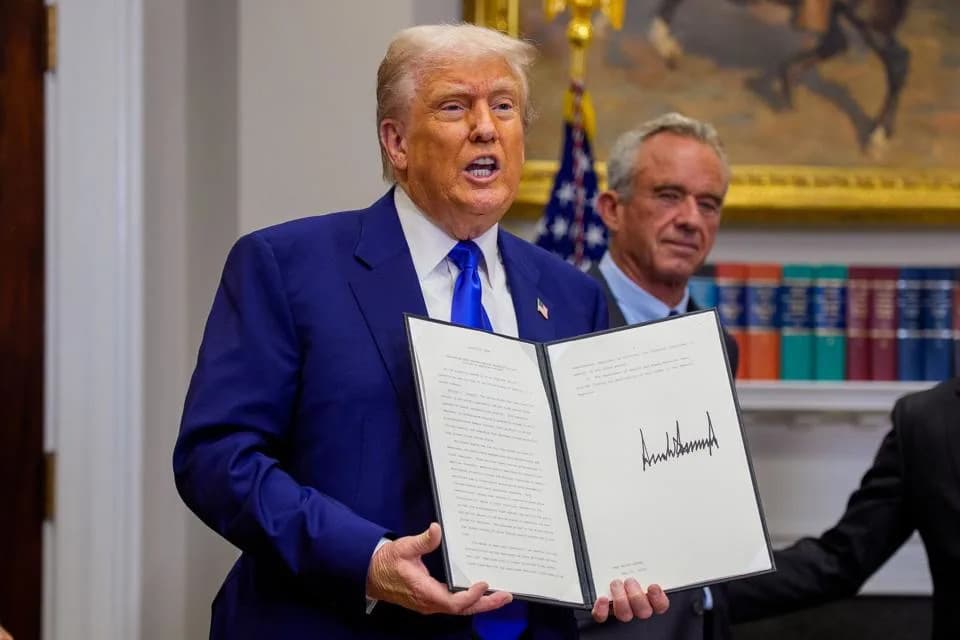
President Donald Trump last month announced confidential agreements with 14 pharmaceutical companies that he described as a major step toward lowering drug costs. The pacts center on a most-favored-nation (MFN) pricing approach, promise some direct-to-consumer discounts and aim to reshape how wealthy countries pay for medicines. But health policy experts say the benefits for most Americans will be limited in the near term.
What the Agreements Say
The administration says participating drugmakers — Amgen, AstraZeneca, Boehringer Ingelheim, Bristol Myers Squibb, Eli Lilly, EMD Serono, Genentech, Gilead, GSK, Merck, Novartis, Novo Nordisk, Pfizer and Sanofi — have signed confidential deals that will:
- Make many medicines available to Medicaid at MFN prices;
- Encourage manufacturers to sell discounted medicines directly to patients; and
- Require newly launched drugs to be priced using an MFN benchmark across commercial, Medicaid, Medicare and cash markets, the administration says.
Who Is Likely To Benefit Now
Analysts say the clearest short-term beneficiary is Medicaid: states may save money if MFN prices are lower than current discounts. Some uninsured and underinsured patients could also benefit from manufacturer direct-to-consumer discounts. But roughly two-thirds of Americans who rely on private insurance are unlikely to see immediate out-of-pocket savings, because direct purchases typically do not count toward insurance deductibles and the deals do not change private-plan cost-sharing.
How MFN Prices Are Calculated
Under the administration’s formula, the MFN price is based on the second-lowest price paid for a drug (after accounting for discounts and rebates) among eight wealthy countries — Canada, Denmark, France, Germany, Italy, Japan, Switzerland and the United Kingdom — adjusted for each country’s income level. A senior Centers for Medicare and Medicaid Services (CMS) official said internal analysis found the method fair, but independent experts note the confidential nature of the deals makes independent verification difficult.
Industry Reaction And Innovation Concerns
Pharmaceutical trade groups and biotech organizations warn that MFN-style price restraints could reduce revenues and investment in new drug development, especially for small and mid-size biotech firms that account for a large share of new medicines. PhRMA and BIO argue lower expected returns could harm U.S. leadership in medical innovation if widespread price reductions follow.
Direct-To-Consumer Sales, PBMs And Market Effects
The administration plans to launch TrumpRx.gov in January to guide consumers to manufacturer discount programs. If widely adopted, that channel could reduce the negotiating role of pharmacy benefit managers (PBMs) — middlemen who negotiate rebates and discounts for insurers and employers. Critics say PBMs can create perverse incentives tied to list-price rebates; others warn removing these intermediaries could give manufacturers more pricing power and raise costs elsewhere.
Durability And Legal/Political Questions
Because the agreements are voluntary and confidential, consumer advocates say the pacts may not survive a future administration unless codified into binding regulation or law. Supporters counter that shifting global pricing norms and commercial practices could be difficult to reverse and may produce broader U.S. savings over time.
Balance Of Possible Outcomes
Short term: Medicaid savings and limited direct discounts for uninsured or underinsured patients. Mid to long term: potential global price rebalancing that might lower some U.S. prices, but also risks to biotech investment and uncertainties about whether voluntary deals will be sustained.
“The vast majority of consumers are not going to see any benefit in their pocketbook,” said Chris Meekins, a Raymond James health care analyst. “The administration is making choices to continue hiding the details of these agreements in a way that should not give people confidence about their actual impact on patients,” added Rachel Sachs, a law professor and former HHS adviser.
CORRECTION: An earlier version of this report misstated when Trump touted his pricing deals. It was last month.
Help us improve.