President Trump has proposed a 250‑foot "Independence Arch" as a gateway to Washington, D.C., and said he wants it to be the "biggest one of all." The proposed site lies beneath Reagan National Airport's approach path, raising airspace and safety questions. The White House plans to seek design approvals from federal planning commissions, but no FAA obstruction filing appears in public records and an FAA response has been delayed by a partial government shutdown. Heightened scrutiny follows a deadly January 2025 Potomac collision that killed 67 people.
Trump Proposes 250‑Foot 'Independence Arch' for D.C.; Says He Wants It to Be World's "Biggest" — FAA, Safety Questions Raised
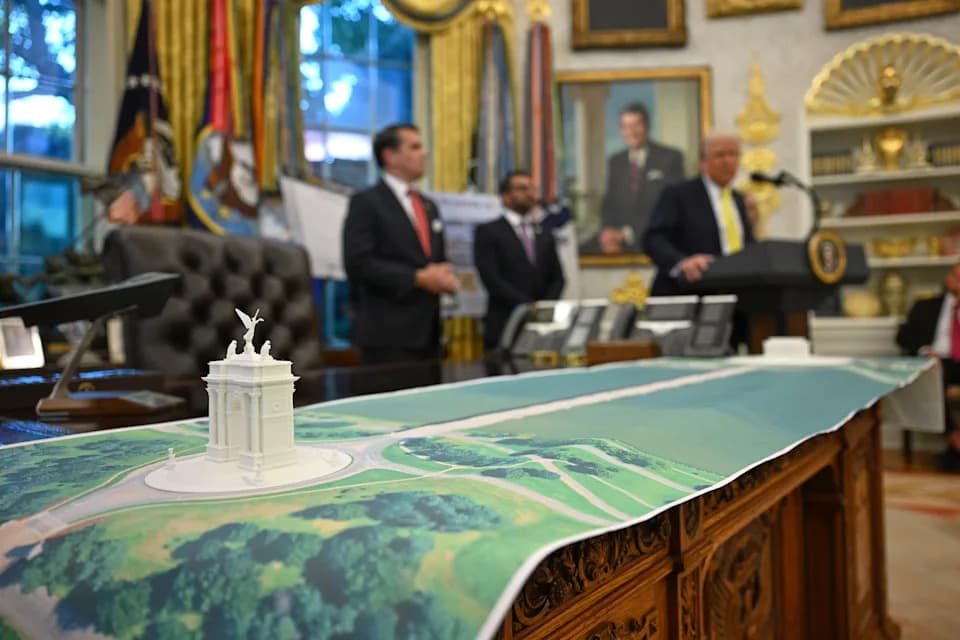
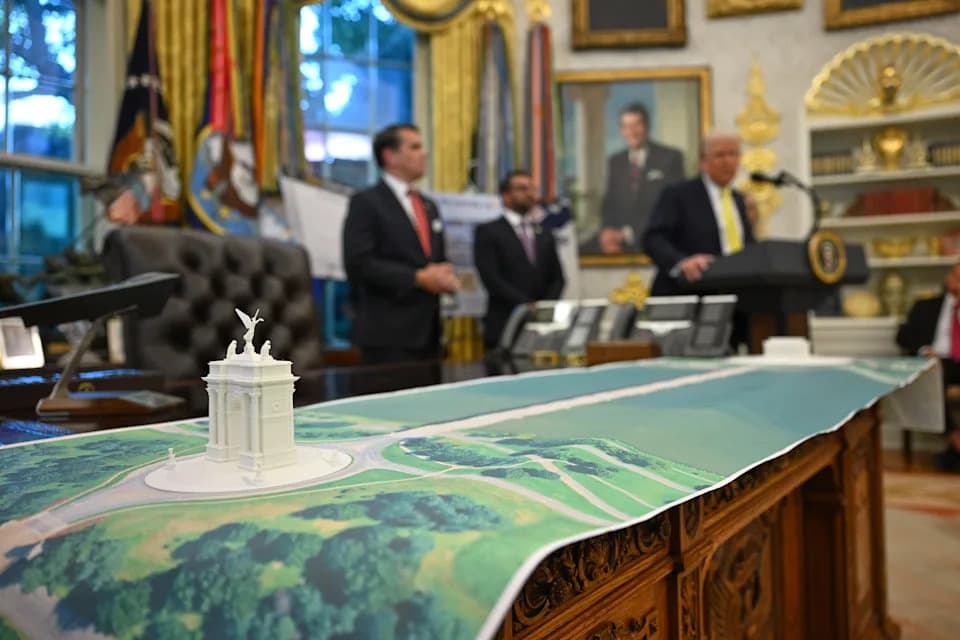
President Trump speaks in the Oval Office at the White House, with a model of the
President Trump has proposed a 250‑foot triumphal "Independence Arch" as a new gateway to Washington, D.C., and told reporters he wants it to be the "biggest one of all." The planned location sits beneath the approach path to Reagan National Airport (DCA) in Arlington, Va., prompting fresh questions about airspace safety and regulatory approvals.
Design, Comparisons and Official Steps
The White House says the design is still being refined. A White House official told reporters the president wants the arch to exceed the height of Paris’s Arc de Triomphe (164 feet) and to mark the nation’s 250th anniversary. At roughly 250 feet, the proposed structure would also be taller than Mexico City’s Monumento a la Revolución (220 feet). For scale, the Lincoln Memorial across the river is about 99 feet tall.
The administration plans to seek reviews and approvals from the Commission of Fine Arts and the National Capital Planning Commission, two key bodies that oversee design and planning in the federal city.
Airspace And Safety Concerns
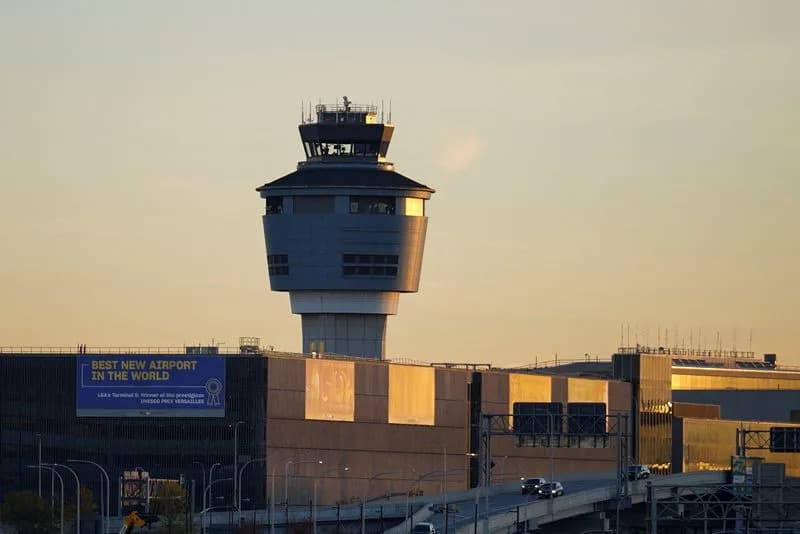
Aircraft are restricted from flying over the National Mall and the Pentagon, so many approaches into Reagan National follow the Potomac River corridor at relatively low altitudes. That routing makes any tall structure near the river more relevant to flight safety assessments.
"I'd like it to be the biggest one of all," Mr. Trump told reporters on Air Force One. "We're the biggest, most powerful nation."
CBS News contacted the Federal Aviation Administration (FAA) about how the proposed arch could affect DCA flight paths, but indicated it did not expect a response until after a partial federal shutdown ends. At the time of reporting, no public record showed the project had been submitted to the FAA's Obstruction Evaluation/Airport Airspace Analysis (OE/AAA) system — the standard database used to assess potential hazards to aircraft.
Context: Potomac Collision And Broader Renovation Plans
Concerns about DCA approaches were heightened after a deadly January 2025 collision over the Potomac River, when a Black Hawk helicopter struck a commercial American Airlines aircraft. The crash killed 67 people and was the deadliest U.S. commercial aviation accident in recent years. Investigators reported the helicopter was flying about 278 feet above the river — above its 200‑foot operational limit — and the U.S. government later acknowledged liability.
Separately, Mr. Trump has suggested other changes to prominent federal sites, saying the Kennedy Center might close for two years for renovation if a Trump‑aligned board approves the plan. The timeline, cost and full permitting path for the arch remain unclear; the White House has not released a public cost estimate.
White House Response: White House spokesman Davis Ingle called the arch "one of the most iconic landmarks not only in Washington, D.C., but throughout the world," and said the president's "bold vision" would leave a lasting mark.
Key next steps include formal design submissions to planning commissions and, crucially, an FAA obstruction evaluation to determine whether the proposed height and location would pose aviation risks. Until those reviews are filed and completed, questions about safety, cost and feasibility will persist.
Help us improve.