
The White House has moved forward with plans for a roughly 90,000-square-foot East Wing ballroom and presented the project in an NCPC "information presentation" this week. Supporters say the permanent venue will eliminate costly tents and protect the grounds; critics argue the process has been rushed and opaque because demolition and below-grade work are already underway. The plan has sparked lawsuits from preservation groups and an asbestos-related records suit, and lawmakers are probing funding and approvals. The administration expects completion by summer 2028.
Trump’s Controversial 90,000‑Sq‑Ft East Wing Ballroom Moves Forward as NCPC Prepares Briefing

President Donald Trump holds a rendering of the planned White House ballroom in the Oval Office of the White House in Washington, DC, in October 2025. - Aaron Schwartz/CNP/Bloomberg/Getty Images
President Donald Trump’s plan to build a roughly 90,000-square-foot East Wing ballroom — a project that has sparked lawsuits, congressional scrutiny and public debate — is advancing this week as the White House presents the proposal to the National Capital Planning Commission (NCPC) in an information briefing.
Project Overview
The administration says the new ballroom would provide a permanent, secure indoor venue for large state functions and other official events, removing the need for temporary tents and associated infrastructure that strain the White House grounds. The White House told NCPC the project would "establish a permanent, secure event space that would expand its capacity for official state functions," and help protect the historic landscape of the grounds.
Why Officials Say It’s Needed
White House hosts and social secretaries have long noted the limitations of existing spaces: the East Room seats roughly 200 people, so larger state dinners typically require outdoor tents. Those tents and their support systems have recently cost hundreds of thousands of dollars, and post-event lawn repairs run into the tens of thousands—expenses historically absorbed by the State Department as part of state visit budgets.
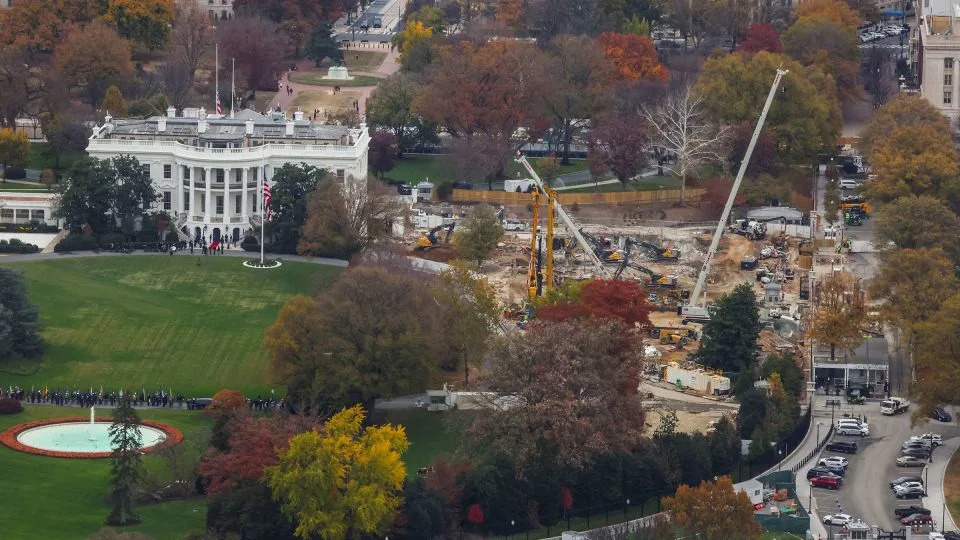
The demolition of the East Wing of the White House during construction of President Donald Trump’s proposed ballroom is seen from the reopened Washington Monument on November 15, 2025. - Jessica Koscielniak/Reuters
Controversy Over Process and Timing
Despite the stated rationale, the project has prompted wide concern over speed, transparency and process. Critics point out that the East Wing demolition has already occurred and below-grade work is underway, even though this week’s NCPC meeting is only an "information presentation" that will not take public testimony or result in a vote. Under normal procedure, such a briefing occurs early in the design process while alternatives are still being considered.
"All of your arguments about all the things that would normally restrain you in a conversation about alternatives, they’re gone. They’re swept away," said Bryan Clark Green, an architectural historian and former NCPC commissioner appointed by President Biden.
NCPC materials note the briefing will focus on "how the public will see and experience the modernization project from surrounding public spaces," including pedestrian-level views, the connection between the new wing and the Executive Mansion, landscaping changes, and perimeter security and infrastructure enhancements.
Concerns About The Commission
Critics also highlight that several recent NCPC appointees are White House allies and political operatives rather than long-time preservationists or architects. The current membership includes White House staff secretary Will Scharf (chair), OMB official Stuart Levenbach (vice chair), and deputy chief of staff James Blair (commissioner), along with officials such as Defense Secretary Pete Hegseth and House Oversight Chairman James Comer. Phil Mendelson, chair of the D.C. Council and an ex-officio NCPC member, warned the panel could be pressured to fast-track approval.
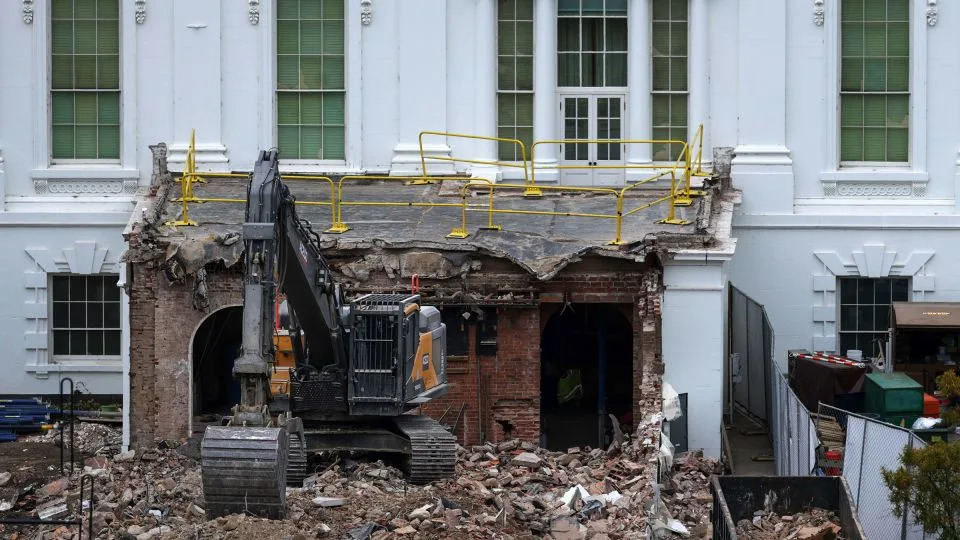
An excavator sits on the rubble after the East Wing of the White House was demolished, on October 28, 2025. - Alex Wong/Getty Images/File
Timeline, Design And Cost
Recent filings indicate the White House expects completion by "summer 2028." The administration initially estimated private funding would cover the project; cost estimates cited publicly have risen from about $200 million to $300 million and most recently to roughly $400 million. The White House replaced the original architect, James McCrery, and in December brought on Shalom Baranes Associates. Filings suggest the new ballroom could stand about 55 feet tall and that the East Colonnade will be rebuilt with an enclosed second story linking into the East Room and the Executive Mansion.
Legal And Oversight Challenges
Multiple historic preservation organizations filed suit to block the project, arguing the administration did not secure required approvals or follow review processes. A federal judge declined to halt work in December but left the door open to future intervention. Separately, the Asbestos Disease Awareness Organization sued to compel release of records about demolition work and potential asbestos risks to workers and the public. Congressional committees and lawmakers are probing donor funding, transparency and the approval process.
Practical Benefits Cited
Supporters emphasize the ballroom’s practical advantages: eliminating soggy walks across the South Lawn to tents, reducing the temporary infrastructure and catering logistics that strain operations, and providing a permanent indoor venue for very large official gatherings.
Outlook
The NCPC briefing this week is intended to set a path toward a formal review that will include public comment, but critics worry the normal give-and-take of design refinement may be limited given that demolition and below-ground work are already in progress. The debate now centers on whether long-standing review norms and preservation safeguards will shape the final design, or whether the project will be fast-tracked to completion.
Help us improve.


