The article considers the catastrophic effects if Earth’s rotation were to stop instantly. Retained tangential velocities (about 1,037 mph at the equator and ~794 mph at New York’s latitude) would drive unprecedented winds and ocean surges, destroying most structures and reshaping coastlines. The planet would relax from an oblate to a more spherical shape, pushing water toward the poles, and widespread earthquakes and volcanism would likely follow. Small, gradual changes in rotation occur naturally (28 leap seconds were added between 1972–2020), but an instantaneous stop is effectively impossible.
What If Earth Suddenly Stopped Spinning? Catastrophic Consequences Explained
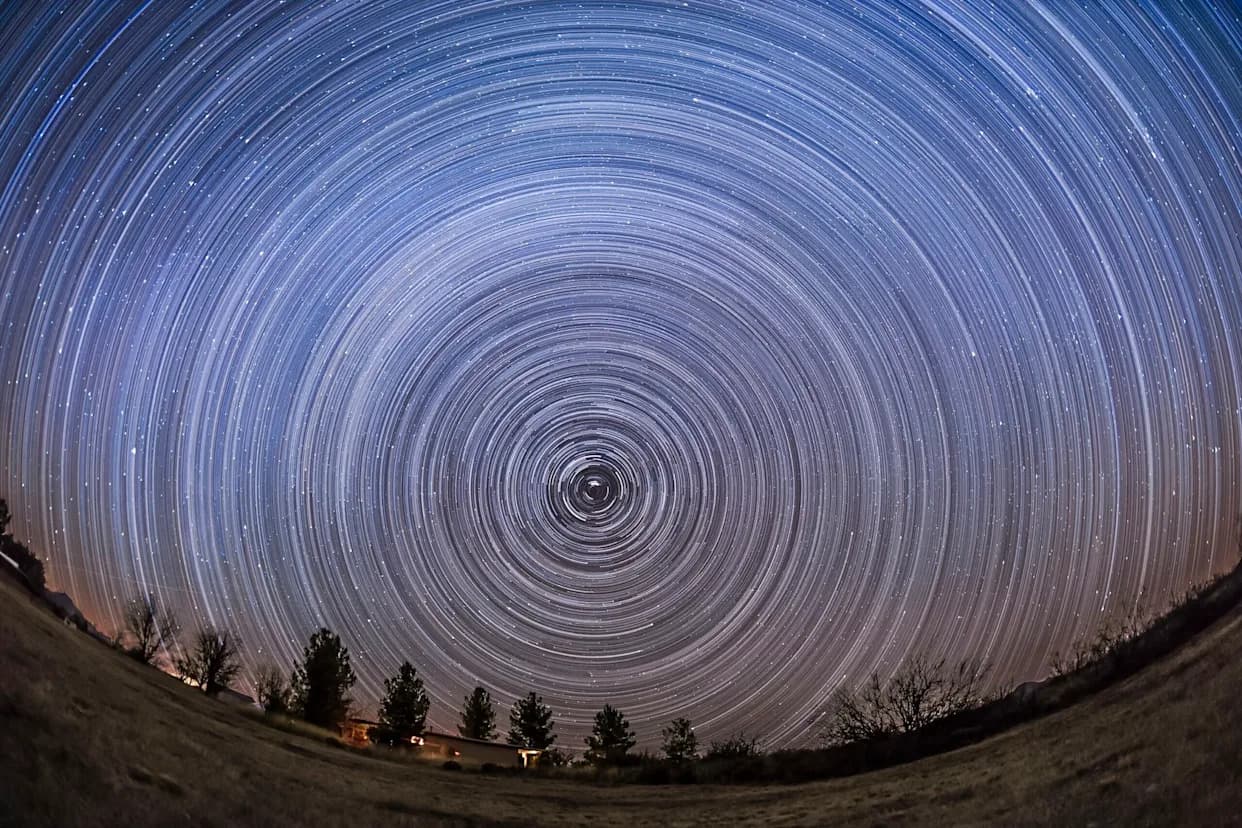
Imagine Earth’s rotation halting instantly rather than slowing gradually. Such an abrupt stop is a thought experiment — not a realistic scenario — but it helps illustrate how fundamental rotation is to our planet’s winds, oceans, shape and geology. The immediate physical effects would be catastrophic.
Immediate Inertial Effects
Objects on Earth share the planet’s tangential speed from rotation. Using a familiar example: if a car moving 70 mph stops suddenly, passengers keep moving until restrained. Scale that up to Earth: a point on the equator moves roughly 1,037 mph (1,668 km/h); at New York’s latitude the tangential speed is about 794 mph (1,278 km/h). You can compute the surface speed V (in mph) at any latitude with V = 1,036 × cos(latitude).
Atmosphere, Oceans, And Surface Devastation
If rotation ceased instantly, the atmosphere and oceans — and anything not rigidly anchored to bedrock — would continue moving at those tangential speeds. The result: horizontal winds and water flows far stronger than any storm observed in recorded history. Buildings, trees, vehicles and most infrastructure would be torn away or crushed; unconsolidated surface layers would be eroded or stripped. Near the equator, the retained horizontal motion would produce winds well above 1,000 mph, and ocean water would surge inland in massive, destructive flows.
Planetary Shape And Water Redistribution
Earth is an oblate spheroid: rotation creates a small equatorial bulge. Remove the centrifugal support and the solid Earth would tend to relax toward a more spherical shape. That readjustment would push ocean water away from the equator and toward higher latitudes, flooding polar and subpolar regions and altering coastlines on a global scale.
Geological And Climatic Aftershocks
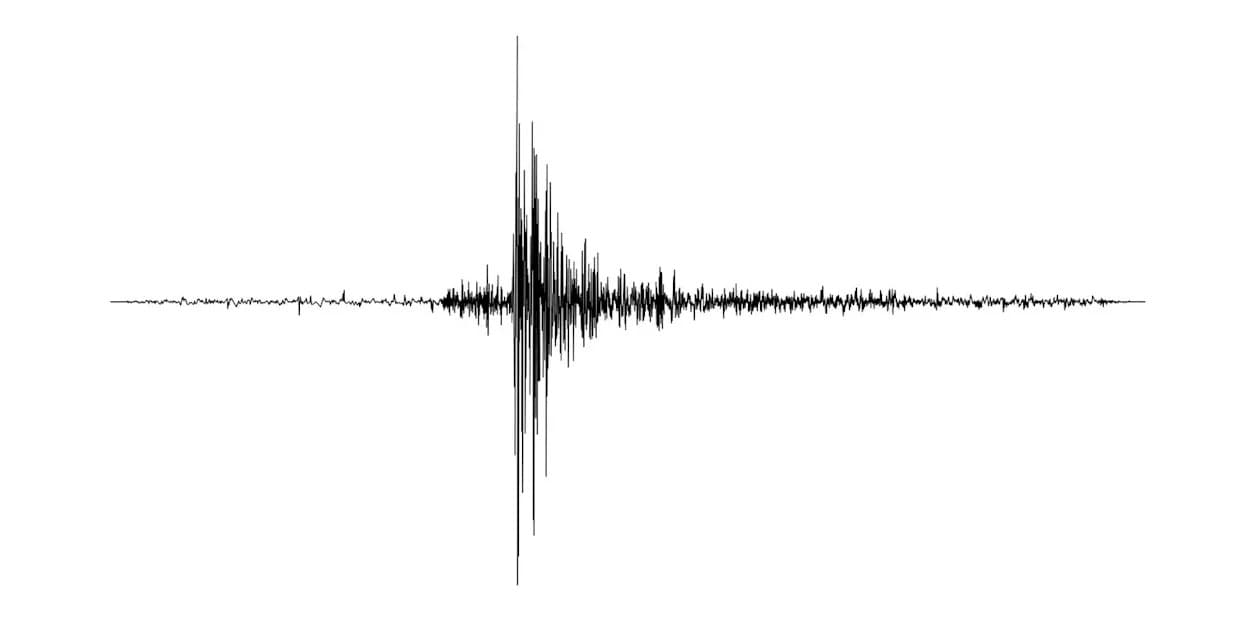
Rapid redistribution of mass and extreme stresses in the crust would likely trigger widespread earthquakes and could provoke volcanic eruptions as the mantle and crust adjust. Over longer periods, the day–night cycle would change dramatically: with no rotation relative to distant stars, the Sun would cross the sky once per orbit, producing seasons with very long days and nights (roughly months long), with profound climatic consequences for temperature, atmospheric circulation and habitability.
Why This Won’t Happen Suddenly
Small variations in Earth’s rotation do occur naturally — tidal interactions, large earthquakes, glacial rebound and changes in mass distribution cause tiny, gradual shifts. Atomic-clock measurements have required occasional leap-second adjustments: 28 leap seconds were added between 1972 and 2020. Recent short-term trends have even suggested a slight speed-up, which could require subtracting a leap second in the future. These changes are minuscule (fractions of a second) compared with the instantaneous-stop scenario.
Bottom line: An instantaneous stop of Earth’s rotation would unleash inertial devastation — supersonic winds, ocean deluges, massive crustal failure and volcanic activity — followed by a reconfiguration of the planet’s shape and climate. Fortunately, natural rotational changes are tiny and gradual, so a sudden stop is not something to fear in reality.
Sources/Contributors: Etan Meyer; Edward Herrick-Gleason, Astronomy Educator, St. John’s, Newfoundland and Labrador.
Help us improve.