John Fredericks, a prominent MAGA radio host, says he would rate a second Trump term highly for delivering many campaign promises but admits growing voter frustration over the economy, the Epstein files, and ICE operations in Minneapolis. Fredericks warns that the president’s recent emphasis on foreign policy risks alienating voters who prioritized affordability and housing. He urges immediate economic relief, better messaging, and less violent-looking enforcement tactics to avoid a possible GOP loss in the midterms.
Trump’s Approval Is Slipping — Inside What His MAGA Base Really Thinks
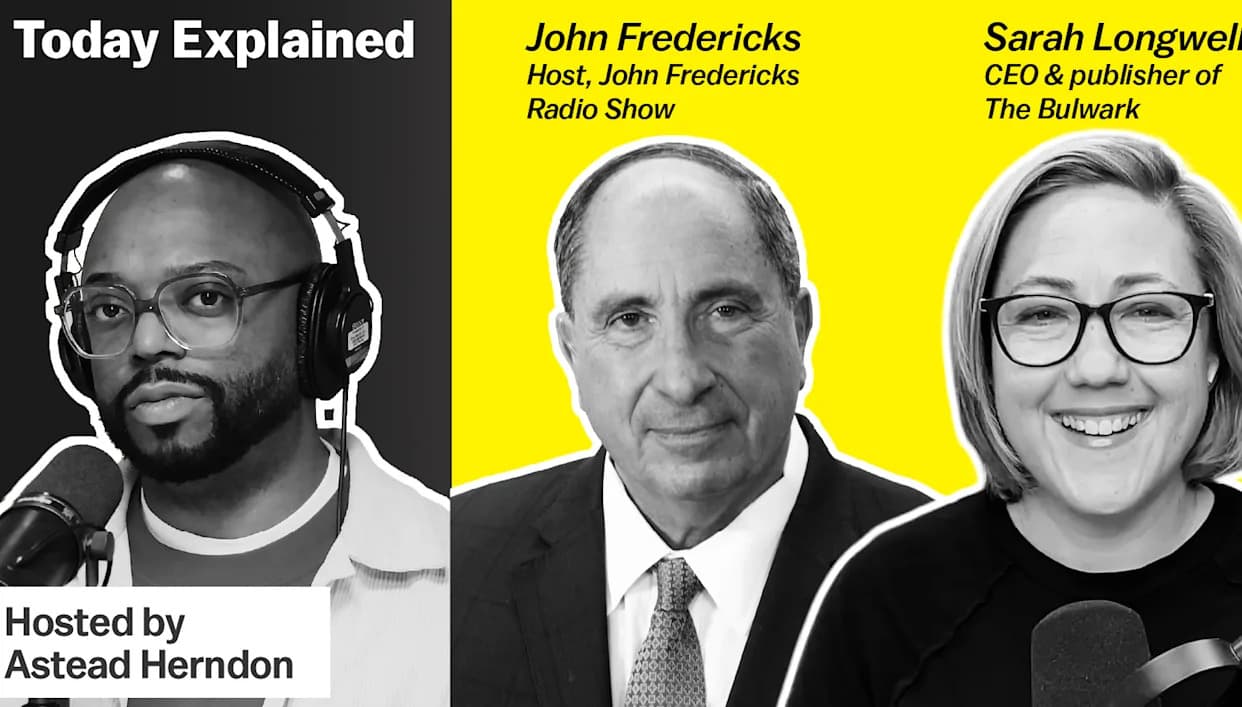
Left: Host Astead Herndon. Center: John Fredricks. Right: Sarah Longwell
One year into a hypothetical second Trump term, approval ratings are near historic lows and independent voters have trended away. To understand how core supporters are reacting, I spoke with John Fredericks, a prominent conservative radio host who calls himself the ‘Godzilla of Truth.’ Fredericks offers a ground-level view of MAGA voters — what they expected, where they feel let down, and what could still change ahead of the midterms.
Why John Fredericks?
Fredericks is widely listened to in conservative circles and has followed the movement closely through election cycles. That makes him a useful interlocutor for gauging whether polling shifts reflect real erosion in Trump’s base or temporary unrest over specific policies and incidents.
How Supporters See The First Year
When asked to rate the first year on a scale of 1–10, Fredericks gave it a 10, arguing that many campaign promises have been fulfilled.
'Ten; he’s delivered on virtually every promise he’s made. The economy is booming right now. Refunds are coming. He closed the border. The one big, beautiful bill got passed. He’s put the right people in place, and we haven’t seen the leaks and backbiting that hampered the first term.'
At the same time, Fredericks acknowledged significant problems that worry MAGA voters: the administration’s handling of the Epstein files and the way ICE operations unfolded in Minneapolis. Those incidents, he says, have produced friction between voter expectations and the results they are seeing on TV and in their communities.
Economic Reality Versus Messaging
Polling shows a steep decline in Trump’s favorability among independents and rolling back of earlier gains among younger voters and some communities of color. Fredericks attributes that largely to the fact that many people don’t yet feel economic gains in their daily lives.
'All that matters to most voters is their grocery bill. If prices, cars, housing and interest rates keep going up, people feel the pinch — and that’s why his numbers are down.'
He also criticized Republican messaging: even if improvements are happening beneath the surface, poor communication has failed to convince skeptical voters.
Epstein Files and Minneapolis: Messaging Missteps
Fredericks called the handling of the Epstein files a major mistake and questioned the priorities of some officials, naming Pam Bondi specifically as a misstep in execution. He also said the administration should have moved faster and with clearer planning in Minneapolis, arguing that a more decisive deployment of federal forces could have prevented violence.
'They should have released all the files on the same day. It’s the biggest mistake he’s made.'
That stance illustrates the tension facing Trump’s team: voters want strong enforcement of immigration promises, but many recoil at graphic images of aggressive tactics on television. Fredericks summed the dilemma succinctly: voters want undocumented migrants removed, but they also do not want to see innocent people harmed in the process.
Focus On Foreign Policy — A Risk For Midterms
Fredericks said he was surprised by the president’s emphasis on foreign policy, noting that many voters prioritized domestic issues such as affordability, housing and interest rates. He warned that continued focus abroad risks neglecting the immediate concerns that shape midterm turnout.
Can The GOP Course-Correct?
Fredericks warned that Republicans must act quickly to avoid losing Congress. His prescription: immediate, visible economic relief; a renewed focus on domestic priorities; clearer, tougher messaging; and enforcement tactics that avoid violent imagery. Without these changes, he fears Democrats could reclaim power and rapidly move against the administration.
In short: Fredericks still views Trump’s year as successful in many policy areas, but he concedes that unaddressed economic pain, mismanaged communications, and heavy-handed enforcement visuals could cost Republicans in the fall — unless leaders pivot and deliver tangible relief and clearer messaging soon.
Help us improve.