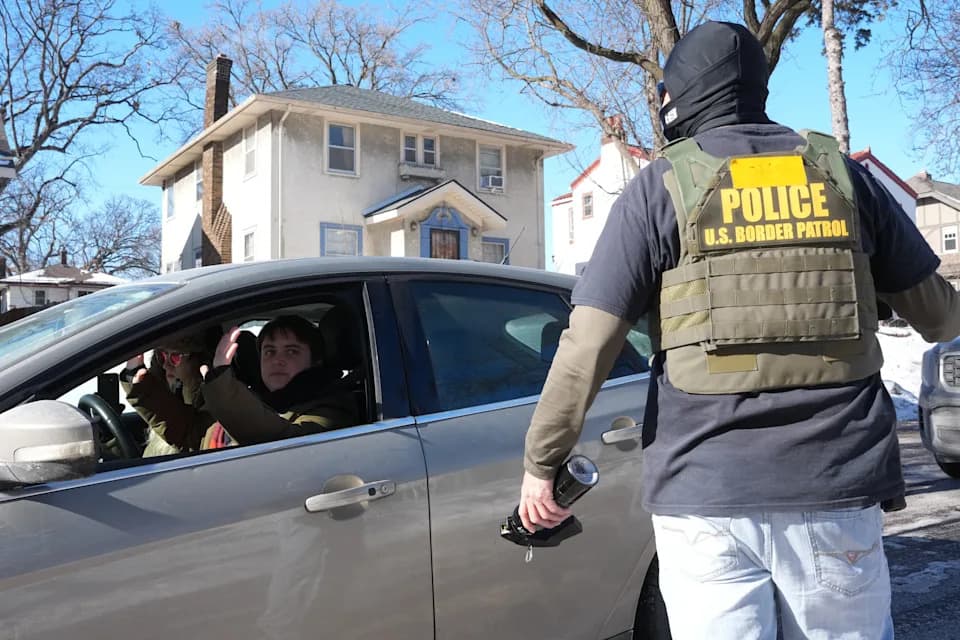
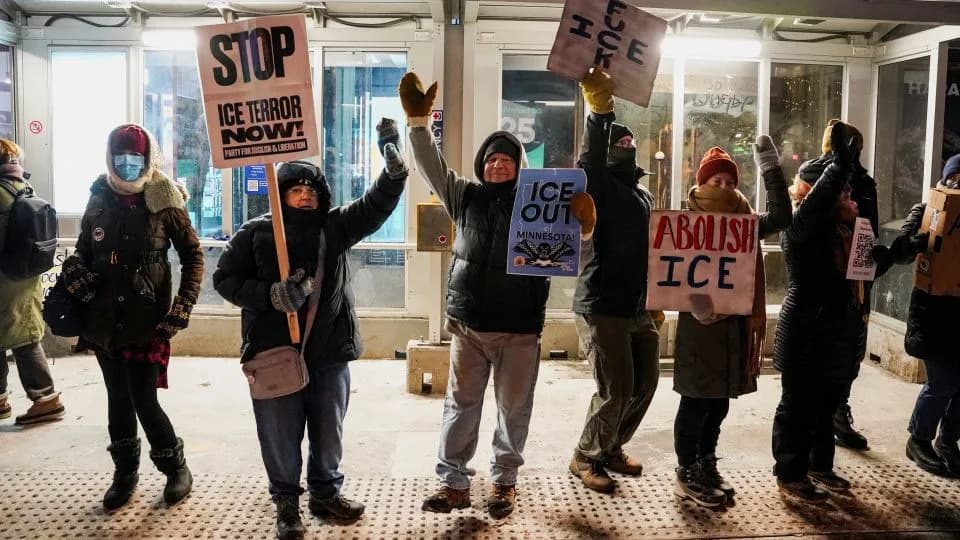
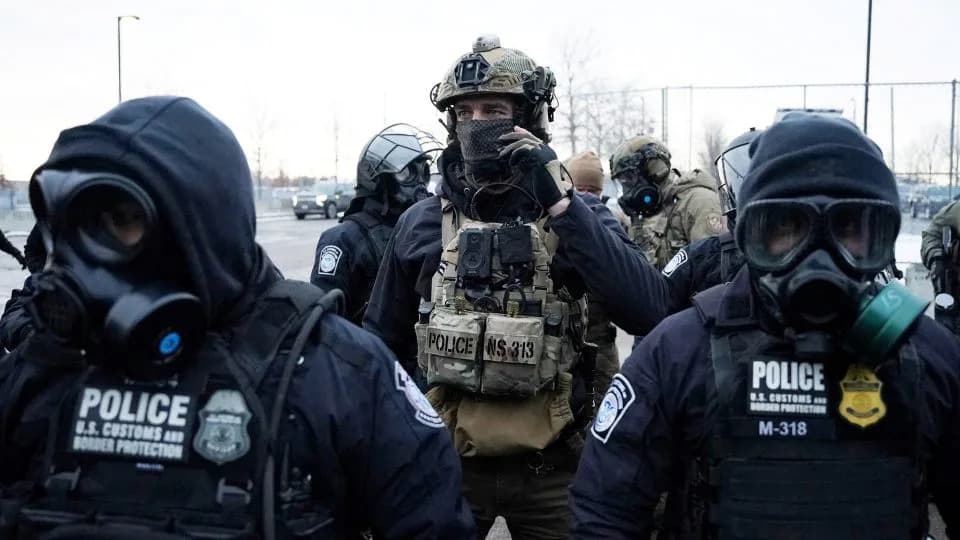
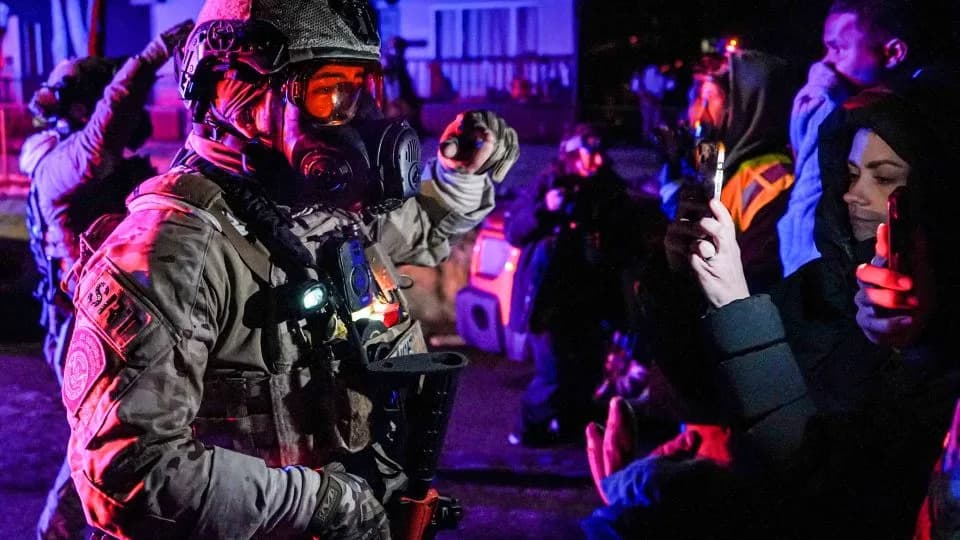
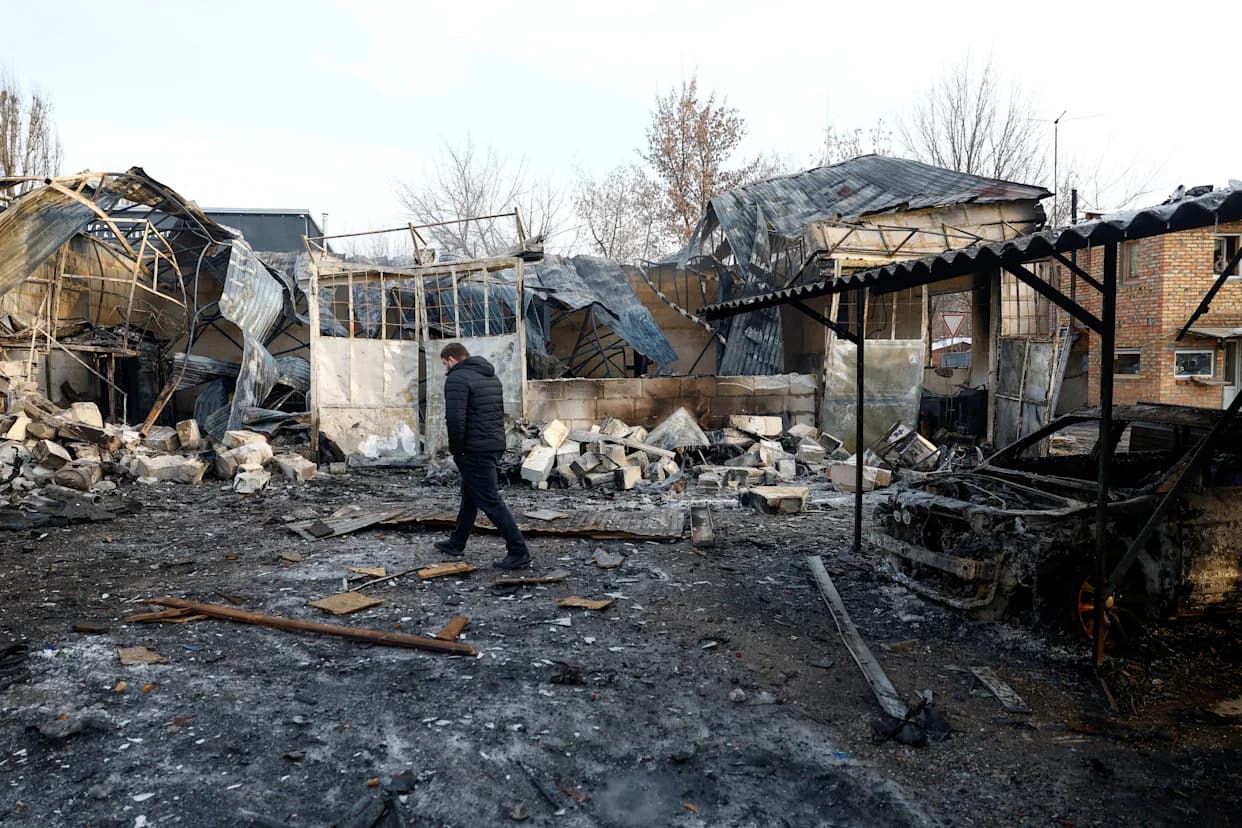
U.S. District Judge Katherine Menendez denied Minnesota's request for a temporary restraining order to stop ICE's month-long "Metro Surge" raids, saying the balance of harms did not clearly support an injunction. The federal operation, carried out under the Trump administration, detained thousands and resulted in the deaths of two U.S. citizens, provoking mass protests and local political backlash. The judge's decision is not a final ruling on Minnesota's broader legal challenge; further court proceedings will determine whether the operation violated state or federal law.
US Judge Denies Minnesota Request To Halt ICE 'Metro Surge' Raids
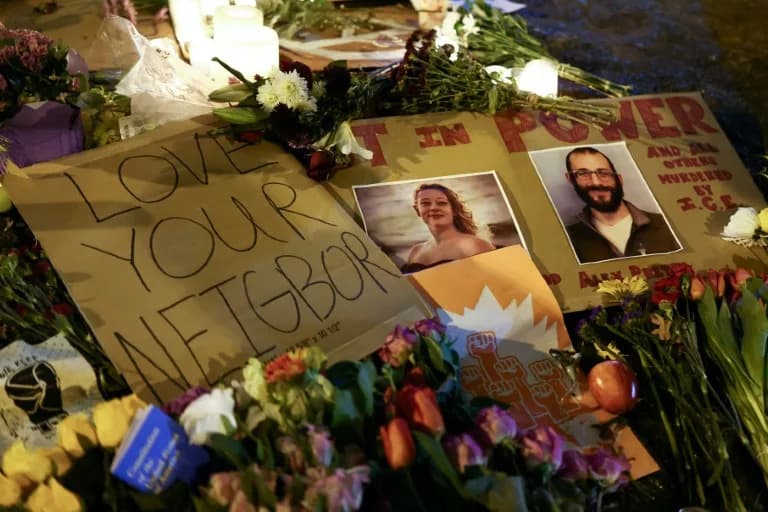
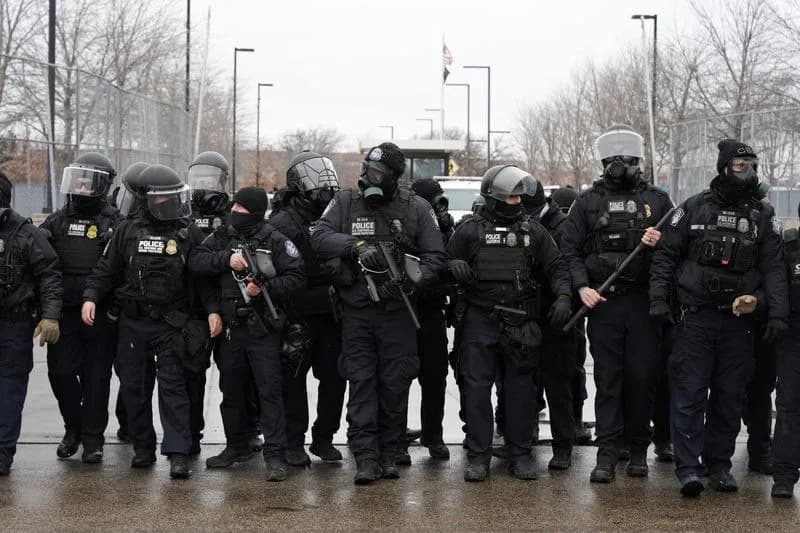
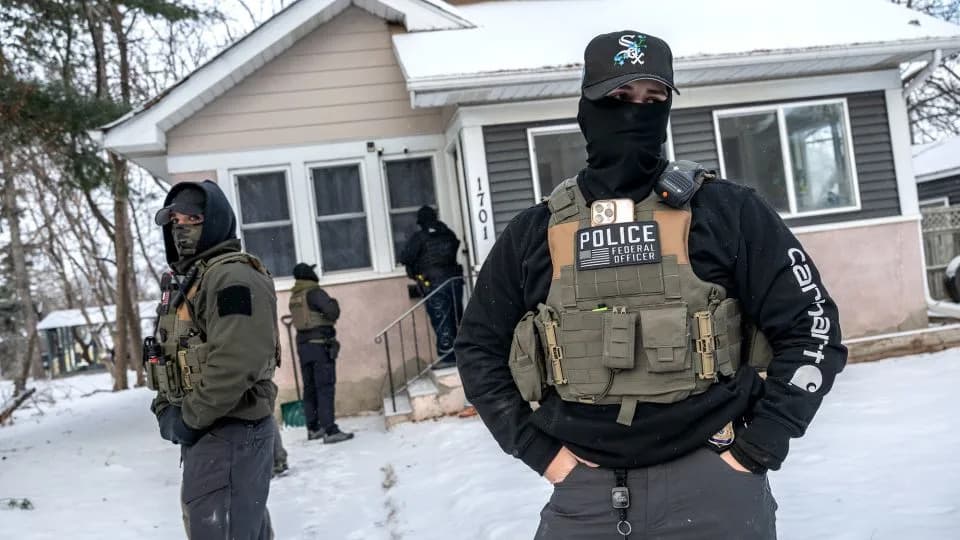
The killings of Renee Good and Alex Pretti by masked, heavily armed agents caused a nationwide outcry (CHARLY TRIBALLEAU)(CHARLY TRIBALLEAU/AFP/AFP)
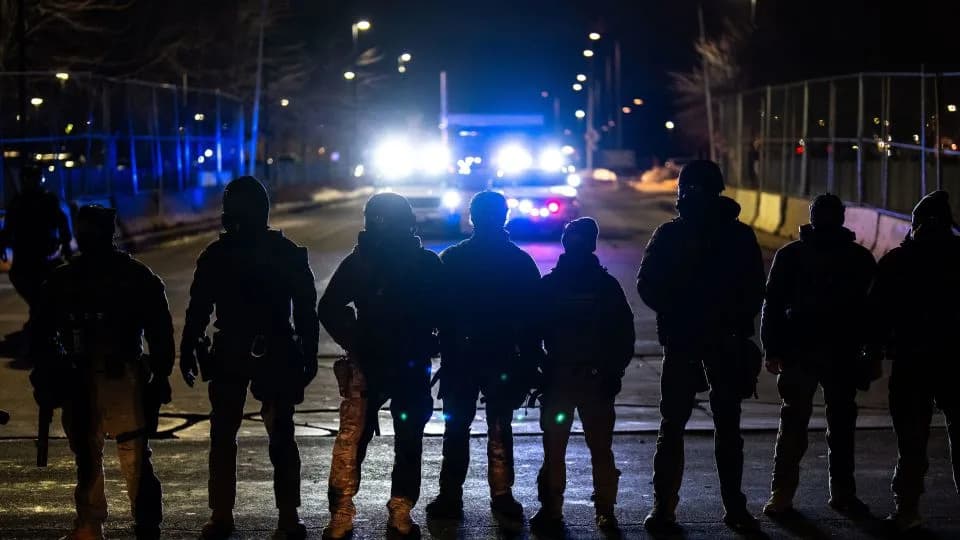
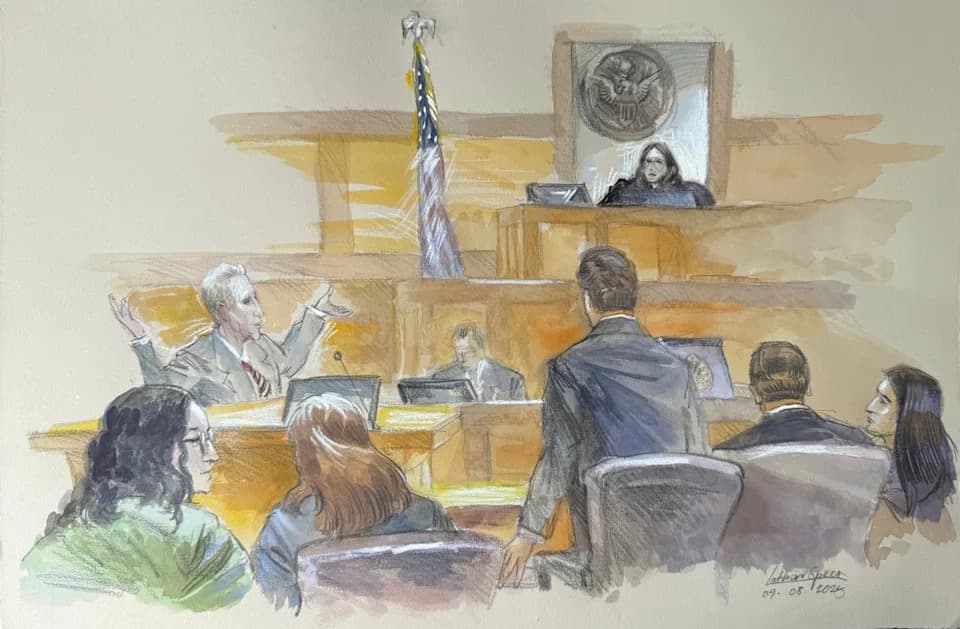
A federal judge on Saturday refused Minnesota's request to force U.S. Immigration and Customs Enforcement (ICE) to suspend its month-long detention and deportation operation known as "Metro Surge." The decision leaves the federal enforcement campaign in place for now while the state's broader legal challenge proceeds.
Court Finds Balance Of Harms Does Not Favor Immediate Injunction
U.S. District Judge Katherine Menendez denied Minnesota's bid for a temporary restraining order, writing that "ultimately, the Court finds that the balance of harms does not decisively favor an injunction." She noted that this was not a final ruling on the merits of the state's lawsuit and that further court proceedings would be required to reach a final determination.
Allegations, Protests And Political Reaction
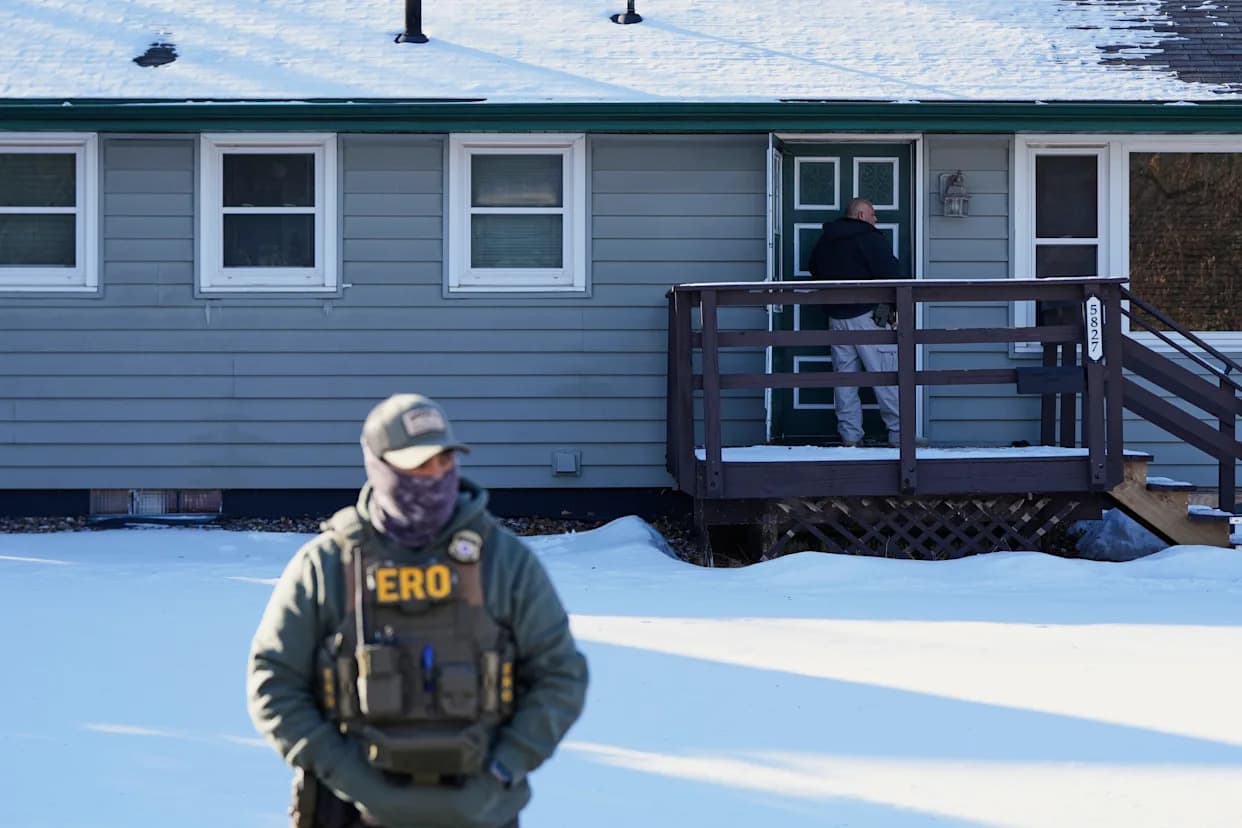
Minnesota's lawsuit contends the month-long federal operation infringed on state sovereignty. The raids, carried out under the Trump administration, detained thousands of people and resulted in the deaths of two U.S. citizens, Renee Good and Alex Pretti, which provoked widespread outrage and large protests in Minneapolis and beyond.
"This decision doesn't change what people here have lived through -- fear, disruption, and harm caused by a federal operation that never belonged in Minneapolis in the first place," Mayor Jacob Frey said, expressing disappointment.
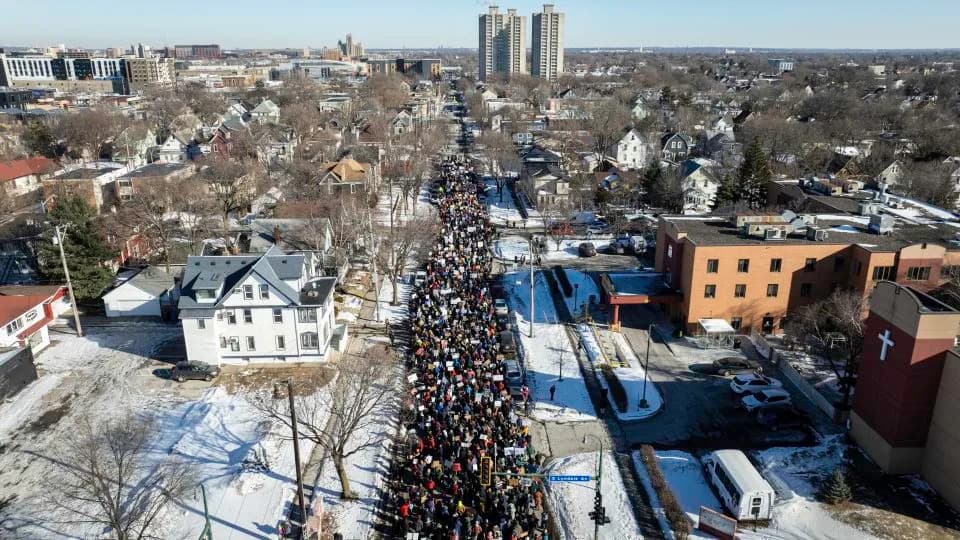
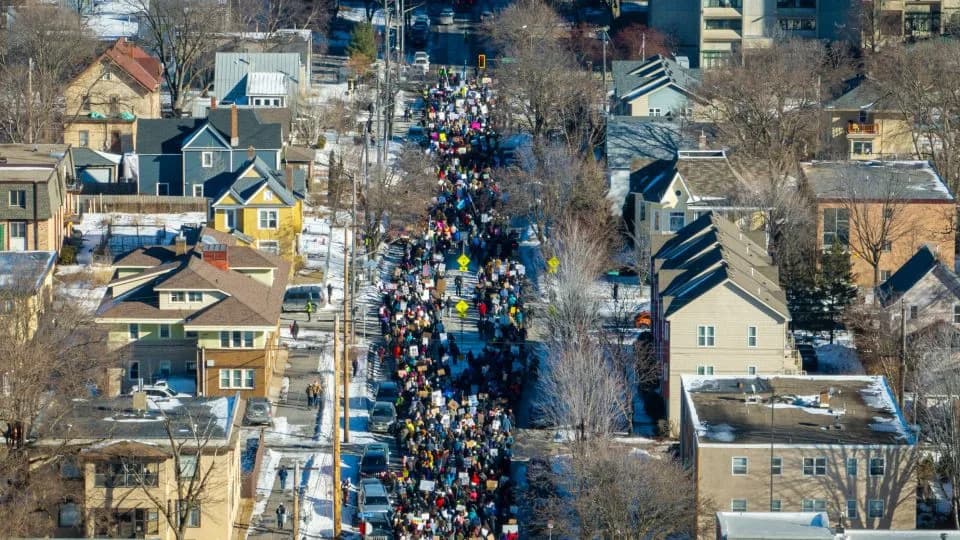
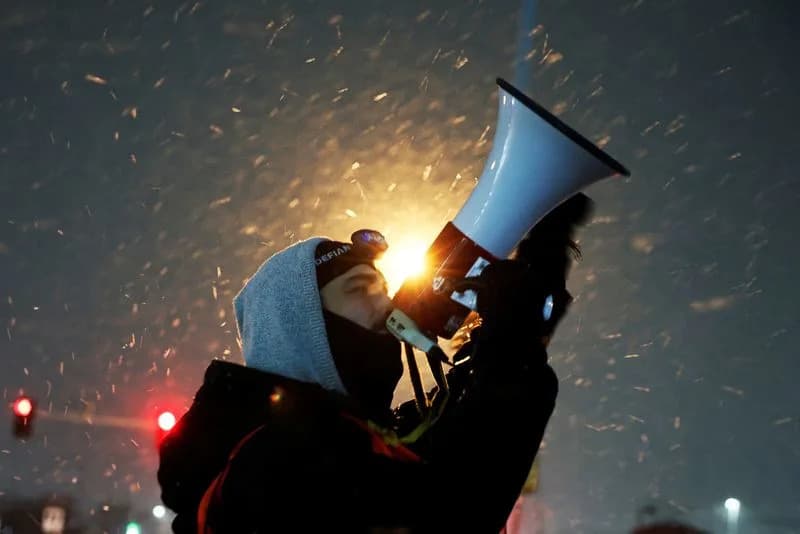
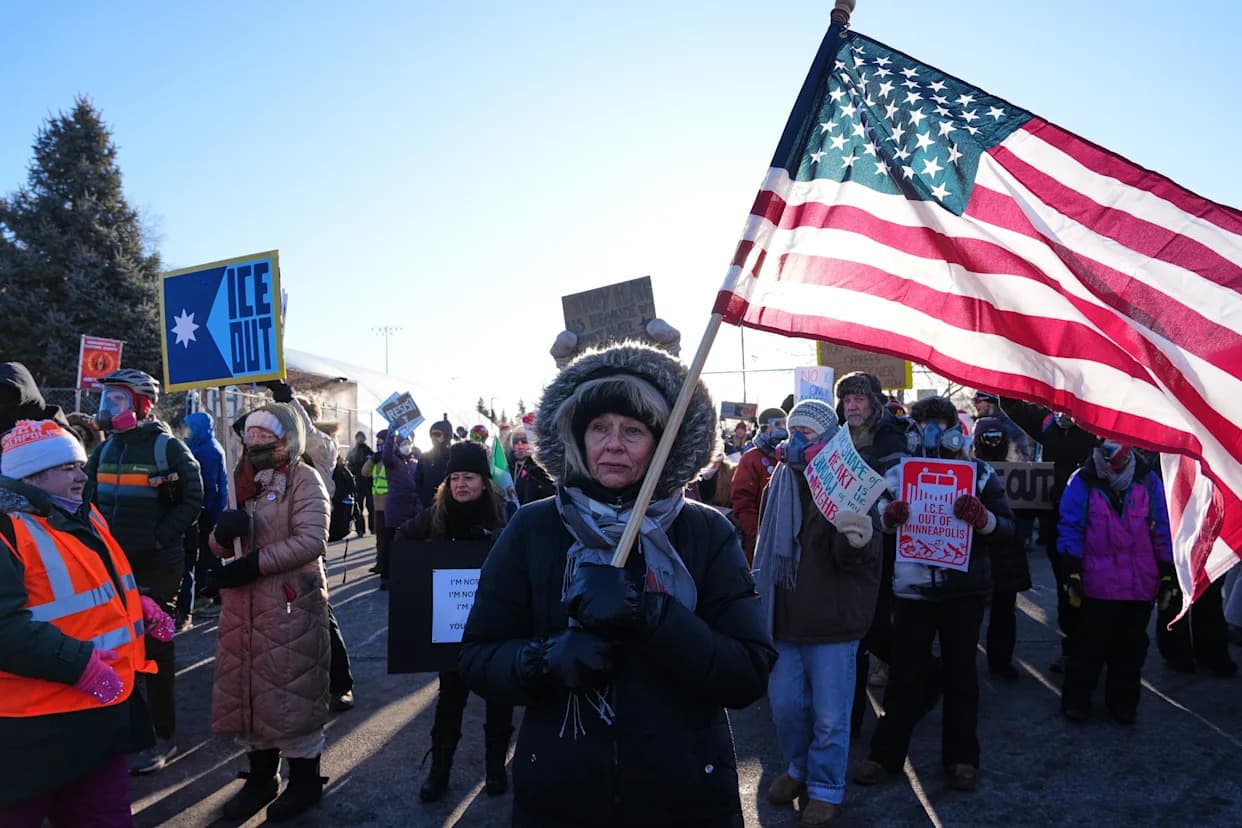
Tens of thousands of Minnesotans protested the operation on Friday. Local Democratic leaders have also criticized the federal campaign known as Metro Surge.
Federal Response And Political Fallout
Following the shootings of Good and Pretti, President Trump removed Customs and Border Protection commander Gregory Bovino from the operation and named veteran official Tom Homan to oversee a drawdown of the effort under certain conditions. Florida Attorney General Pam Bondi praised Judge Menendez's ruling, calling it a "huge" legal win for the Justice Department and asserting that federal law enforcement would continue to be enforced in Minnesota.
Hamline University politics and legal studies professor David Schultz said Minnesota's argument centers on claims that the federal government was "trying to force or coerce the state into doing certain things," pointing to correspondence from officials in the aftermath of the deaths.
Judge Menendez did not rule on whether the Metro Surge operation violated federal or state law; she only declined to grant the immediate emergency relief Minnesota sought. The state's case will proceed through additional hearings and filings, where those legal questions will be addressed more fully.
Help us improve.