France will lower the allowable cereulide level in infant formula to 0.014 μg/kg body weight after suspected contamination prompted recalls in more than 60 countries. Authorities are investigating two infant deaths but have not established a direct link to the formula. The European Commission has asked EFSA to issue guidance on cereulide in children's products by 2 February, while consumer group Foodwatch has launched a lawsuit alleging delays in action.
France Tightens Cereulide Limit in Infant Formula After Global Recalls and Probe
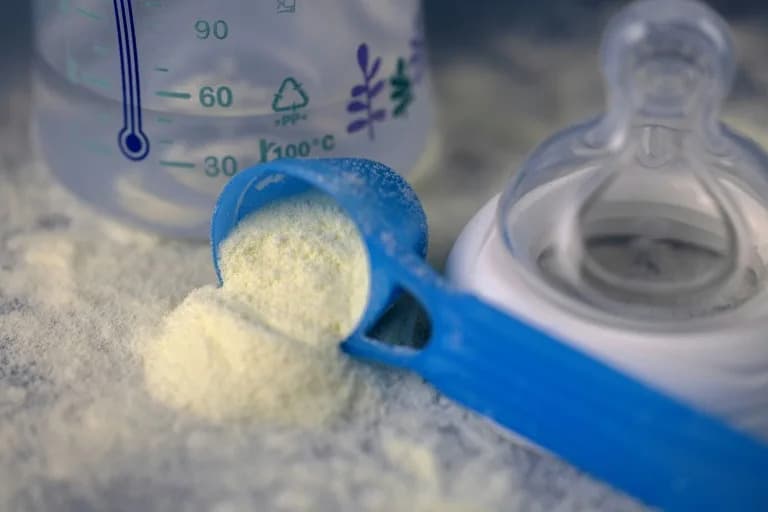
The infant formula industry has been rocked by several firms recalling batches that could be contaminated with cereulide, a toxin that can cause nausea, vomiting, and diarrhoea (Fred TANNEAU)(Fred TANNEAU/AFP/AFP)
France announced it will tighten the allowable level of the toxin cereulide in infant formula after batches potentially contaminated with the compound prompted recalls in more than 60 countries.
What Happened
The infant-formula sector has been hit by multiple precautionary recalls linked to suspected cereulide contamination. Cereulide is an emetic toxin produced by certain strains of Bacillus cereus; it can cause nausea, vomiting and diarrhoea and is notably heat-stable and difficult to detect with routine tests.
French Response and Investigation
French authorities launched an inquiry after two infants died in December and January and were believed to have consumed possibly tainted powdered milk. Investigators say they have not yet established a direct causal link between the infants' symptoms and the milk.
In a precautionary public-health move, France will lower the allowable cereulide threshold to 0.014 micrograms per kilogram of body weight, down from the previous level of 0.03 micrograms. The agriculture ministry said: "Protecting the health of infants is the top priority for health authorities." This is the second recent tightening of contamination thresholds in France.
Supply Chain, Suspected Supplier and Industry Action
The recalls have focused attention on a Chinese supplier suspected of providing a contaminated ingredient used in infant formula. French statements have referred to an unnamed "Chinese supplier"; reporting and industry sources identify the company as Cabio Biotech, based in Wuhan, a major producer of ARA (arachidonic acid) used in baby formulas.
Major manufacturers including Nestlé, Danone and Lactalis have issued recalls in France and dozens of other countries. Companies say cereulide is rare and hard to detect; some recalls were carried out as a precaution after traces were identified on production lines.
Regulatory Steps and Testing
This week the European Commission asked the European Food Safety Authority (EFSA) to provide guidance on safe cereulide levels in products intended for children; EFSA is due to issue an opinion on 2 February. The European Centre for Disease Prevention and Control (ECDC) has received reports of infants developing diarrhoea after consuming the implicated products but said "no severe cases have been reported."
Laboratory experts note that routine checks commonly test for Bacillus cereus bacteria, but assays specifically for the cereulide toxin are not standard and are requested more widely only in this context.
Lawsuit and Public Concern
The consumer group Foodwatch has filed a lawsuit alleging that manufacturers and French authorities were too slow to act. Eight families in France, whose babies reported serious digestive problems after consuming formula named in the recalls, have joined the legal action. Nestlé has disputed the watchdog's claims and said it reserves the right to respond in court if it considers information misleading.
Wider Food Safety Context
According to World Health Organization estimates (2019), about 23 million people in Europe fall ill each year from contaminated food and roughly 4,700 die. The recent events highlight challenges in global food-safety oversight, ingredient sourcing and the need for harmonized testing standards for heat-stable toxins such as cereulide.
Key fact: The new French cereulide threshold is 0.014 μg/kg body weight — a precautionary measure while regulators and investigators assess risks and update guidance.
Help us improve.