Summary: The U.K.'s Online Safety Act has empowered Ofcom to demand takedowns and age restrictions, and regulators have begun pressing U.S. platforms to comply. Tech lawyer Preston Byrne is representing several targeted sites and has proposed the GRANITE Act to enable U.S. suits against foreign governments that attempt to censor Americans. Wyoming introduced a state-level bill, and federal legislation is being discussed as lawmakers voice concern over extraterritorial censorship.
How Americans Are Pushing Back Against Britain’s Online Safety Act
How Americans Are Fighting a British Censorship Invasion
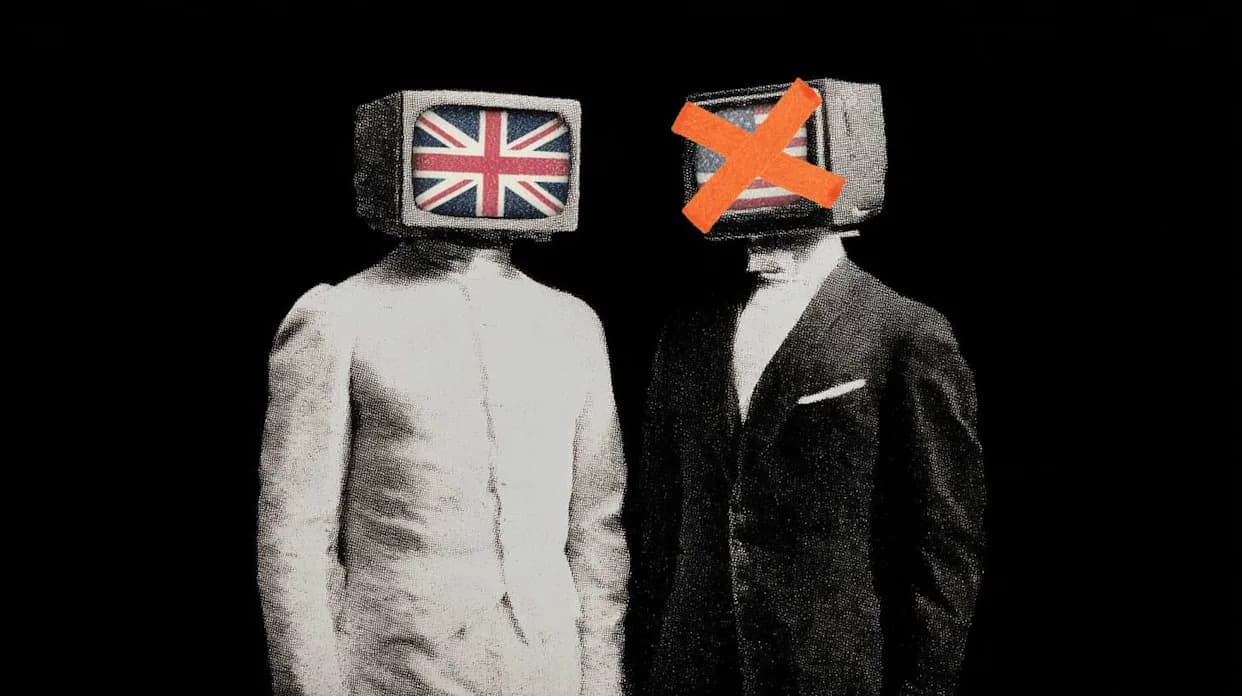
The U.K.'s Online Safety Act has given the communications regulator Ofcom broad authority to demand removals, age restrictions, and other controls over online content in the name of protecting children. Though the law applies to services operating in the U.K., regulators have begun pressing U.S.-based platforms to comply — prompting a growing legal and political counterattack in the United States.
What The Online Safety Act Does
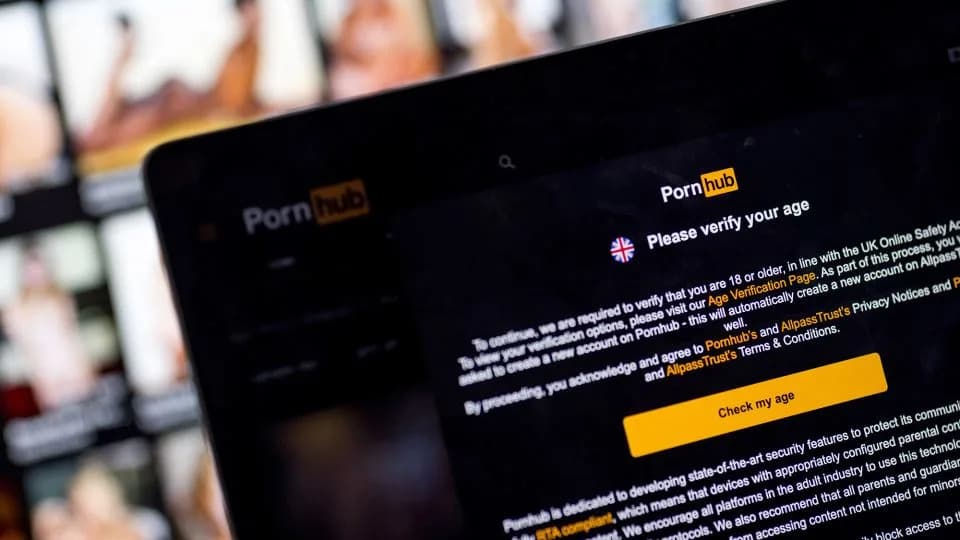
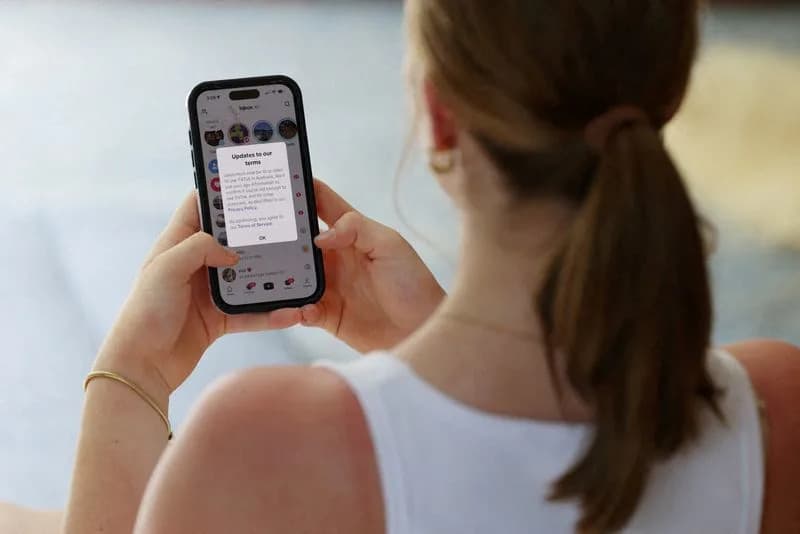
The Online Safety Act empowers Ofcom to require platforms to remove or restrict access to content it deems harmful, with special rules aimed at protecting minors. In practice, platforms serving U.K. users have applied wide-ranging age gates and takedowns, affecting communities and material as varied as Reddit forums on Ukraine and Gaza, a parliamentary speech about the rape of a minor, and even an image of Francisco Goya's painting Saturn Devouring His Son.
How Ofcom Has Sought To Extend Its Reach
Although most American users have yet to see these restrictions on their own feeds, Ofcom has been quietly pressuring U.S. companies to follow its mandates. That outreach has included information requests and fines when Ofcom judges a platform noncompliant — steps that have alarmed some U.S. lawyers, platform operators, and lawmakers who view the regulator's approach as extraterritorial overreach.
Legal Pushback From U.S. Lawyers And Lawmakers
Tech-policy attorney Preston Byrne has led a prominent legal response, representing four U.S.-based sites targeted by Ofcom: 4chan, Gab.com, Kiwi Farms, and Personal Autonomy LLC (operator of the forum Sanctioned Suicide). When Ofcom fined 4chan £20,000 (about $27,427) over an information request dispute, Byrne refused to comply and has repeatedly pushed back in written exchanges.
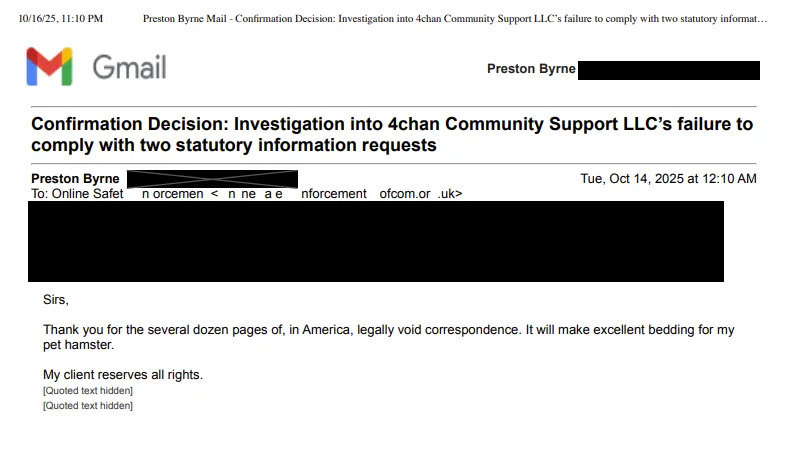
"I don't think you understand quite how easy it's been to parry them. We just write back to them and say, 'no,'" Byrne told Reason. In one reply he described Ofcom's demand as "legally void" and mockingly suggested it would make "excellent bedding" for his "pet hamster."
Byrne relies on First Amendment protections to defend U.S. platforms from foreign censorship demands but warns that continued pressure could lead some companies to comply simply to avoid legal hassle. "Enough people will say, 'OK, we just want the hassle to go away,'" he warned — a dynamic he argues would effectively export foreign restrictions onto American platforms.
The GRANITE Proposal
To counter these pressures, Byrne proposed the Guaranteeing Rights Against Novel International Tyranny & Extortion (GRANITE) Act. The concept would allow U.S. companies and individuals to sue foreign governments that attempt to censor Americans; if successful in U.S. courts, plaintiffs could seek forfeiture of the foreign government's assets held in U.S. jurisdiction as a deterrent.
Preston Byrne(Preston Byrne)
Byrne argues the idea has bite because many countries rely on access to U.S. banking and financial infrastructure. He cited a figure — roughly £47 billion custodied in North American banks for the U.K. — to illustrate the leverage that asset-forfeiture remedies could create.
State And Federal Responses
Originally pitched as a New Hampshire initiative (a play on "GRANITE" and the Granite State), the first formal incarnation of the idea arrived in Wyoming. State Rep. Daniel Singh (R–Cheyenne) introduced a bill that would bar Wyoming from recognizing, enforcing, or cooperating with certain foreign judgments that amount to censorship, impose civil penalties on state personnel who enforce such orders, and declare foreign censorship orders unenforceable in Wyoming courts.
While state laws like Wyoming's could offer localized protections, Byrne and others say federal legislation would be more powerful. Foreign governments generally enjoy sovereign immunity under the Foreign Sovereign Immunities Act (FSIA), which shields them from many U.S. lawsuits. A federal GRANITE bill could seek to amend the FSIA to create exceptions for foreign attempts to censor U.S. speech.
Political Momentum And Next Steps
Hints of federal action have emerged: late last year the State Department's Under Secretary for Public Diplomacy, Sarah Rogers, told GB News that the federal government was exploring a version of the GRANITE concept. Meanwhile, members of Congress have grown vocal. In July 2025, Rep. Jim Jordan (R–Ohio) accused U.K. regulators of threatening to censor U.S.-based platforms, and in December Sen. Eric Schmitt (R–Mo.) said he was working on legislation to shield American speech from foreign interference.
Proponents say a legislative response could impose strong financial and legal disincentives on foreign states that attempt to export censorship. Critics caution that such measures could raise complex international-law questions and provoke diplomatic friction. For now, the debate centers on how to balance sovereignty, free-speech protections, and cross-border regulation in an increasingly global internet.
Disclosure: This article synthesizes reporting and public statements by lawyers, lawmakers, and regulators. Quotations and figures are attributed to the original reporting.
Help us improve.