Archaeologists have found a 5,000-year-old rock panel in the Sinai that appears to depict an Egyptian victory: a triumphant figure, a bound victim pierced by an arrow, and a boat linked to royal power. An inscription identifies the god Min as "ruler of the copper area," suggesting the campaign targeted mineral resources such as copper and turquoise. A nearby inscription that may have named the ruler was deliberately erased; its timing and motive remain unclear. The panel was discovered in a 2025 survey and researchers plan larger field campaigns to document more rock art.
5,000-Year-Old Sinai Rock Art Portrays Violent Egyptian Conquest, Archaeologists Say
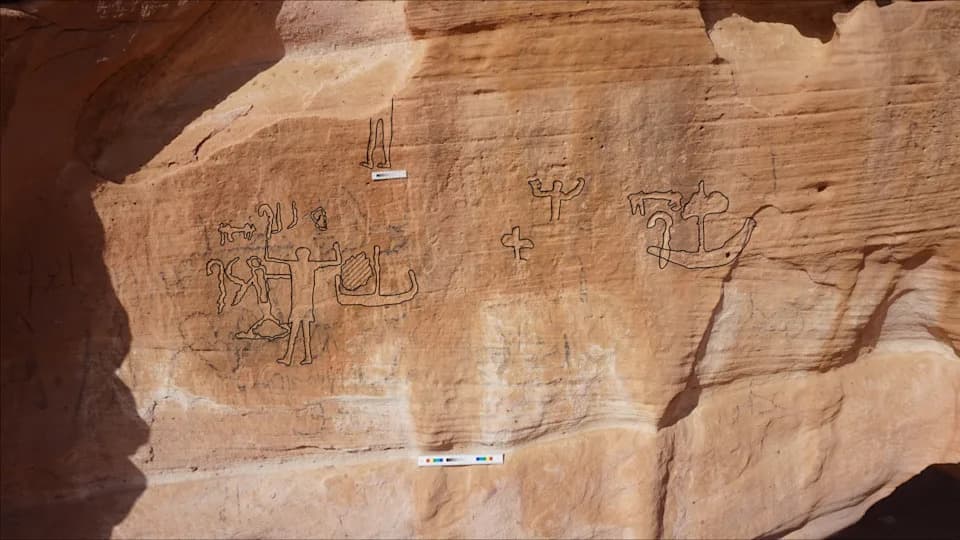
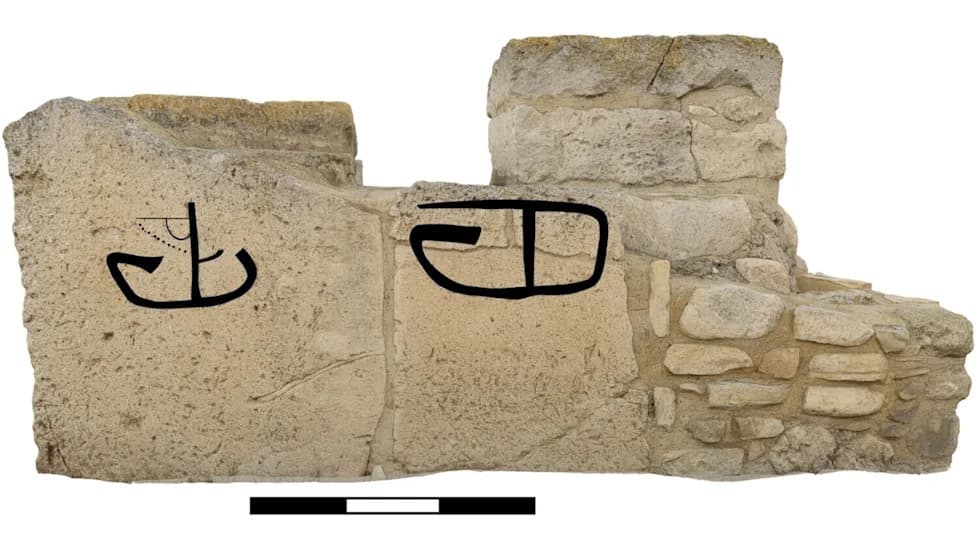
A victorious man walks forward with raised arms next to a bound kneeling figure who has been pierced by an arrow. The boat on the right may signify dominance. (The black lines highlight the carvings for visibility.). | Credit: Photo: M. Nour El-Din/redrawing: E. Kiesel
Archaeologists have uncovered a rock-art panel in the Sinai Desert, dated to roughly 5,000 years ago, that appears to depict a violent episode of Egyptian expansion into the peninsula.
Ancient Scene Suggests Conquest for Minerals
The panel shows a triumphant figure standing with raised arms, a kneeling figure pierced by an arrow with hands tied behind his back, and a nearby boat image. An inscription beside the boat identifies the god Min—associated with fertility—as the "ruler of the copper area," a detail the researchers say links the image to mining activity.
"The panel shows in a terrifying manner how the Egyptians colonized the Sinai and subjugated the inhabitants," the archaeologists write in the 2025 issue of the journal Blätter Abrahams.
The authors interpret the boat as a symbol of Egyptian royal power, the triumphant figure as associated with the god Min (and thus with Egyptian authority), and the subdued figure as representing local inhabitants. Similar rock-art panels from the same period have been found in the Sinai and have been read as evidence that early Egyptian expeditions established control over parts of the peninsula.
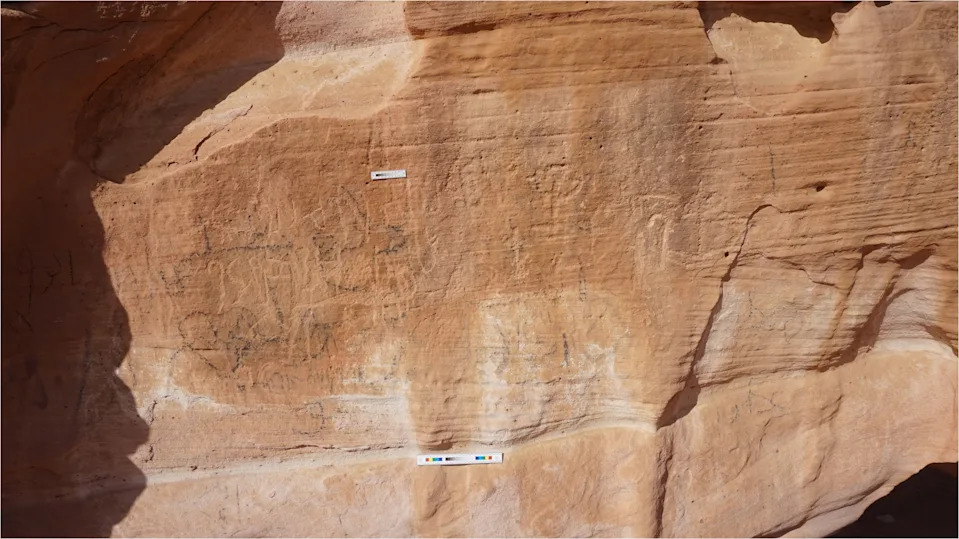
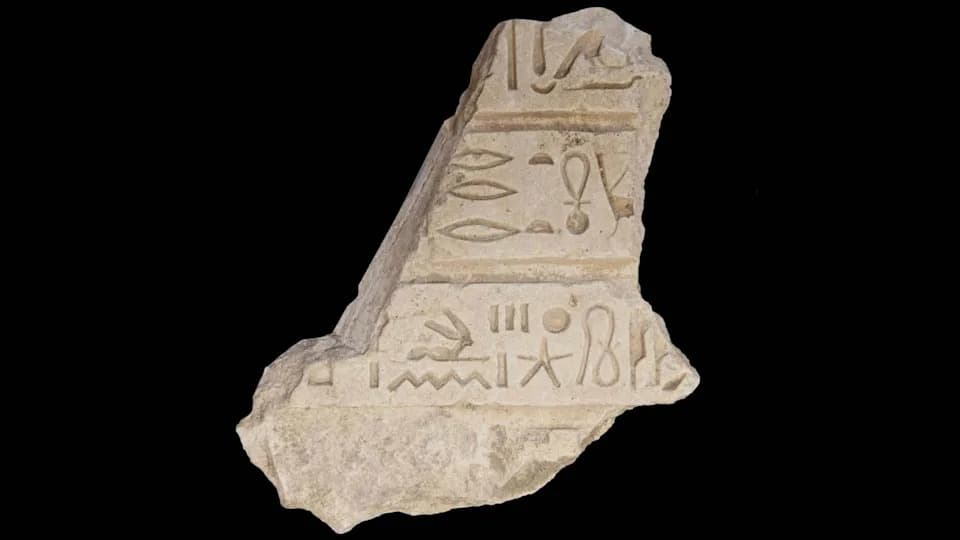
The 5,000-year-old rock art reads "God Min, ruler of copper region." | Credit: M. Nour El-Din
Mineral Motives and an Erased Name
The research team argues the campaigns into southwestern Sinai were driven largely by access to mineral resources—especially copper and turquoise—rather than by abstract territorial expansion. At the time, the Sinai was largely occupied by nomadic groups, making resource extraction a likely motivation, says co-author Ludwig Morenz, an Egyptology professor at the University of Bonn, in comments reported to Live Science.
Notably, an inscription beside the boat that may once have named an Egyptian ruler now appears deliberately erased. Who removed the name, when, and why remain unclear. While erasure of a pharaoh's name is known from later periods of Egyptian history, the team cannot yet link this panel to any specific practice or later political act.
Discovery and Next Steps
The panel was discovered by Mustafa Nour El-Din of the Aswan Inspectorate, Egyptian Ministry of Antiquities, during a 2025 field survey. The archaeologists say further rock art is likely to be found nearby and have announced plans for a larger follow-up campaign to document and study additional panels.
Publication: The findings are presented in the 2025 volume of Blätter Abrahams. The team emphasizes that research is in its early stages and that interpretation may evolve as more material is found.
Help us improve.