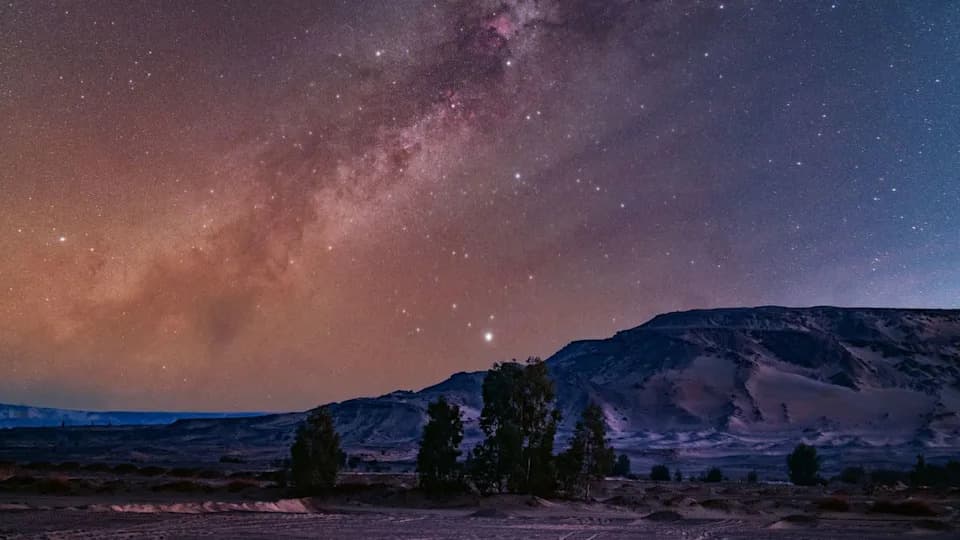
Astrophotographer Osama Fathi captured a composite image of the Milky Way and the Summer Triangle over Egypt's volcanic Black Desert on Dec. 20, 2025. The moonless night, combined with the desert's low light pollution and dry air, produced striking contrast between the galaxy's luminous core and surrounding stars. Deneb, Vega and Altair trace the Summer Triangle along the Milky Way's band; the scene was recorded with a modified Nikon Z6 and a Nikkor 14–24 mm lens in a 6-minute exposure, with the foreground captured under natural starlight.
Milky Way and Summer Triangle Illuminate Egypt’s Black Desert — Stunning Nightscape by Osama Fathi
Credit: Osama Fathi - Night Sky Watcher
Astrophotographer Osama Fathi captured a striking composite of the Milky Way arching over the volcanic expanse of Egypt’s Black Desert, where a bright stellar triangle shimmers against an exceptionally dark, moonless sky.
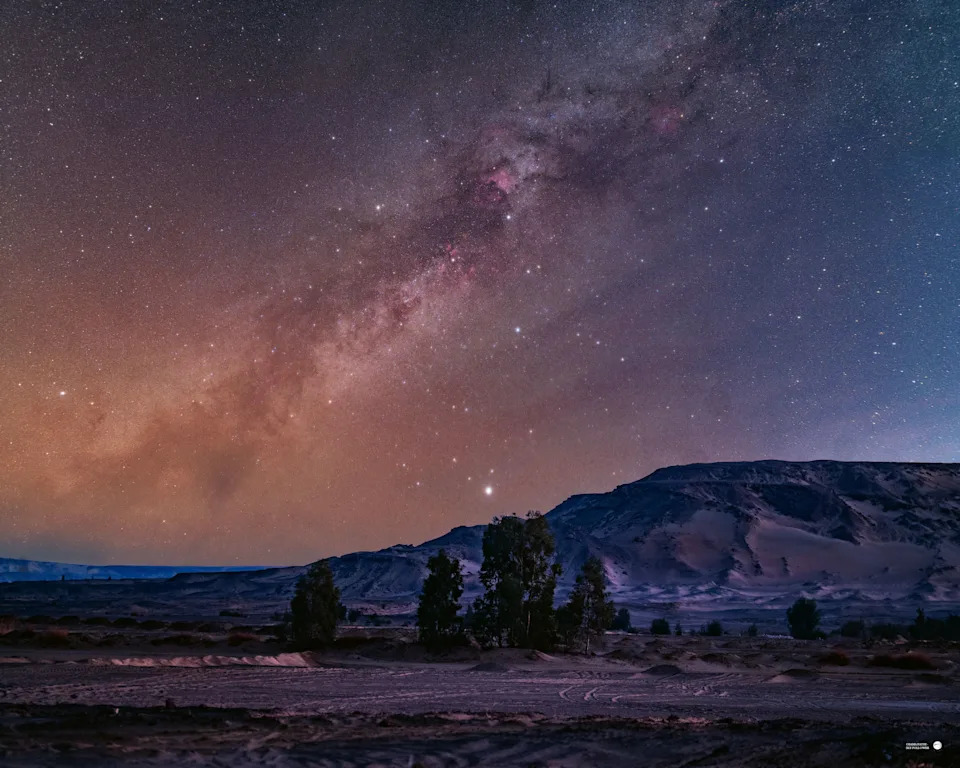
The glowing band of the Milky Way's galactic plane is pictured tumbling diagonally through a starry night sky above a mountainous region.
About the Image
Fathi recorded the composite on the night of Dec. 20, 2025, when dense starfields and dark, dusty filaments of the Milky Way's galactic plane dominated the pristine sky. The desert's very low light pollution and dry atmospheric conditions produced strong contrast between the galaxy's luminous core and the surrounding stellar background.
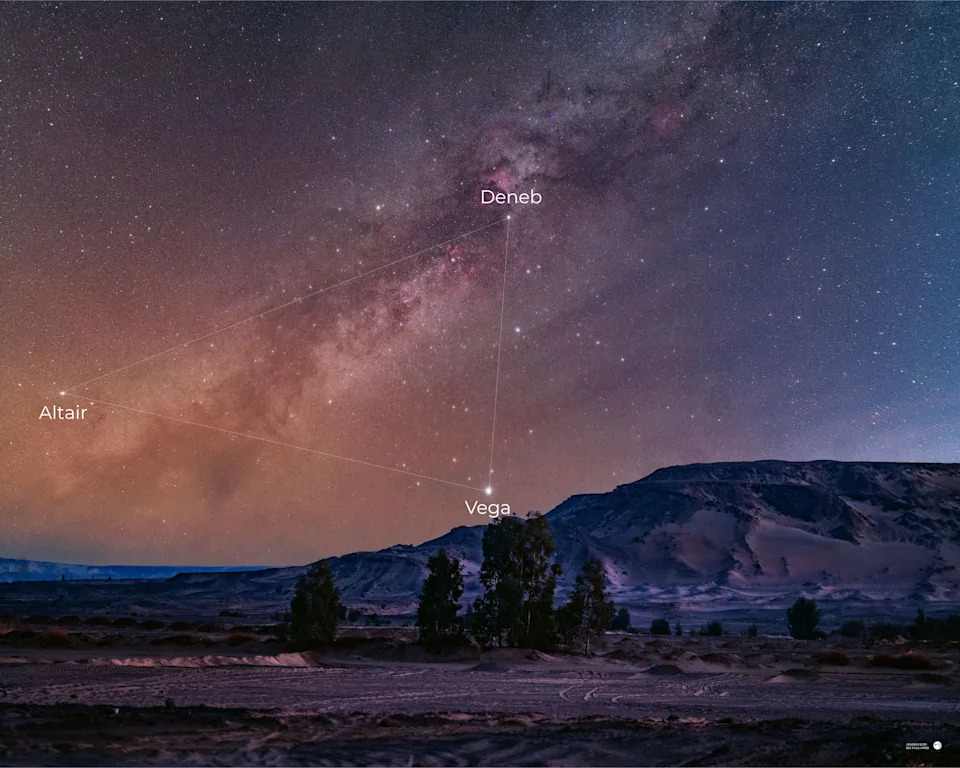
The glowing band of the Milky Way's galactic plane is pictured tumbling diagonally through a starry night sky above a mountainous region.
The Stars: Deneb, Vega and Altair
Embedded in the Milky Way's glowing band, the bright star Deneb—the tail of the Swan in the constellation Cygnus—appears amid the ribbon of the galaxy. Vega, a past and future North Star, shines low near the horizon, while Altair, the brightest star in Aquila, glows on the opposite side of the band. Together these three stars form the Summer Triangle, one of the night sky's most recognizable asterisms.
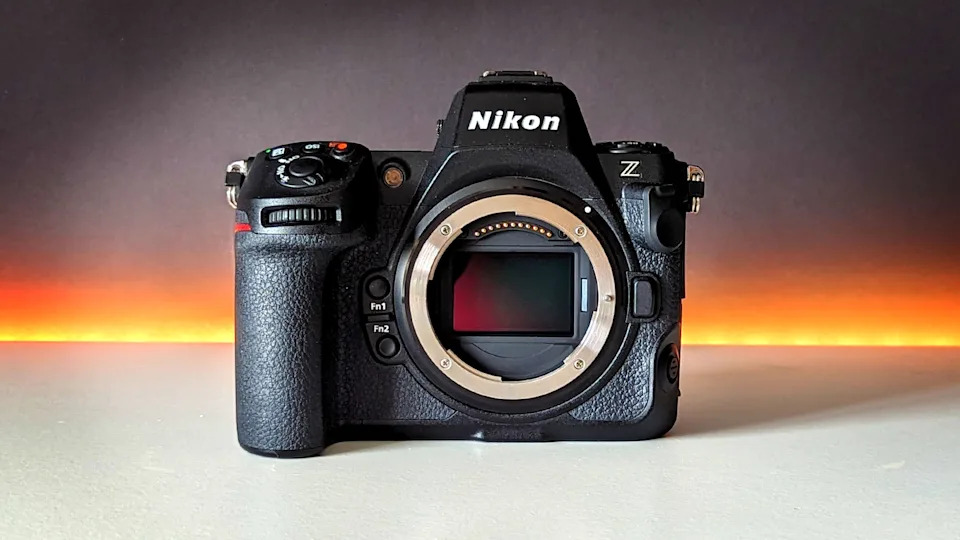
Nikon Z8 on a white table
"The exceptionally low light pollution and dry atmospheric conditions of the desert allow for high contrast between the Milky Way's bright core regions and the surrounding stellar background," Fathi told Space.com.
How the Photo Was Taken
Fathi made the composite using a modified Nikon Z6 camera with a Nikkor 14–24 mm lens, recording the scene in a single 6-minute exposure. Foreground features were captured under natural starlight—no artificial illumination—preserving the desert's subtle textures and emphasizing the link between Earth’s ancient geology and the vast structure of our galaxy.
Why It Matters
The image highlights how remote, arid locations like Egypt's Black Desert are ideal for deep-sky photography: minimal light pollution and stable air give astrophotographers exceptional contrast and clarity. The photo also offers a vivid reminder of seasonal sky changes — the Summer Triangle sits lower in the Northern Hemisphere winter and climbs high overhead during summer nights.
If you'd like to try similar shots, consult guides on how to photograph the Milky Way and reviews of recommended cameras and lenses for astrophotography. To share your own night-sky photos with Space.com readers, send images, comments, and your name and location to spacephotos@space.com.
Help us improve.