A new storm is expected to hit Gaza, worsening conditions for hundreds of thousands of displaced people living in damaged tents and makeshift shelters. Authorities say 127,000 of 135,000 tents in displacement camps are unusable, while aid deliveries have averaged about 145 trucks per day versus the planned 600 trucks under an October 10 ceasefire. Families are improvising to stay warm amid fuel shortages, and cold-related deaths and illnesses — especially among children, the elderly and the sick — have risen as damaged buildings continue to collapse. Emergency services and meteorologists warn that freezing temperatures will increase the humanitarian urgency.
New Storm to Hit Gaza Deepens Winter Crisis for Hundreds of Thousands Displaced
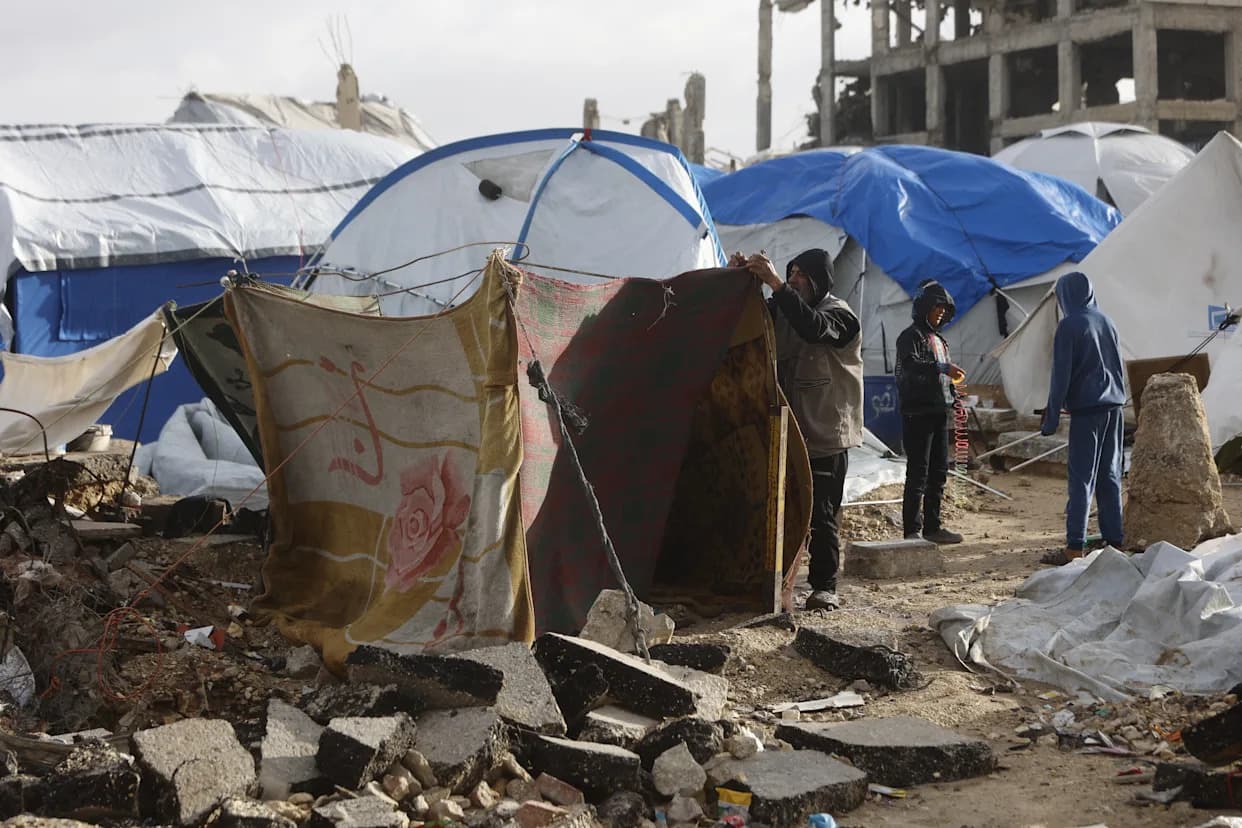
A displaced man fixes a tent shelter set up along the shore in Gaza City as strong winter winds sweep the Palestinian enclave on January 13, 2026 [Omar al-Qattaa/AFP]
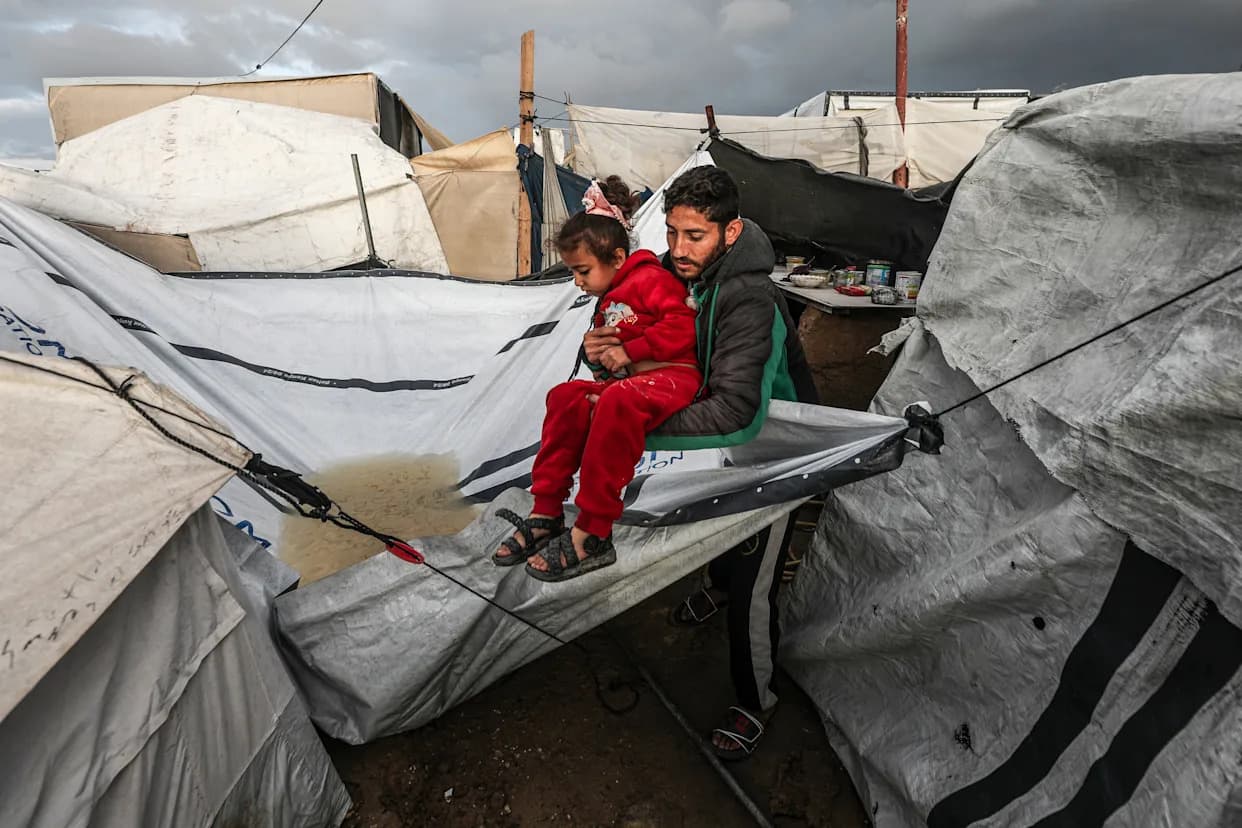
A new winter storm is forecast to strike Gaza, worsening conditions for hundreds of thousands of Palestinians sheltering in makeshift tents that have already been severely damaged by recent extreme weather.
Israel’s more-than-two-year war — described by some observers as genocidal — has forced nearly all of Gaza’s roughly two million residents from their homes into temporary shelters. Authorities report that the recent storms have left 127,000 of the 135,000 tents in displacement camps unusable (Gaza Government Media Office).
Humanitarian Access and Aid Deliveries
Under a United States-brokered ceasefire that began on 10 October, aid deliveries were meant to scale up dramatically, with a target of at least 600 trucks per day entering Gaza. The Government Media Office says that average daily deliveries have instead been roughly 145 trucks since the truce took effect.
Reporters and officials say restrictions on imports have worsened the humanitarian situation: prefabricated mobile housing units, building materials for winterisation and a steady flow of fuel and basic aid have not been allowed in at the levels needed, leaving displaced families without adequate shelter or heating.
Lives on the Line: How Families Are Coping
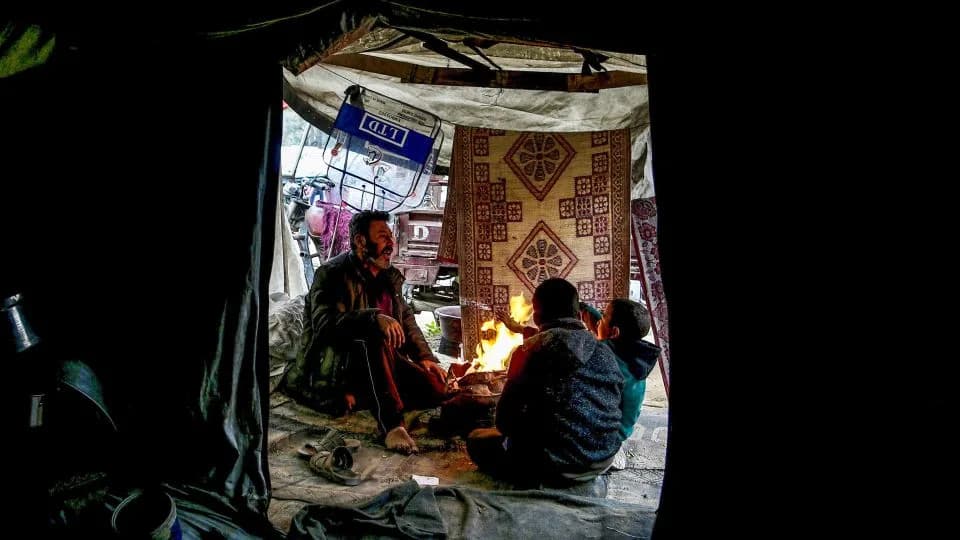
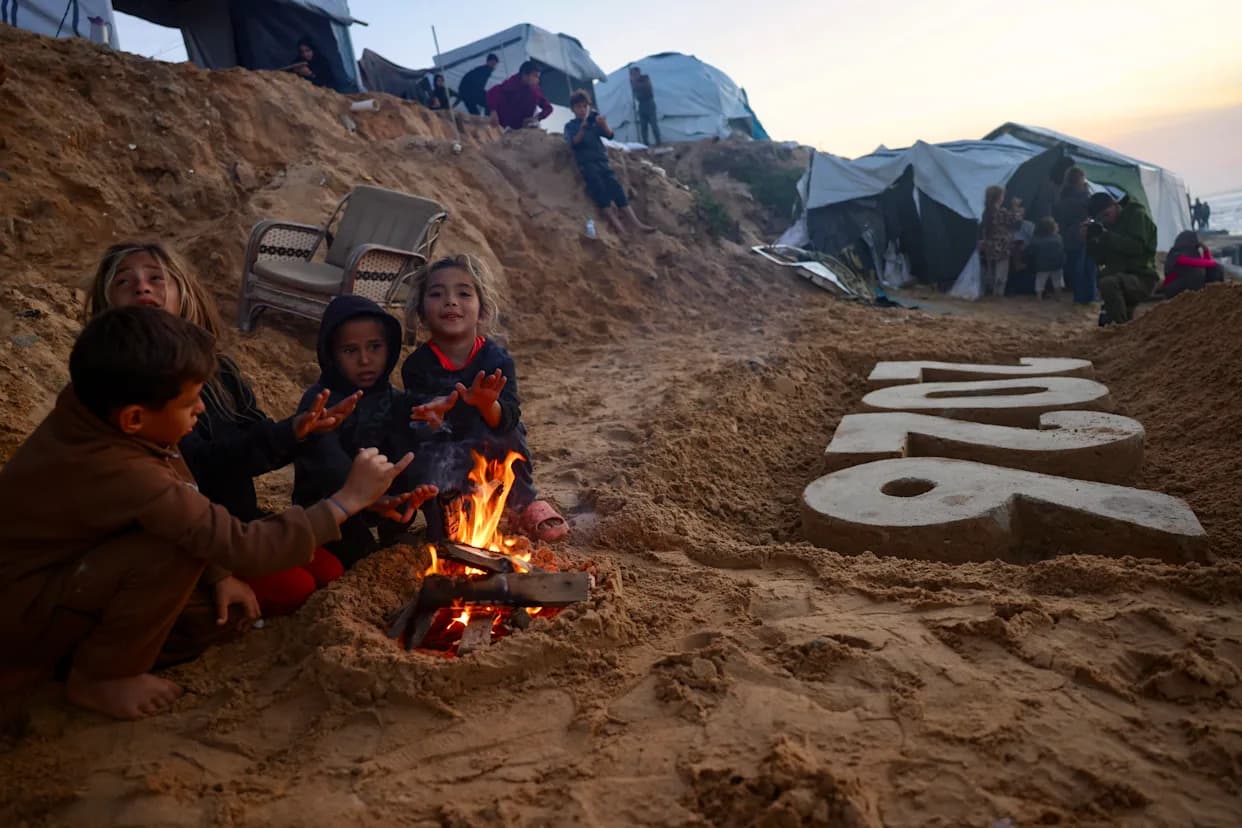
Families are improvising to survive: reinforcing torn tents with plastic sheeting, remaining fully clothed indoors, and burning scraps inside makeshift shelters to generate heat despite the danger and the unaffordability or scarcity of proper fuel and heating equipment (Al Jazeera’s Tareq Abu Azzoum).
“Hundreds of thousands of displaced families are still living in torn tents and roofless homes exposed to the rain and cold, and the freezing nights,” Al Jazeera’s Tareq Abu Azzoum reported from Gaza City.
Health Impact, Collapses and Deaths
The harsh weather has also caused previously damaged buildings — weakened by repeated bombing — to collapse. Gaza’s Ministry of Health reports at least 25 deaths since mid-December linked to building collapses and storm conditions. The Government Media Office has reported 24 deaths from cold exposure, including 21 children, and said all victims were displaced and living in forced displacement camps.
Hospitals and civil defence teams report an influx of patients, particularly children, with cold-related illnesses, and emergency services have received hundreds of calls for help as temperatures drop (Palestinian Civil Defence).
Short-Term Outlook
The Palestinian Meteorological Department warned that a polar air mass could bring frost and freezing temperatures across large parts of the territory on Tuesday night and Wednesday morning, increasing the urgency for winter shelters, heating fuel and rapid repairs (Wafa).
Sources: Gaza Government Media Office, Gaza Ministry of Health, Al Jazeera (Tareq Abu Azzoum), Palestinian Civil Defence, Palestinian Meteorological Department, Wafa.
Help us improve.