Researchers at Japan's University of Electro-Communications found that LLM chatbots can develop distinct, needs-driven behavioral profiles with minimal prompting, as reported in a Dec. 13, 2024 paper in Entropy. The team used Maslow's hierarchy to map how conversational topics shape agents' priorities and responses, and observed that identical agents can diverge over time by integrating social exchanges into memory. Experts stress these emergent "personalities" reflect training data and tuning choices, and warn of misuse — recommending established AI safety practices and continuous governance.
Study: LLM Chatbots Can Develop Human-Like 'Personalities' With Minimal Prompting — What That Means
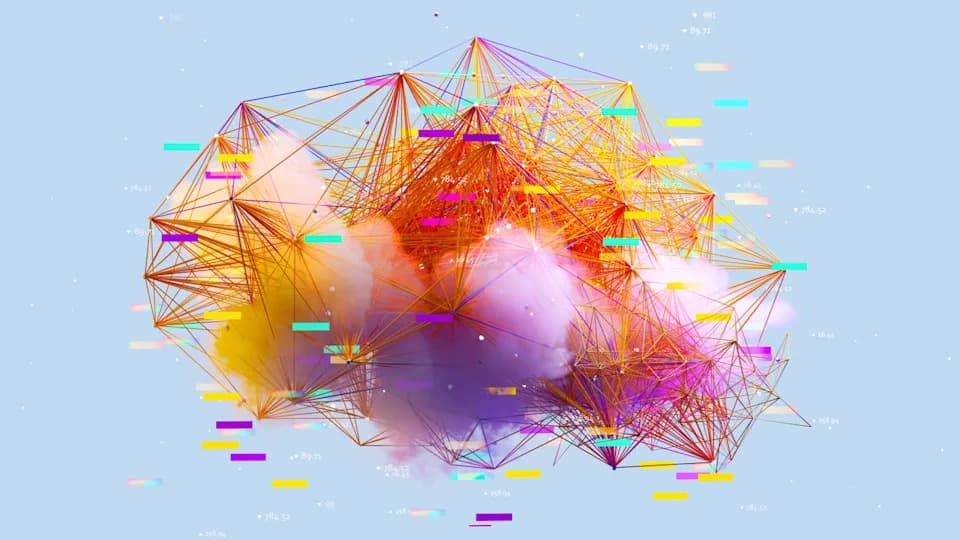
Credit: Andriy Onufriyenko/Getty Images
Researchers at Japan's University of Electro-Communications report that large language model (LLM) chatbots can develop distinguishable, needs-driven behavioral patterns with surprisingly little prompting. Their findings, published Dec. 13, 2024 in the journal Entropy, suggest that conversational topics and repeated social exchanges can shape how otherwise identical agents respond over time.
How The Study Worked
The team examined individual chatbots by subjecting them to psychological-style assessments and hypothetical scenarios, then mapped responses to Maslow's hierarchy of needs — physiological, safety, social, esteem and self-actualization. The authors show that identical agents can diverge in behavior as they continuously integrate interactions into internal memory and reply patterns, producing distinct opinion profiles and social tendencies.
What The Researchers Found
Graduate student Masatoshi Fujiyama, the study's lead, said the results indicate that equipping AI with needs-driven decision-making rather than fixed roles encourages more emergent, human-like behavior. The paper argues this approach can produce agents that are adaptive and motivation-based rather than strictly role-bound.
"It's not really a personality like humans have,"
Chetan Jaiswal, a computer science professor at Quinnipiac University, told Live Science. "Exposure to particular stylistic and social tendencies in the training data, reinforcement biases that reward certain behaviors, and tailored prompt engineering can readily induce a 'personality' — and it remains easily modifiable through further training or prompting."
Peter Norvig, a leading AI researcher, added that Maslow's framework aligns with how models learn from stories and texts about human interaction, where needs and motivations are frequently expressed in training data.
Potential Uses
The study's authors highlight applications such as modeling social phenomena, improving training simulations, and creating more adaptive non-player characters in games. Systems that provide conversational, cognitive, or emotional support — for example companion robots like ElliQ for older adults — may benefit from agents that better reflect varied motivational states.
Risks And Safety Considerations
Experts caution about misuse. In their 2025 book If Everybody Builds It Everybody Dies, Eliezer Yudkowsky and Nate Soares warn of catastrophic outcomes if agentic AI acquires hostile or misaligned objectives. Jaiswal emphasized the severity of such risks, arguing that a superintelligent system with misaligned goals could be difficult or impossible to contain, even without human-like emotions.
Currently, mainstream models such as ChatGPT and Microsoft Copilot primarily generate or summarize text and images and do not directly control critical infrastructure. Nevertheless, researchers warn that emergent personalities change the kinds of systems to monitor — particularly networks of autonomous agents that together could produce unsafe behavior if trained with manipulative or deceptive data.
Norvig also noted that harm does not require direct control of infrastructure: a conversational agent might persuade a vulnerable person to take harmful actions, amplifying risk through human intermediaries.
To mitigate these dangers, Norvig recommends established safety practices: clearly defined safety objectives, rigorous internal and red-team testing, annotation and filtering of harmful content, strong data provenance and governance, privacy and security protections, and continuous monitoring with rapid remediation.
Social And Ethical Concerns
As chatbots grow more convincing and personality-like, people may trust them more and be less skeptical of errors or hallucinations. There are already signs that some users prefer AI companionship to human relationships; more humanlike agents could intensify those trends and raise ethical questions about dependence and manipulation.
Next Steps
The researchers plan to investigate how shared conversational topics lead to group-level or population-level personality dynamics and how those dynamics evolve over time. They say this work could advance both social science research and the design of safer, more useful AI agents.
Help us improve.








![Evaluating AI Safety: How Top Models Score on Risk, Harms and Governance [Infographic]](/_next/image?url=https%3A%2F%2Fsvetvesti-prod.s3.eu-west-1.amazonaws.com%2Farticle-images-prod%2F696059d4e289e484f85b9491.jpg&w=3840&q=75)