The US urged full respect for the ceasefire in northern Syria after envoy Tom Barrack met SDF commander Mazloum Abdi and politician Ilham Ahmed, calling for confidence-building measures. Washington reiterated support for a January 18 integration deal between Damascus and the SDF, amid disputes over its implementation. Government forces have reportedly seized parts of Aleppo, Raqqa and Deir Ez Zor, including oilfields and prisons; about 150 ISIL detainees were transferred to Iraq. Both sides accuse each other of breaching the truce, raising concerns of renewed violence.
US Envoy Presses For Ceasefire To Hold After Talks With SDF Leaders In Northern Syria
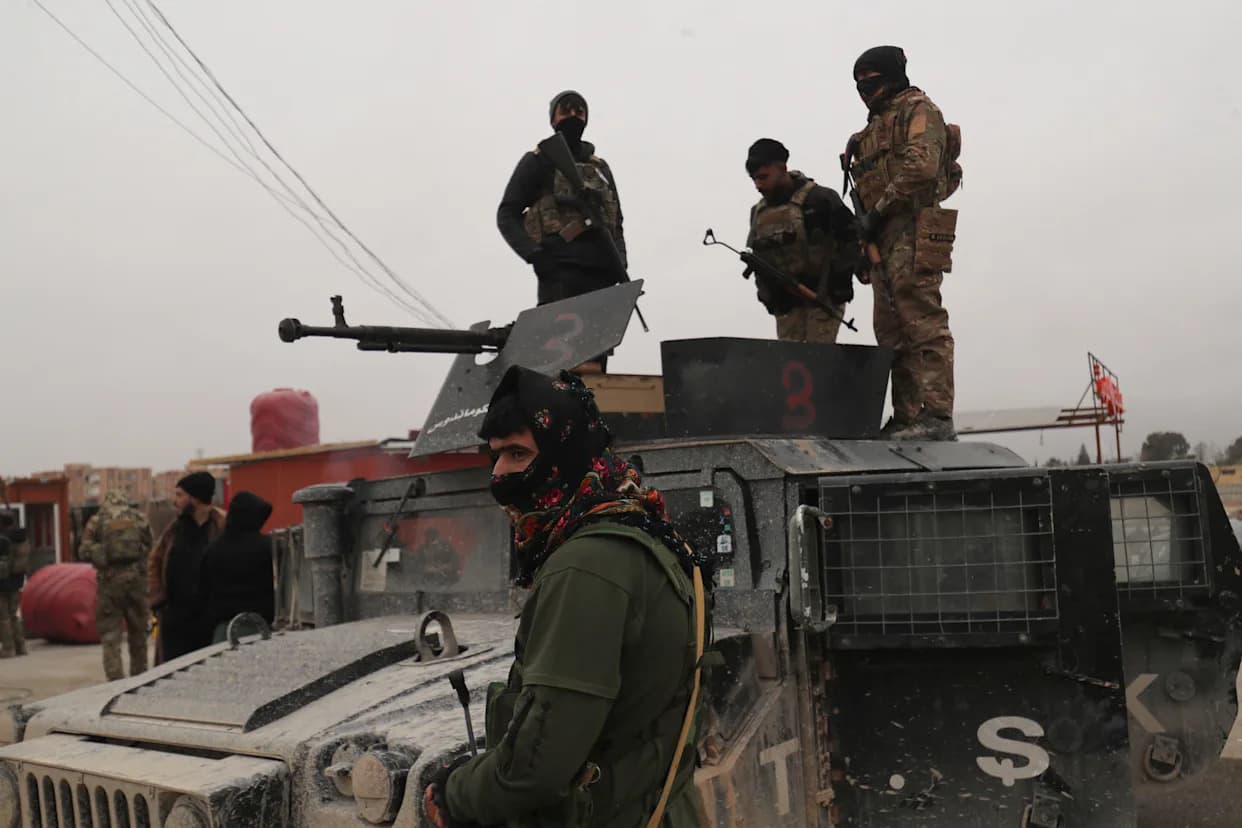
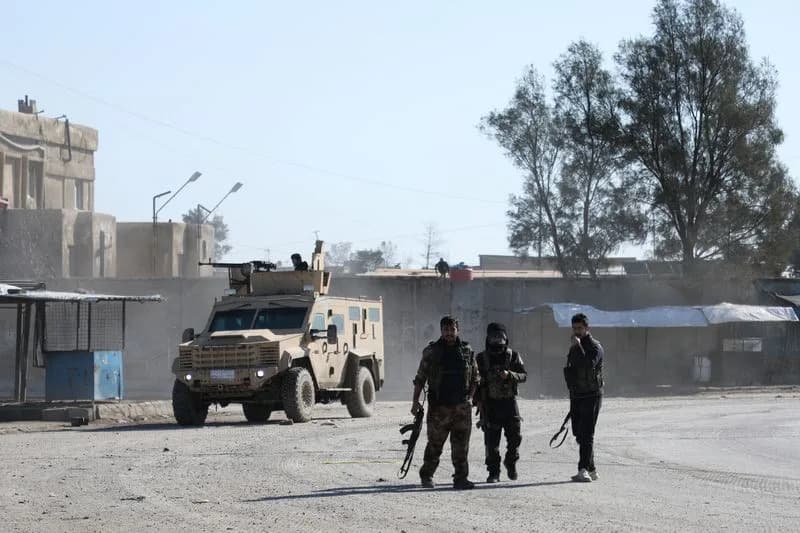
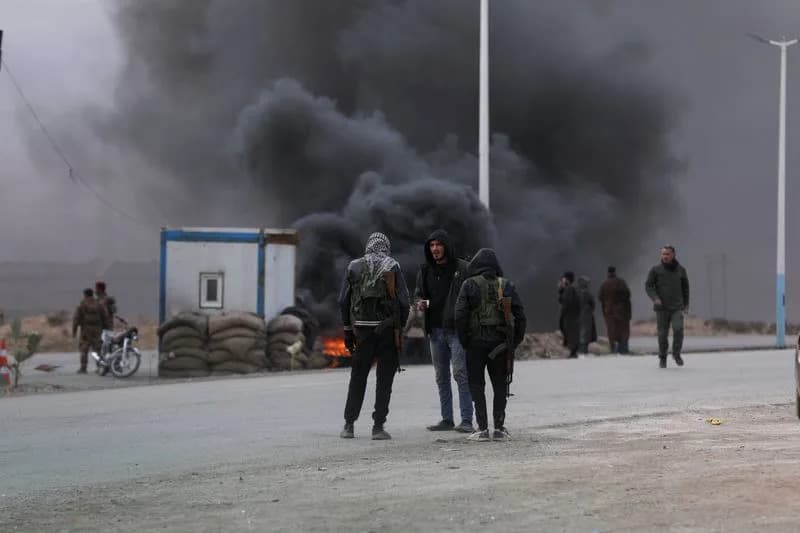
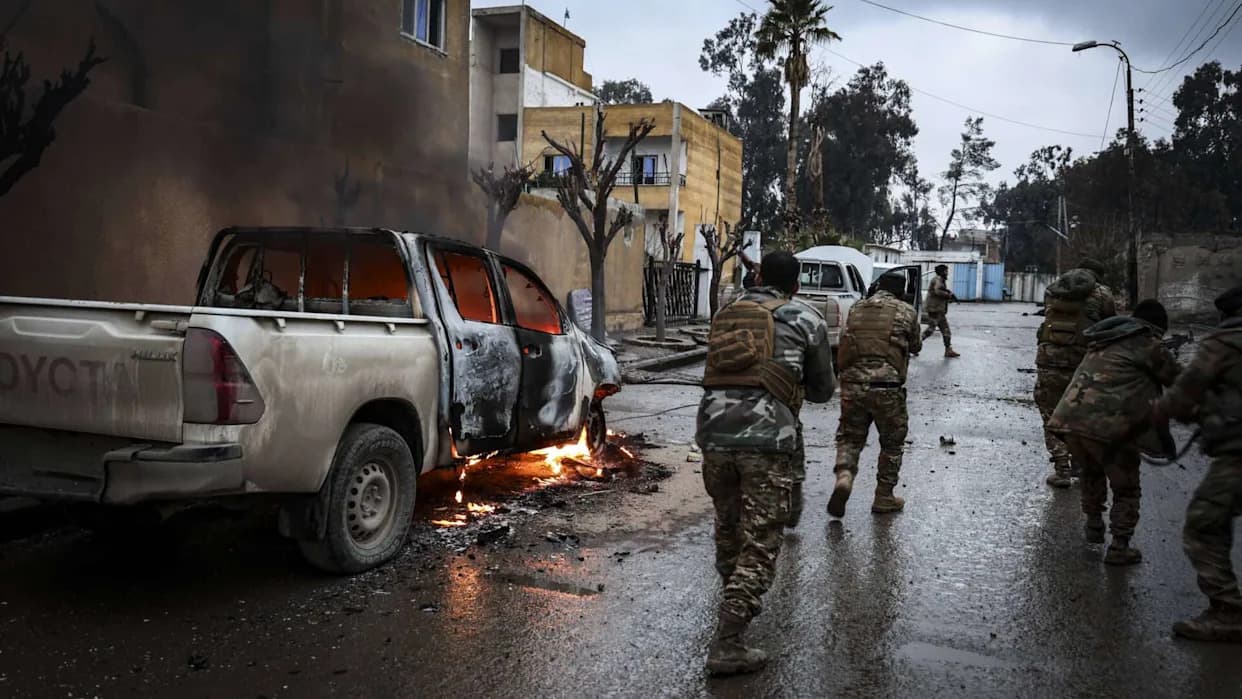
Syrian Democratic Forces (SDF) fighters stand near a prison where ISIL detainees are held in Hasakeh, Syria, January 22 [Delil Souleiman/AFP]
The United States has reiterated its support for the ceasefire in northern Syria and urged both the Syrian government and the Kurdish-led Syrian Democratic Forces (SDF) to adopt confidence-building measures following recent clashes.
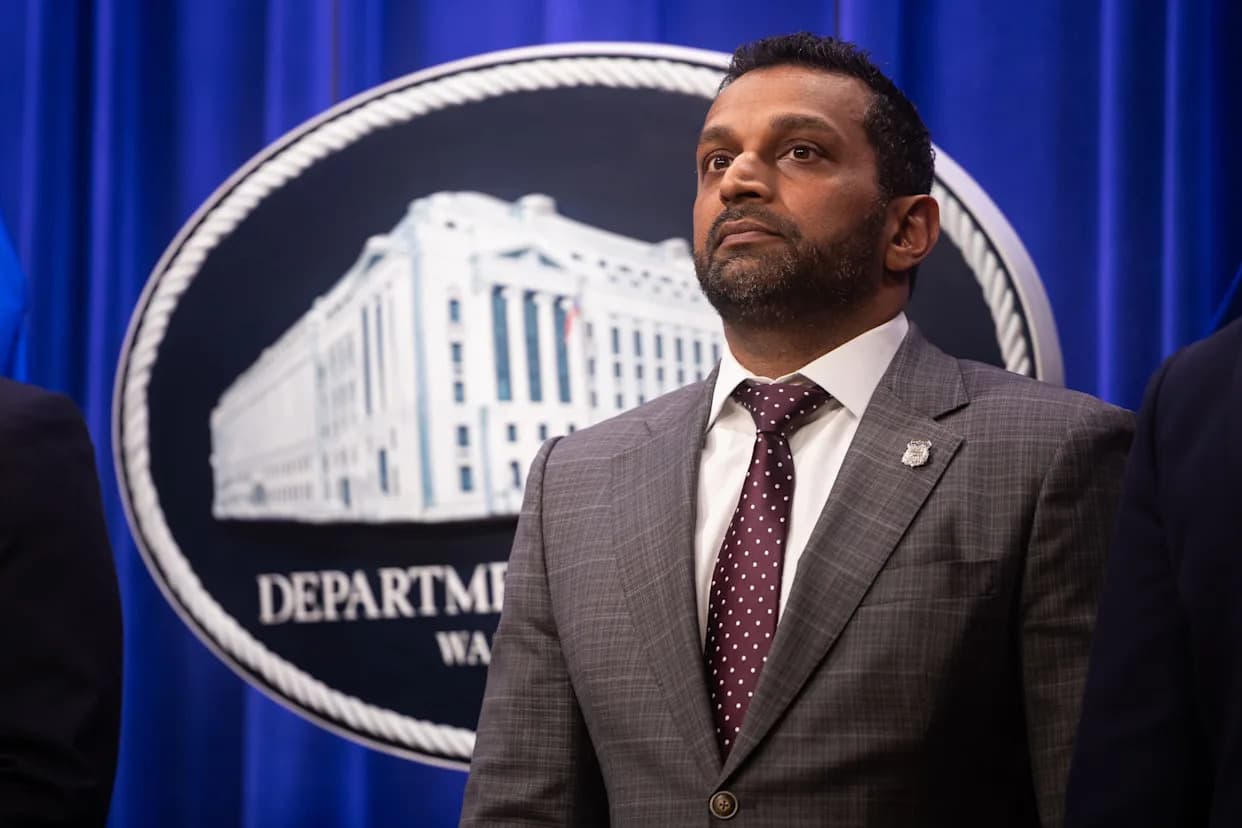
US Special Envoy to Syria Tom Barrack made the appeal on Thursday after meeting with Mazloum Abdi, commander-in-chief of the SDF, and Ilham Ahmed, a leading Syrian Kurdish politician. Barrack said on X (formerly Twitter) that "the essential first step is the full upholding of the current ceasefire, as we collectively identify and implement confidence-building measures on all sides to foster trust and lasting stability."
Support For Integration Deal
Barrack reaffirmed US backing for an agreement signed on January 18 between Damascus and the SDF to integrate Kurdish-led forces into state institutions — a central element of President Ahmed al-Sharaa’s stated effort to restore Syrian unity. Disputes over how that integration should proceed have been cited as a key trigger for the recent rounds of fighting.
Territorial Gains And Security Concerns
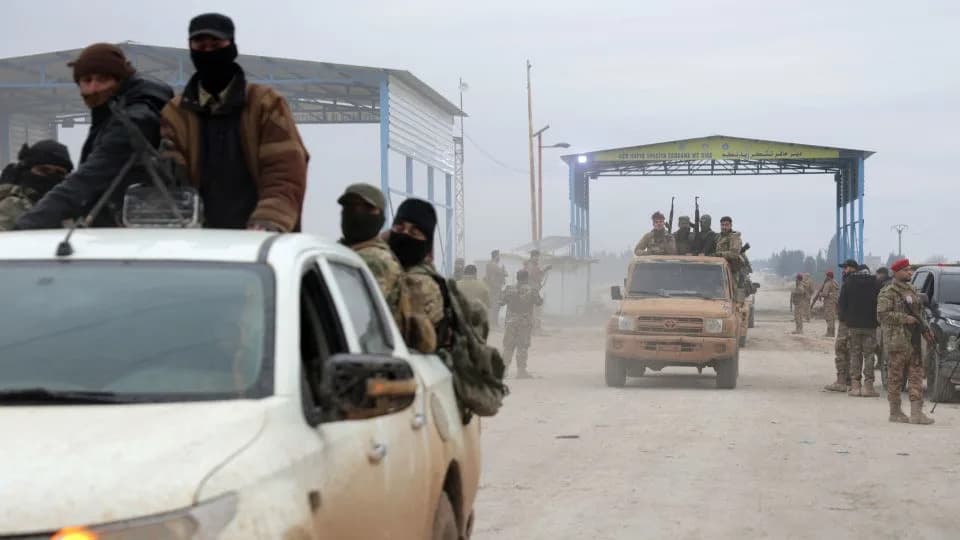
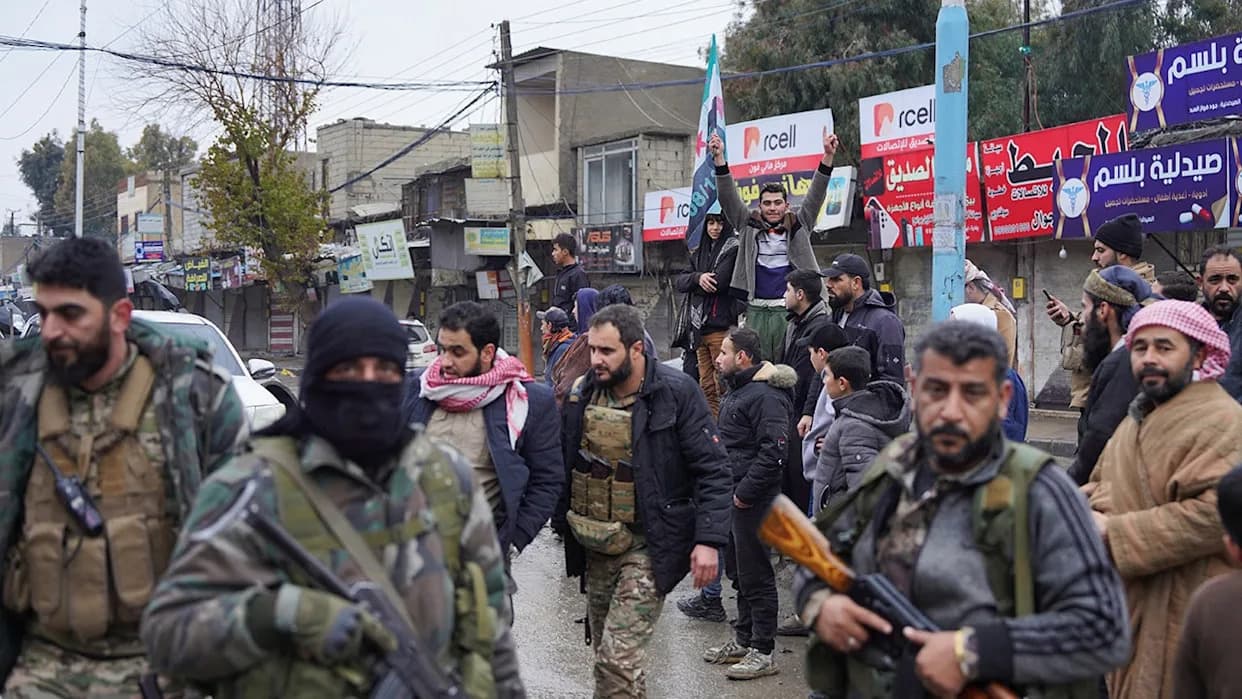
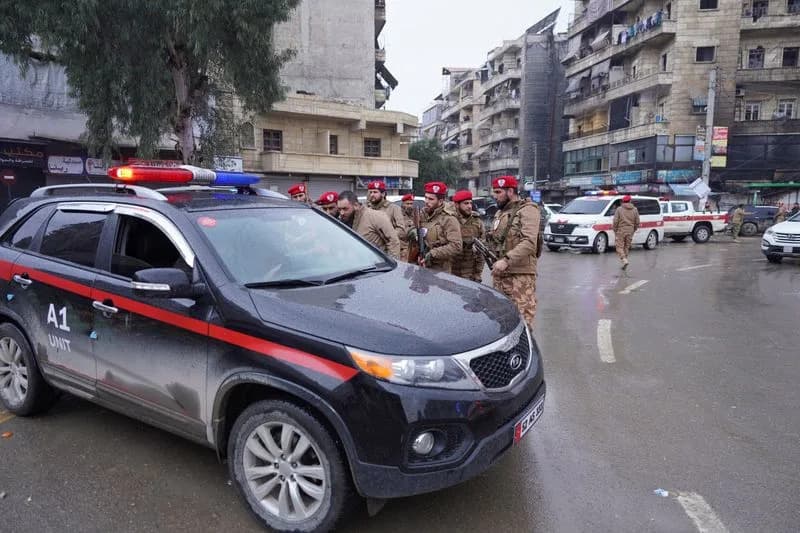
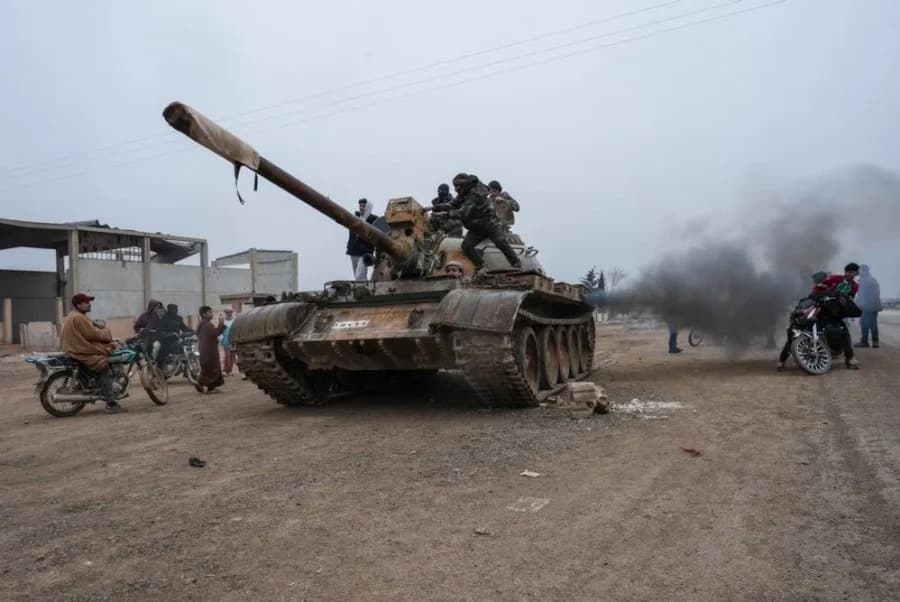
Over several weeks, government forces launched offensives against multiple SDF-held areas, reportedly taking control of parts of Aleppo, Raqqa and Deir Ez Zor. Territories captured by Damascus include major oilfields, agricultural zones and prisons that had been holding ISIL (ISIS) detainees. Some 150 detainees have already been transferred to Iraq, which says it intends to pursue legal proceedings against them.
Ceasefire Terms And Tensions
Under a ceasefire announced on Tuesday, the government gave the SDF four days to present a plan for merging its remaining enclaves and pledged not to send troops into two SDF-held cities — Hasakah and Qamishli — if a deal was reached. Since the truce was declared, both the SDF and the government have accused each other of violating its terms, raising concerns about a renewed escalation.
Shifting Alliances
The SDF, long considered Washington’s principal partner on the ground against ISIL, appears to have seen a decline in leverage amid shifting US ties with Damascus. Barrack was quoted as saying the SDF’s role as the “primary anti-ISIS force on the ground has largely expired” as Syrian government presence increases. Commentators, including Al Jazeera’s Bernard Smith, have argued that the group’s strategic importance to the US is diminishing as diplomatic realignments evolve.
What’s Next: Diplomats and local leaders say confidence-building measures, transparent implementation of the integration agreement and international monitoring will be critical to preventing further clashes and stabilizing the region.
Help us improve.