Ras Ein al-Auja, a Bedouin village in the Jericho governorate of the occupied West Bank, has seen roughly 450 of its 650 residents displaced by repeated settler attacks, thefts and blocked access to water and electricity. The growth of illegal outposts — including armed 'shepherding' outposts — and weak enforcement have enabled land seizures and daily intimidation. Humanitarian agencies report a surge in settler attacks and mass displacements across the West Bank since 2023. Despite brief moments of solidarity and music, villagers describe deep exhaustion and the loss of centuries-old Bedouin life.
‘If You Sleep, Settlers Will Burn Your House’: Ras Ein al-Auja’s Forced Flight
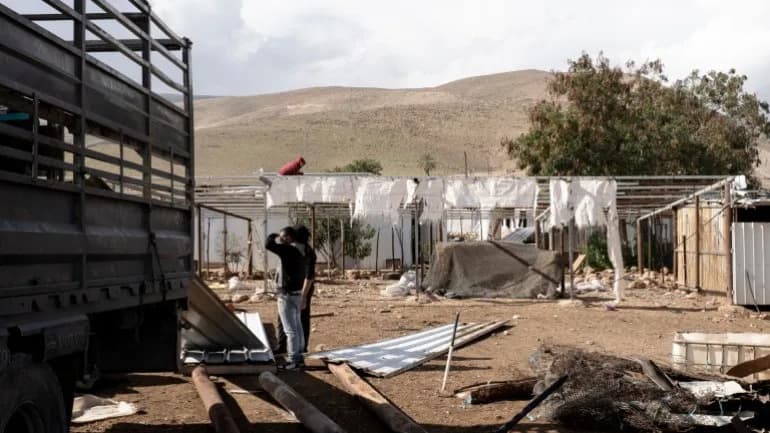
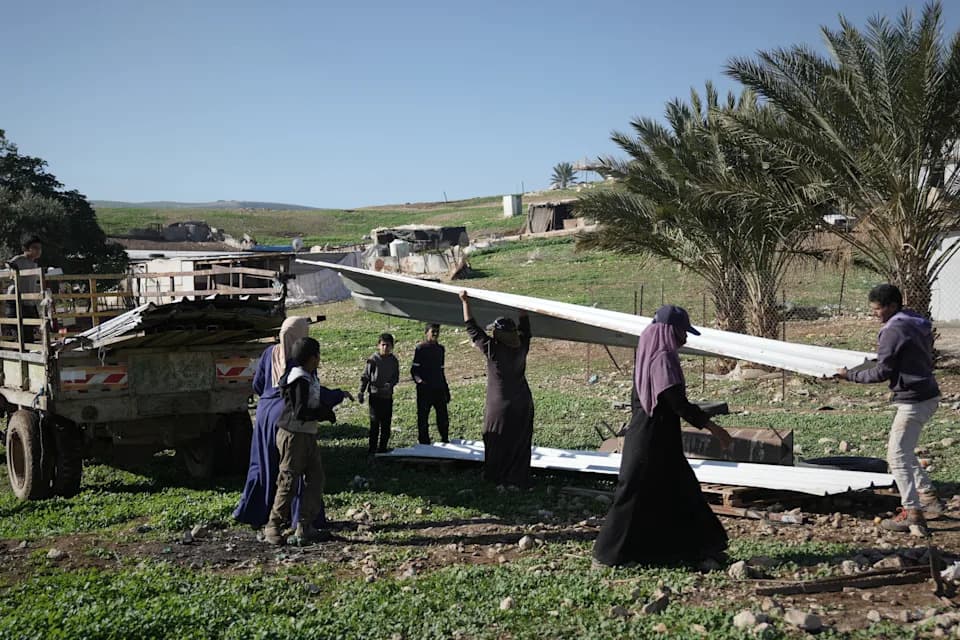
Palestinians dismantle their homes as settler violence forces them out of Ras Ein al-Auja [Courtesy of Looking the Occupation in the Eye]
Ras Ein al-Auja, occupied West Bank — After a rare moment of quiet, Naif Ghawanmeh, 45, sank onto a low seat beside a small fire. The night air was cold and, for a brief pause, the settler celebrations had stopped. But the village he calls home has been largely erased.
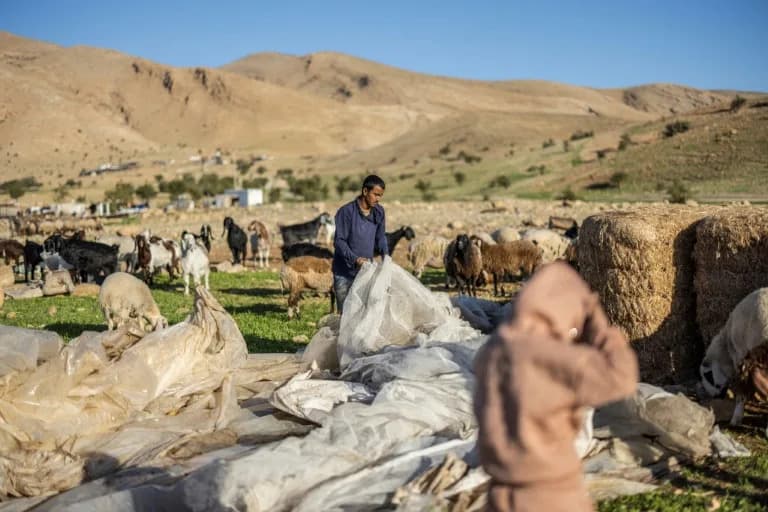
Once one of the last Palestinian herding communities in this part of the Jordan Valley, Ras Ein al-Auja has lost most of its livestock — through theft, poisoning or sales made under pressure — and has been effectively cut off from its spring for the past year. Over the past two weeks many homes have been dismantled, and families leaving the village destroyed furniture rather than leave it for others to take.
Since January, roughly 450 of the village's 650 residents have fled, many of them for the only homes they have ever known. Only 14 households from the Ghawanmeh family and a small number of others remain because they say they have nowhere else to go; most other families are preparing to leave.
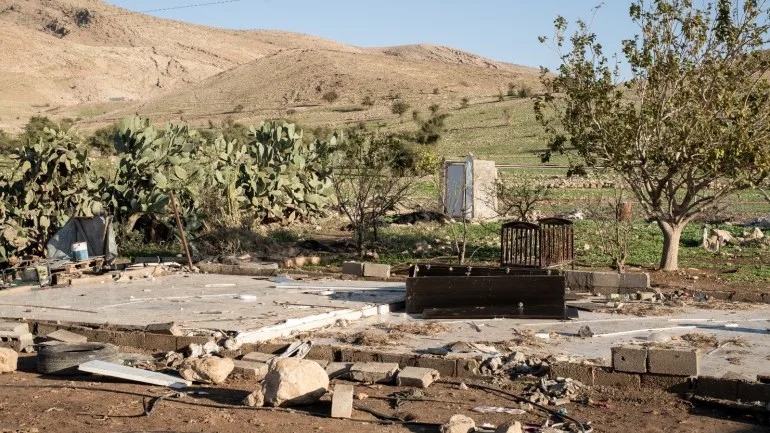
A Palestinian home is dismantled except for the floor in Ras Ein al-Auja, nearly all of whose inhabitants have been forced out by violent Israeli settlers [Courtesy of Looking the Occupation in the Eye]
How Outposts and 'Shepherding' Took Root
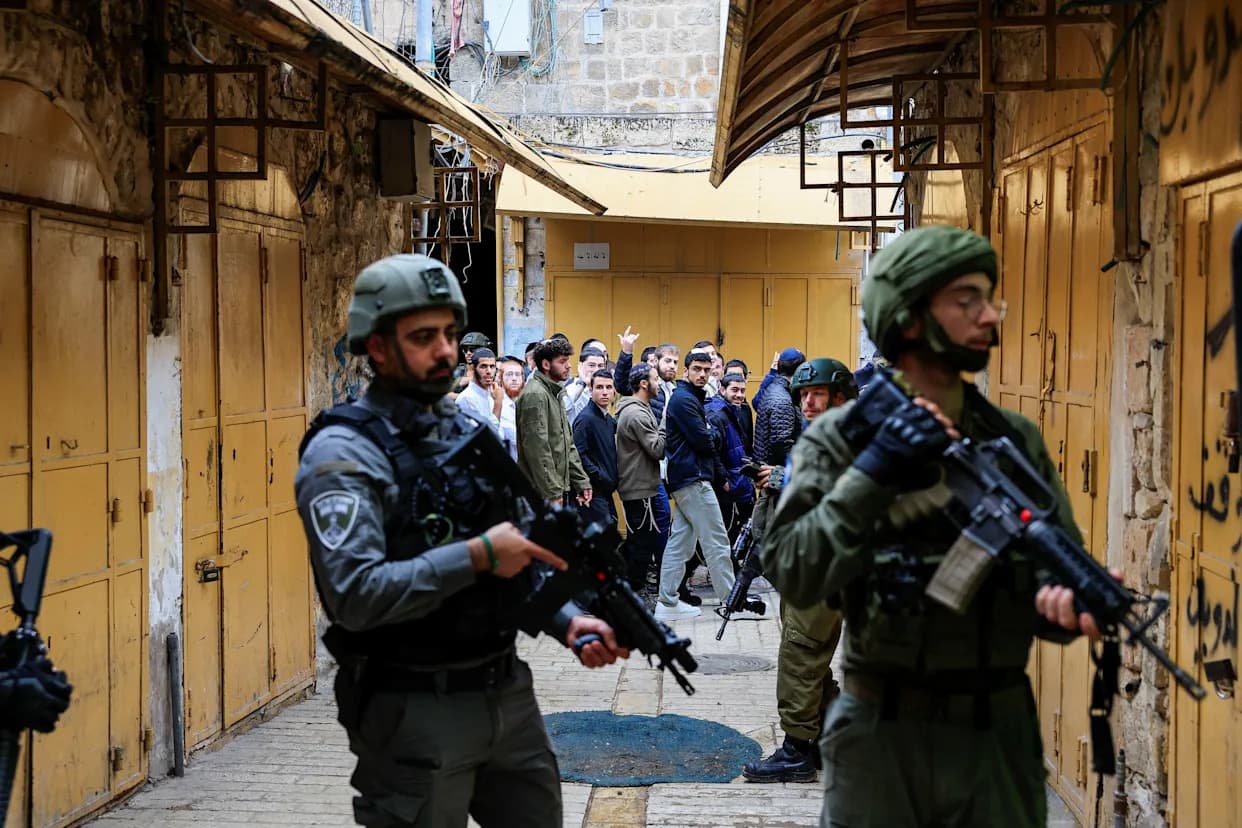
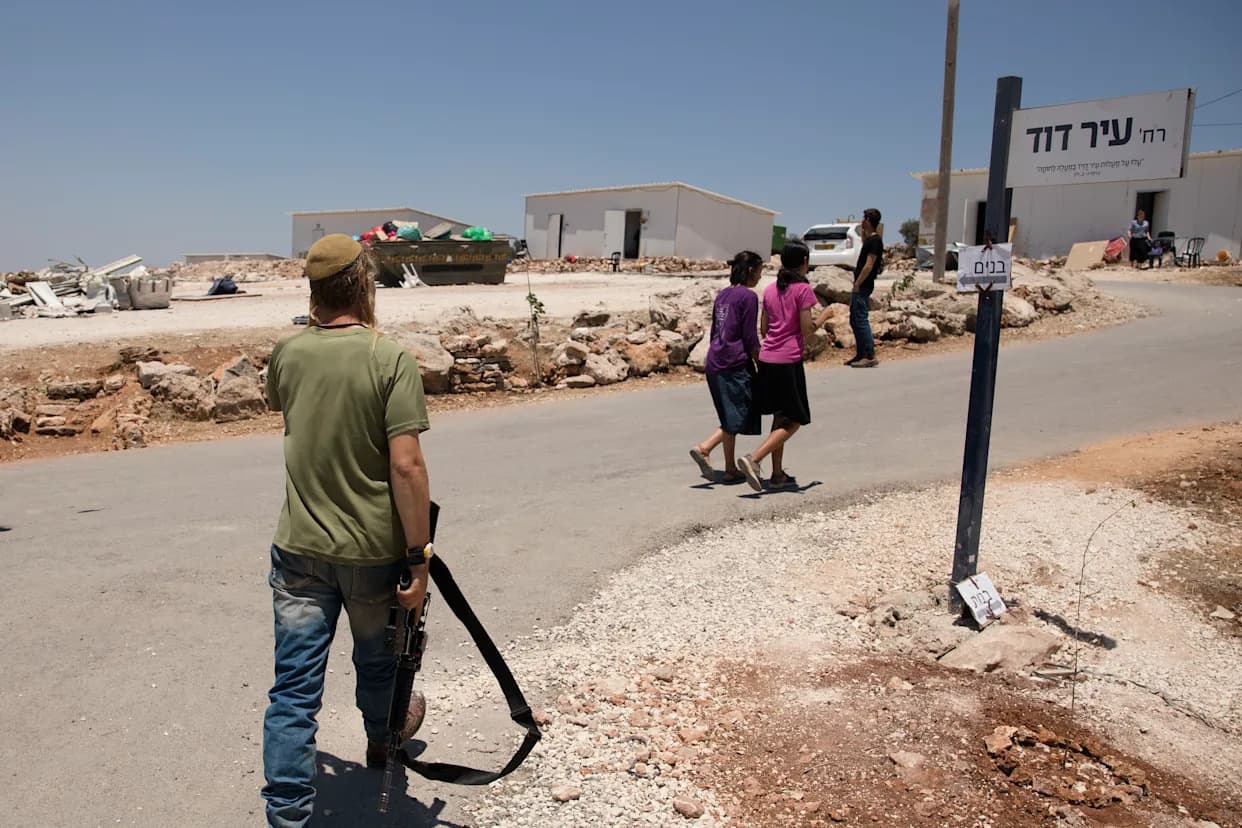
Settler outposts have proliferated across the West Bank in recent years. Although many are built without formal government approval, they are often tolerated and protected by Israeli security forces. In December, Israel retroactively recognised 19 previously unauthorised outposts as official settlements. Overall, the number of settlements and outposts in the West Bank and occupied East Jerusalem has risen from 141 to 210 since 2022.
A more recent and targeted phenomenon is the emergence of so-called 'shepherding outposts'. These mimic Bedouin pastoral life but are occupied by settlers and their flocks. Typically operated by an armed settler and supported by armed teenagers recruited through programmes targeting 'at-risk' youth, these outposts use grazing to encroach on Palestinian shepherding areas. By April 2024 the Israeli NGO Kerem Navot estimated such tactics had enabled settlers to take over roughly 14% of the West Bank; that area has grown since then by at least tens of thousands of dunums, Kerem Navot’s founder says.
Daily Intimidation, Resource Denial and Violence
In Ras Ein al-Auja, settlers have repeatedly stolen and poisoned livestock, built fences, grazed flocks immediately outside Palestinian homes and blocked access to springs. The community's herd has fallen from about 24,000 animals to fewer than 3,000. Villagers say solar panels they installed have been destroyed and that Israeli planning restrictions in Area C effectively prevent authorised electricity connections or infrastructure. Water from the Ras Ein spring has been declared off-limits by neighbouring settlers for roughly a year.
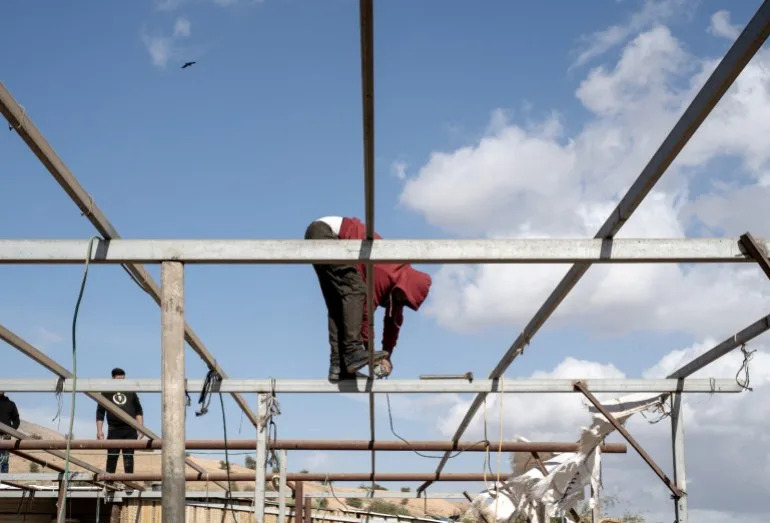
Palestinians take their houses apart before fleeing the village of Ras Ein al-Auja in the eastern West Bank [Courtesy of Looking the Occupation in the Eye]
'They prevented us from getting water,' Ghawanmeh says. 'They prevented us from bringing the sheep to the water and getting water from the spring.'
People in Ras Ein al-Auja describe two years of constant psychological pressure, with men taking irregular shifts at night to keep watch. 'If you sleep, the settlers will burn your house,' Ghawanmeh says.
Local activists and international volunteers have tried to provide protection: at one point nine solidarity activists kept a round-the-clock presence to deter attacks. Still, mounting threats and a new outpost erected inside the village this year pushed most families to leave.
Scale of Violence and Displacement
Humanitarian agencies and rights groups document a dramatic rise in settler violence across the West Bank. The United Nations Office for the Coordination of Humanitarian Affairs recorded more than 1,800 settler attacks in 2025 — roughly five per day — causing casualties or property damage in about 280 communities. In 2025, 240 Palestinians in the West Bank, including 55 children, were killed by Israeli forces or settlers, according to UN figures. Since October 2023, rights groups report that 44 West Bank communities — 2,701 people, nearly half under 18 — have been forced out entirely, with 13 additional communities partially displaced.
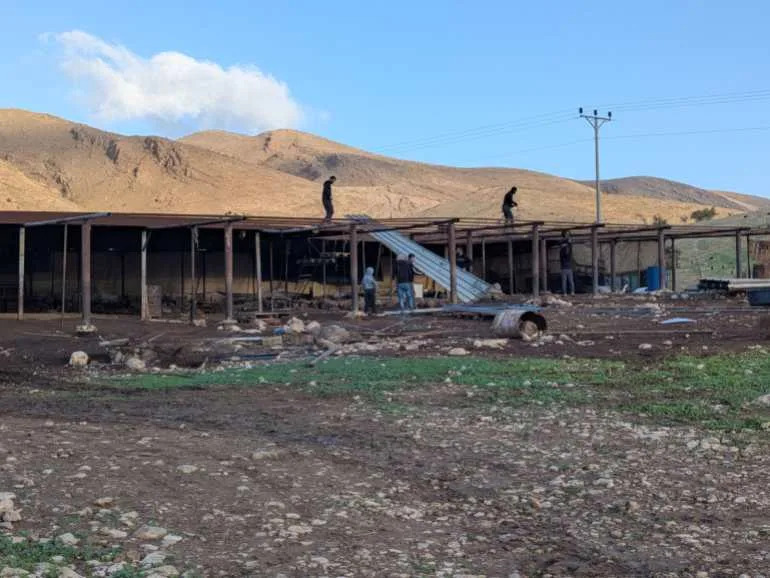
Residents of Ras Ein al-Auja prepare to leave as Israeli settler attacks have intensified on their community, property and livestock this year [Courtesy of Looking the Occupation in the Eye]
In January–February 2025, Israeli military operations also forcibly displaced around 40,000 people from refugee camps in Tulkarm and Jenin, according to B'Tselem. These waves of violence and resource denial have accelerated the erasure of rural Palestinian communities and fractured long-established ways of life.
Lives and Traditions Under Threat
As most families disperse to towns and cities, many relocating to areas administered by the Palestinian Authority, Ras Ein al-Auja's centuries-old Bedouin traditions are at risk of being lost. 'There’s a saying among the Bedouins: "Upbringing outweighs origins,"' Ghawanmeh says. 'You were raised here, you eat from the land, you drink from the land, you sleep on the land. You are from it, and it is from you.'
In a rare moment of respite, musicians visited the village to play folk songs. Children relaxed briefly, clapping and singing along. But the relief was temporary: elders and parents remain exhausted and fearful as they prepare to leave.
Al Jazeera requested comment from the Israeli military about the allegations in this report and what steps are being taken to prevent settler attacks; no response was received.
What remains clear: Ras Ein al-Auja's rapid displacement is part of a wider pattern of settler expansion, resource restrictions and violence across the West Bank that is reshaping rural Palestinian life.
Help us improve.