
Israeli forces have used bulldozers to demolish homes in northern West Bank refugee camps as part of Operation "Iron Wall," now in its 11th month. Human Rights Watch estimates at least 850 structures in Nur Shams, Jenin and Tulkarem have been demolished or heavily damaged, prompting the largest displacement in the West Bank since 1967. Tens of thousands are sheltering with relatives or in public buildings while Israel says demolition targets militant infrastructure and reports recent discoveries of explosives.
Israeli Bulldozers Destroy Homes in West Bank Camps, Triggering Largest Displacement Since 1967

People watch an Israeli army bulldozer demolishing homes in the Palestinian urban refugee camp of Nur Shams, near the West Bank city of Tulkarem, Wednesday, Dec. 31, 2025. (AP Photo/Majdi Mohammed)(ASSOCIATED PRESS)
NUR SHAMS REFUGEE CAMP, West Bank (AP) — Residents of the northern West Bank watched on Wednesday as Israeli military bulldozers tore down homes in Nur Shams, part of a campaign that has been under way for nearly a year across several refugee camps.
The operation, named Operation "Iron Wall," began in early 2025. Human Rights Watch, after analysing satellite imagery, says Israeli forces have demolished or heavily damaged at least 850 structures in the refugee camps of Nur Shams, Jenin and Tulkarem during roughly 11 months of operations.
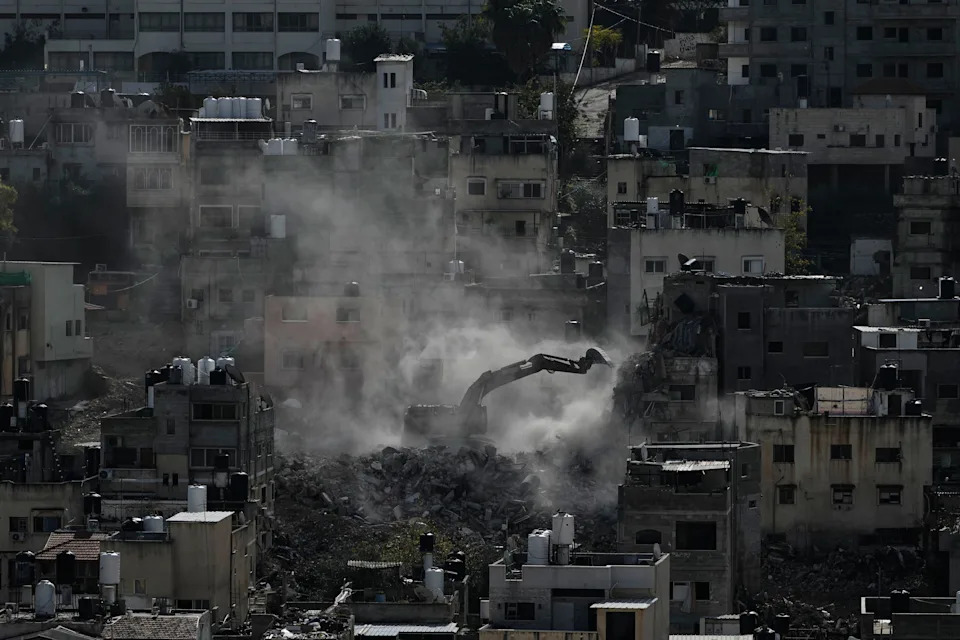
An Israeli army bulldozer demolishes homes in the Palestinian urban refugee camp of Nur Shams, near the West Bank city of Tulkarem, Wednesday, Dec. 31, 2025. (AP Photo/Majdi Mohammed)(ASSOCIATED PRESS)
Troop activity has forced large segments of camp populations to flee, producing what rights groups call the largest displacement in the West Bank since Israel captured the territory in 1967. Tens of thousands of displaced people are sheltering with relatives, crowded into rental apartments or staying in public buildings.
Military Rationale and Local Impact
Israel says the offensive aims to dismantle armed groups and that demolitions are necessary to remove militant infrastructure or to clear routes for troops operating in densely built camps. The military said soldiers allowed residents to retrieve belongings before demolitions and that structures were taken down only where there was a "clear and necessary operational need" after assessing alternatives.
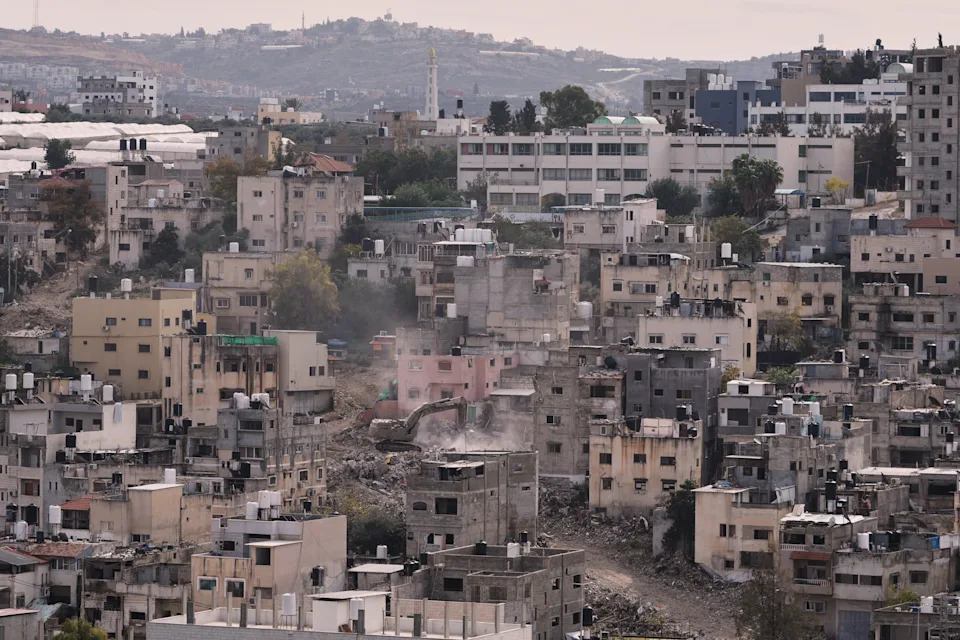
An Israeli army bulldozer demolishes homes in the Palestinian urban refugee camp of Nur Shams, near the West Bank city of Tulkarem, Wednesday, Dec. 31, 2025. (AP Photo/Majdi Mohammed)(ASSOCIATED PRESS)
Officials also said some camps will remain under military presence for up to a year and that troops recently found explosives in the area. Rights groups and residents counter that the raids are destroying civilian housing and uprooting entire communities.
Personal Stories
Motaz Mohor watched bulldozers approach his home as it was marked for demolition. "Our home is dear to us — the memories, the family, the neighbors," he said. "The first time our grandparents were displaced, and this is the second time." His grandparents moved to Nur Shams after being displaced from Jaffa and Haifa during the 1948 war that Palestinians call the Nakba, or "catastrophe."
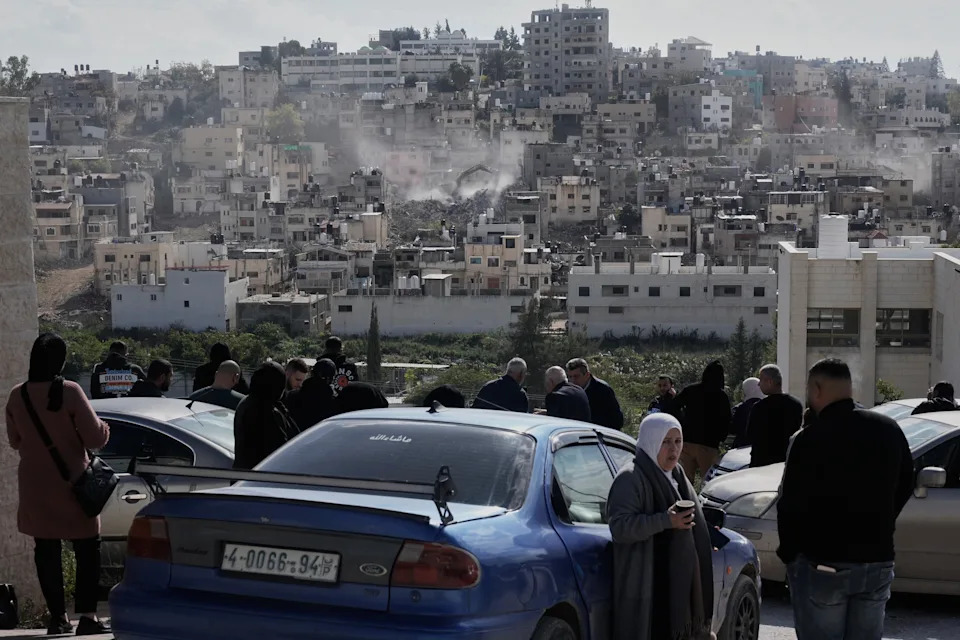
People watch an Israeli army bulldozer demolishing homes in the Palestinian urban refugee camp of Nur Shams, near the West Bank city of Tulkarem, Wednesday, Dec. 31, 2025. (AP Photo/Majdi Mohammed)(ASSOCIATED PRESS)
"I am sheltering with roughly 25 relatives in a 100-square-meter apartment after being displaced from the camp," Mohor said.
Ahmed al Sayyes, 60, said he was surprised to wake and see bulldozers already at work. "It's very difficult and painful," he said, adding that the home where he was sheltering is for sale and he will soon have to leave. "It's a tragedy after tragedy. Only God knows where we will end up."
Wider Context
Analysts warn that prolonged military presence and repeated demolitions risk deepening humanitarian needs and entrenching displacement. Humanitarian organizations have called for access to affected populations and for measures to prevent further civilian harm while governments and international bodies debate responses.


