MIT retained the No. 1 spot in Times Higher Education’s 2026 World University Rankings for Business and Economics, followed by Stanford and Tsinghua. THE assesses whole institutions across Teaching, Research Environment, Research Quality, Industry and International Outlook, covering 1,067 universities in 91 countries. MIT’s lead reflects especially strong Research Quality (90.4) and Teaching (94.3) scores, while Asian schools strengthened their presence in the Top 10. Critics note THE’s heavy research weighting and limited data transparency, urging readers to pair THE’s results with program-level rankings and student-focused measures.
MIT Tops THE 2026 Business & Economics Rankings — Asian Schools Surge Into the Top 10

Sloan Fellows: An Elite Mid-Career Degree At Three World Class B-Schools
The Times Higher Education (THE) 2026 World University Rankings for Business and Economics takes a university-wide view of business education—and this year the Massachusetts Institute of Technology (MIT) retained the No. 1 spot. THE evaluates whole institutions across teaching, research, industry engagement and international outlook, rather than ranking single programs in isolation.
Top Finishers and Regional Shifts
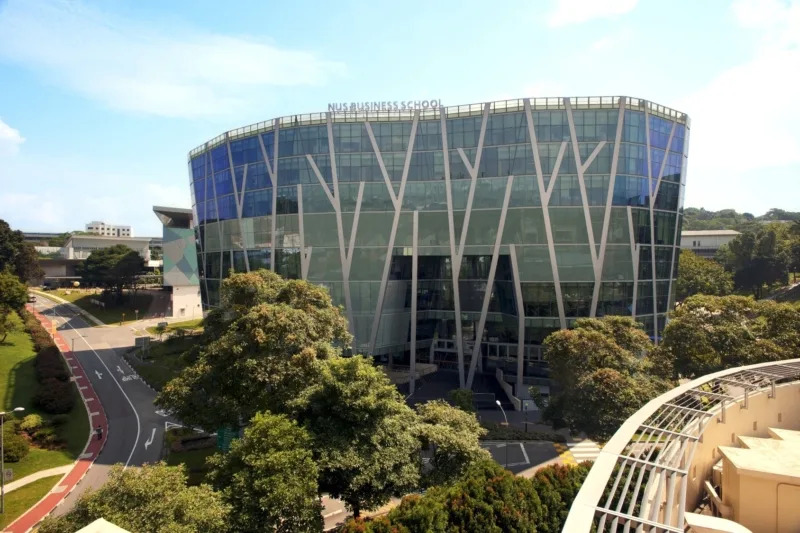
MIT leads the list, followed by Stanford University and Tsinghua University. Completing the Top 5 are the University of Oxford and the University of California, Berkeley. Harvard (8th), the University of Chicago (9th) and the University of Pennsylvania (10th) also made the Top 10. A notable development in 2026 is stronger Asian representation: Tsinghua, Peking University and the National University of Singapore (NUS) all placed inside THE’s Top 10 for Business and Economics.

What THE Measures
THE’s subject ranking merges three linked fields—Business and Management, Accounting and Finance, and Economics and Econometrics—covering 1,067 universities across 91 countries. The ranking uses five core pillars of assessment:

- Teaching: Reputation, student-to-staff ratio, doctoral staffing and institutional income.
- Research Environment: Research reputation, income and productivity.
- Research Quality: Citation impact and research influence.
- Industry: Income from industry partnerships and patents.
- International Outlook: International students, staff and co-authored publications.
In the Business and Economics ranking, Research Environment carries 22.8% of the weight, Teaching Reputation 21.1% and Citation Impact 13%; THE combines 16 weighted indicators overall. To qualify, a university must have at least 5% of faculty in Business and Economics and produce a minimum of 200 published research papers in the field.

Why MIT Came Out On Top
MIT excelled across research and teaching metrics. It posted a Research Quality index of 90.4/100 and a Teaching score of 94.3, outperforming nearly every Top 50 school on these dimensions. MIT also scored highly in Research Environment (95.0) and nearly perfect marks in Industry, giving it a well-rounded profile that edged out close rivals—Stanford was beaten by MIT in all but the Teaching metric.

Movement and Notable Results
Year-on-year, the Top 20 is largely consistent with 2025’s list, but there were notable moves: Tsinghua climbed from 6th to 3rd, UC Berkeley rose to 5th thanks to sizable gains in Research Quality, and the University of Pennsylvania entered the Top 10 following improvements in multiple categories. The Top 50 is dominated by Western institutions (22 from the U.S.), though China accounts for 10 entries and Singapore and Japan are also represented. Notably absent from the Top 50 are universities from India, France and Spain.

How This Differs From Program-Level Rankings
THE’s holistic approach contrasts with program-focused lists such as the Financial Times Global MBA ranking. Several European MBA heavyweights—INSEAD, London Business School, HEC Paris and others—appear high in FT program lists but do not feature in THE’s World University Top 50 for Business and Economics. Similarly, respected MBA providers like IE Business School and IMD rank differently on program lists versus full-university subject rankings.
Limitations And Criticisms
THE’s strengths include a broader institutional perspective, but two common criticisms persist: first, limited transparency—the underlying datasets and calculations are not fully published, which prevents independent replication; second, the methodology places a majority of weight on research-related indicators. That emphasis can skew results toward research productivity and citations rather than direct measures of student experience, classroom teaching quality, career outcomes or alumni satisfaction.
"Research excellence does not always translate to student experience or career support—rankings that underweight student and alumni voices miss an important part of what many prospective students care about."
Bottom Line
THE’s Business and Economics ranking is a useful high-level tool for assessing institutional strengths across teaching, research and industry engagement. It highlights MIT’s research and teaching performance and signals rising Asian representation among top institutions. Still, prospective students and stakeholders should consult program-specific rankings and qualitative factors—student surveys, career outcomes and campus fit—when making decisions.
Photo captions and ancillary images referenced in the original article have been summarized rather than reproduced here.
Help us improve.