The US military says it has seized the Motor Vessel Sagitta, the seventh tanker linked to Venezuela, during a blockade aimed at controlling Caracas’s oil exports. SOUTHCOM said the boarding occurred "without incident" and released footage of US forces boarding the ship. Washington frames the seizures as enforcement of sanctions, while legal experts dispute the legality of using military force to implement economic penalties. President Trump has claimed the US has taken 50 million barrels; Venezuelan officials report $300 million in recent oil sales and say they plan legal reforms to attract foreign investment.
US Seizes Seventh Venezuela-Linked Tanker as Washington Tightens Control Over Caracas’s Oil
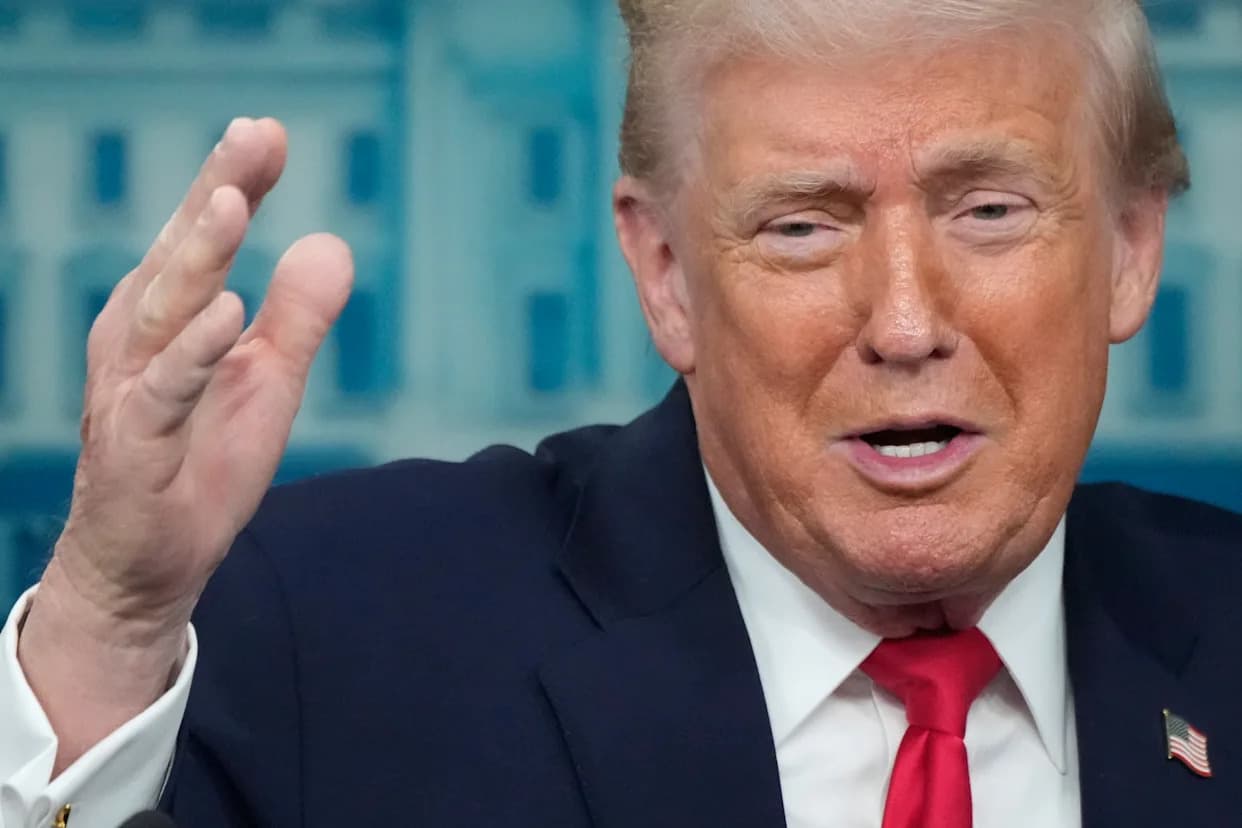
US President Donald Trump speaks during a news briefing at the White House on January 20 [Mark Schiefelbein/AP Photo]
The United States military says it has seized a seventh oil tanker linked to Venezuela, capturing the Motor Vessel Sagitta as part of an intensified blockade on vessels entering and leaving the country.
What Happened
US Southern Command (SOUTHCOM), which oversees military operations in Latin America, announced on Tuesday that its forces boarded and took control of the Motor Vessel Sagitta. SOUTHCOM described the operation as occurring "without incident" and released footage that appears to show US personnel approaching the ship by air and landing on the deck.
"The apprehension of another tanker operating in defiance of President Trump’s established quarantine of sanctioned vessels in the Caribbean demonstrates our resolve to ensure that the only oil leaving Venezuela will be oil that is coordinated properly and lawfully," SOUTHCOM said in a statement.
Broader Context
The United States began intercepting sanctioned tankers on December 10 as part of a stepped-up campaign of economic and operational pressure on the Maduro government. US officials frame the seizures as enforcement of sanctions, though the legality of using military force to enforce economic penalties is disputed by legal experts and foreign governments.
Tensions between Washington and Caracas have escalated in recent weeks. Reports said that on January 3 President Donald Trump authorised a predawn operation that some described as intended to detain President Nicolás Maduro; those reports were contested and drew sharp criticism from international legal observers. In the run-up to these events, some US officials and allies publicly asserted claims on Venezuelan oil, citing historical US petroleum interests in the country.
Venezuela nationalised its oil industry by 1971, and policy moves in 2007 to expropriate some foreign oil assets further soured relations with foreign companies and governments. The Trump administration has characterised some Venezuelan oil as "stolen" from US owners — a claim legal experts largely reject as incompatible with Venezuelan sovereignty.
US officials have said that sales of Venezuelan oil on the global market will be managed by the United States and that proceeds from such sales will be held in a US-controlled account. Control over Venezuela’s oil has also been used as leverage to increase pressure on Cuba, which depends on Venezuelan hydrocarbons as an important economic lifeline.
President Trump told reporters at a White House briefing that he has taken "50 million barrels of oil from Venezuela." "We’ve got millions of barrels of oil left," he said. "We’re selling it on the open market. We’re bringing down oil prices incredibly."
On the Venezuelan side, Maduro-aligned official Delcy Rodríguez said the government received $300 million from recent oil sales and indicated plans to reform the hydrocarbon law to attract greater foreign investment.
Legal And Political Stakes
Observers say the tanker seizures raise complex legal questions about maritime law, the extraterritorial use of military force to enforce economic sanctions, and respect for national sovereignty. The evolving situation will likely prompt diplomatic friction and legal challenges as Washington and Caracas dispute control of oil revenues and exports.
Help us improve.