The article reports that a Minnesota military recruiter emailed roughly 200 Minneapolis high school students urging them to join the National Guard as a way to help undocumented relatives, highlighting Parole in Place (PIP) as a possible, but discretionary, protection. Minnesota National Guard officials said PIP only applies after enlistment and often requires legal help; USCIS reported an average PIP processing time of about 4.5 months (FY2025). Critics called the recruiter’s direct outreach to students intimidating and urged better coordination with school officials.
Minnesota Recruiter Told High School Students To Enlist To Shield Families From ICE — Email Sparks Outcry
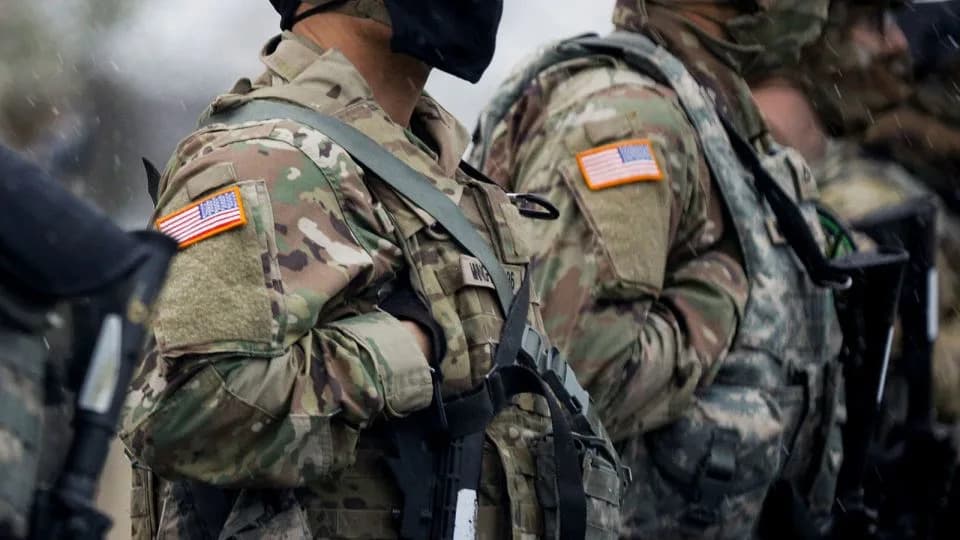
National Guard members stand guard in Brooklyn Center, Minnesota, on April 13, 2021. - Nick Pfosi/Reuters/File
A military recruiter in Minnesota emailed Minneapolis high school students last week urging them to consider joining the National Guard, citing recent Immigration and Customs Enforcement (ICE) activity in the city and pointing parents and students to a program that can, in limited cases, pause deportation proceedings for relatives of service members.
Sent under the subject line "I know [it] is scary out there," the message directly referenced ICE detentions and framed enlistment as a potential way for U.S.-born teens to help parents who may lack immigration status. The email reads in part:
“All of you have heard about how ICE and how they are taking people without any consideration. … If you are born here and you are 17yrs old, and in a position, like many, where your parents may not be documented. They need you to help!”
What Recruiter Highlighted: Parole in Place
The recruiter referenced Parole in Place (PIP), a discretionary program administered by U.S. Citizenship and Immigration Services (USCIS). PIP can, in some cases, provide temporary protection from deportation for parents, spouses and children of service members. Approvals are granted case-by-case and typically issued in one-year increments, USCIS says. As of fiscal year 2025, USCIS reported an average processing time of about 4.5 months for PIP requests.
Official Responses And Context
Maj. Andrea Tsuchiya, a Minnesota National Guard spokesperson, confirmed the email and emphasized that PIP cannot be requested or granted until after an individual enlists. She added that while military personnel may assist with paperwork, the process is driven by the service member and often requires legal counsel.
“There was no command directive to share information about Parole in Place, but recruiters often do share information about programs that individuals are eligible for either during the recruiting process or after enlistment,” Tsuchiya said.
The article also notes public tension in Minneapolis amid protests and federal immigration enforcement activity. South Dakota Gov. Kristi Noem said Monday that more than 10,000 “criminal illegal aliens” have been arrested in Minneapolis; CNN could not independently verify that figure.
Reaction And Concerns
One source familiar with the recruiting message told CNN it was sent to roughly 200 students at at least one Minneapolis-area high school and that it immediately caused confusion and concern. Critics — including a recruiter familiar with PIP — called the email’s tone intimidating and predatory, saying it inappropriately urged young people to enlist by appealing to fears about their families' immigration status.
“The problem is the recruiter leads his email with the threat of ICE taking people ‘without any consideration,’” the recruiter told CNN. “He then goes on to explain it’s basically the student’s job to protect their parents by enlisting. That’s intimidating, it’s predatory, and in my opinion an unethical way to do business in schools and with community partners.”
That recruiter suggested a less direct, more ethical approach: provide informational materials to school officials and community partners and allow them to connect interested students with recruiters rather than contacting students directly.
Broader Guidance
Military branches have previously warned recruiters not to represent PIP as a guaranteed benefit because the Department of Defense does not decide immigration outcomes. For example, the Marine Corps instructed its recruiters last year not to imply the service can secure immigration relief for applicants or their families.
CNN sought comment from the recruiter who sent the message but did not receive a response. The Department of Defense directed questions about Parole in Place to USCIS; USCIS did not immediately reply to a request for comment.
Help us improve.