Bulgarian President Rumen Radev has announced he will resign and will submit his resignation to the Constitutional Court, a move that could clear the way for him to form a new political party ahead of imminent parliamentary polls. If approved, Vice President Iliana Iotova would serve as interim president until elections in November. Radev, re-elected in 2021, has questioned Bulgaria’s adoption of the euro and taken positions critics call Kremlin-friendly on Ukraine. Polls show strong personal trust but analysts say a Radev-led party would likely need coalition partners.
Bulgarian President Rumen Radev Resigns, Raising Prospect He'll Launch New Party
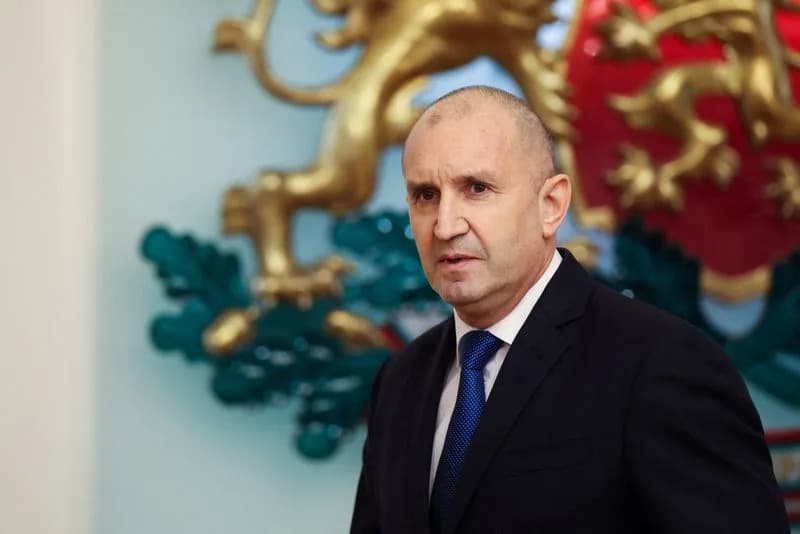
Bulgarian President Rumen Radev departs after delivering an address to the nation at the Presidency, in Sofia, Bulgaria, January 19, 2026. REUTERS/Stoyan Nenov
SOFIA, Jan 19 (Reuters) — Bulgarian President Rumen Radev announced on Monday that he will resign, a move that has intensified speculation he intends to form his own political party to contest imminent parliamentary elections after the previous government stepped down in December.
Radev, who was elected president in 2016 and re-elected in 2021, said he will formally submit his resignation to the Constitutional Court on Tuesday. If the court approves the resignation, Vice President Iliana Iotova would serve as interim president until presidential elections scheduled for November.
Long seen as a largely ceremonial officeholder, Radev has increased his political profile in recent years — repeatedly appointing interim governments and speaking out on economic and foreign policy issues. He has publicly questioned Bulgaria’s adoption of the euro and taken positions described by critics as Kremlin-friendly on the war in Ukraine, including calling military aid to Ukraine “doomed.”
“Today’s political class has betrayed Bulgarians’ hopes. We need a new public contract,”
Radev framed his resignation as a step toward creating a new political force to restore stability and tackle corruption in one of the European Union’s poorest and most corruption-plagued members.
Political Context
Bulgaria is heading toward its eighth parliamentary election in four years amid persistent fragmentation and government instability. Successive election winners have struggled to secure workable majorities or lasting coalitions, undermining efforts to form stable governments.
The cabinet that resigned in December had lasted nearly a year before widespread protests over a proposed budget and allegations of corruption forced its exit. Parliamentary elections are expected in the coming months.
Outlook For A Radev-Led Movement
Analysts say Radev enjoys solid personal support but would likely fall short of winning an outright parliamentary majority if he leads a new party. A nationwide poll by Bulgarian consultancy Market Links found 44% of respondents trust Radev versus 34% who do not. Market Links’ managing director, Dobromir Zhivkov, estimated a Radev-led movement could capture roughly 20%–35% of the vote, meaning coalition partners would almost certainly be necessary.
Potential partners might include the reformist PP-DB bloc, but analysts note tension between Radev’s positions — notably his scepticism about the euro and reluctance to support military aid to Ukraine — and the views of pro-Western, reform-minded parties.
Political observers, including Tihomir Bezlov of the Centre for the Study of Democracy in Sofia, say Radev has long positioned himself as a potential stabilising figure by capitalising on public frustration with corruption and weak governments.
(Additional reporting by Alex Lefkowitz in Sofia; Writing by Ivana Sekularac and Edward McAllister; Editing by Ros Russell)
Help us improve.