The U.S. Postal Service changed its postmark policy so stamps may reflect when mail first reaches a processing facility rather than when it was accepted. That shift could cause ballots mailed on Election Day to show a later date and be rejected in some states. A pending Supreme Court case brought by Republican groups could end state "grace periods" that currently allow late-arriving, postmarked ballots to count. The change would disproportionately affect voters with disabilities, seniors, military personnel abroad and rural residents.
New USPS Postmark Rule Could Invalidate Mail-In Ballots — What Voters Need to Know

If you plan to vote by mail next year, consider sending your ballot earlier than usual. A recent U.S. Postal Service policy change affecting how postmarks are applied could cause ballots mailed on time to show a later date and be rejected in some states.
Most people picture a postal clerk pressing a round rubber stamp onto an envelope. But those hand-stamped postmarks are now rare. The vast majority of mail is postmarked automatically by machines as it moves through processing facilities.
Beginning this week, the Postal Service ended a seven-decade practice in which postmarks reflected when an item was considered mailed. Under the new policy, a postmark may show the date a piece of mail first arrived at a processing center rather than the date the Postal Service first accepted it.
That distinction matters: a ballot dropped in a blue USPS collection box on Election Day — or a tax return mailed on April 15 — could receive a postmark dated the following day.
Practical Tip: If you must mail a ballot on or near Election Day, take it to a retail counter and ask for a manual postmark or, preferably, use an official ballot drop box when available.
Why This Matters Now
Under ordinary circumstances, the change might seem procedural. But postmarks have been central to several high-profile legal disputes over whether late-arriving ballots should be counted.
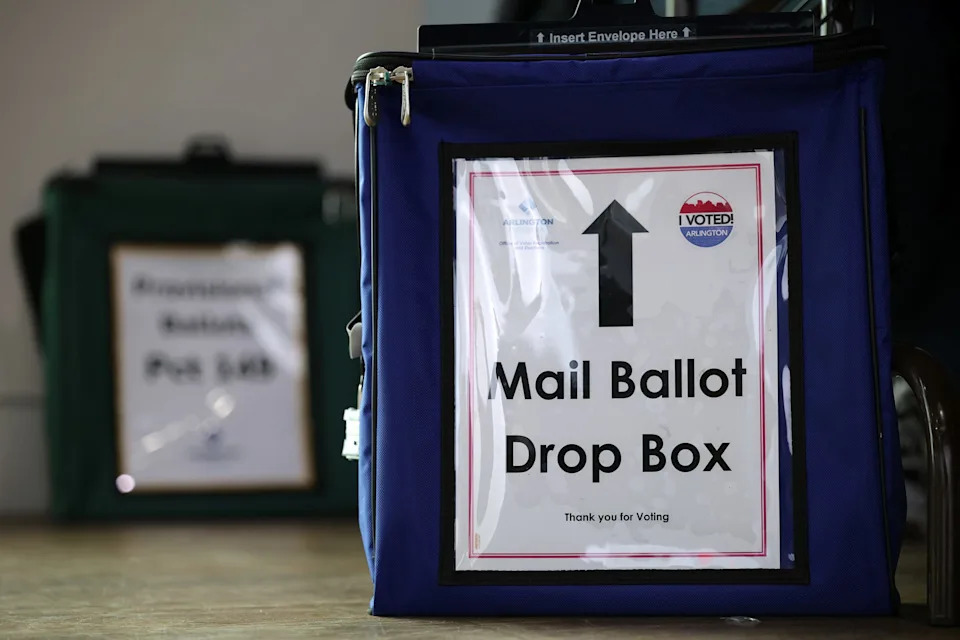
A mail ballot drop box is seen at a polling station on Nov. 4, 2025, in Arlington, VA.(Alex Wong / Alex Wong/Getty Images)
In September 2020, a Wisconsin judge ordered that ballots arriving after Election Day be counted if they were postmarked by Election Day. That extension was paused by an appeals court, and the Supreme Court declined to reinstate it just days before the election. Similar disputes have arisen in Pennsylvania and Nevada.
Currently, 16 states and the District of Columbia permit mail-in ballots postmarked by Election Day to be counted if they arrive within a short grace period, typically a few days after the election. Twenty-nine other states offer similar grace periods only for military and overseas voters.
What’s At Stake Legally
Those grace periods may be at risk. In November the Supreme Court agreed to hear a case first brought by the Mississippi Republican Party, the Republican National Committee and two Mississippi voters. The Fifth Circuit Court of Appeals — widely regarded as the nation's most conservative federal circuit — ruled in favor of the challengers, finding that such grace periods violate a federal statute that calls for a single Election Day.
If the Supreme Court upholds that reasoning, many states’ allowances for late-arriving ballots could be invalidated, making the timing of postal processing far more consequential.
Who Would Be Hurt Most
Discarding ballots over postmark technicalities disproportionately affects voters who have limited control over mailing logistics: people with disabilities, older adults, expatriates living abroad, active-duty service members and residents of remote rural communities who live farther from processing centers. Few individual voters can predict or influence how quickly the Postal Service processes their piece of mail.
While Democrats tend to vote by mail at higher rates, these groups are not uniformly Democratic. Voters with disabilities are often swing voters, and Pew Research Center data show seniors, military members and many rural residents lean Republican. That means partisan efforts to invalidate late-arriving ballots could end up disenfranchising some of the very voters who favor those efforts.
What You Can Do
- Mail your ballot well before Election Day when possible.
- Use an official ballot drop box if available in your area.
- If mailing on Election Day, bring your ballot to a retail counter and request a manual postmark.
- Track your ballot online where state systems allow, and follow local election office guidance.
This piece first appeared on MS NOW and was originally published on ms.now.
Help us improve.