The article follows Minh, a Vietnamese trainee who came to Japan under the Technical Intern Training Program in 2015 and now faces enforcement after overstaying his visa. Critics say TITP exposes trainees to debt, exploitation and limited mobility, leading some to abscond and sometimes turn to crime. Tokyo plans to replace TITP with a new system in 2027 and tighten visa controls, but experts warn a weak yen and regional competition may reduce Japan’s appeal to prospective workers. Support groups stress trainees’ contributions while warning against prejudice fueled by isolated crimes.
Japan's Crackdown on Illegal Workers Puts Vietnamese Interns in the Spotlight
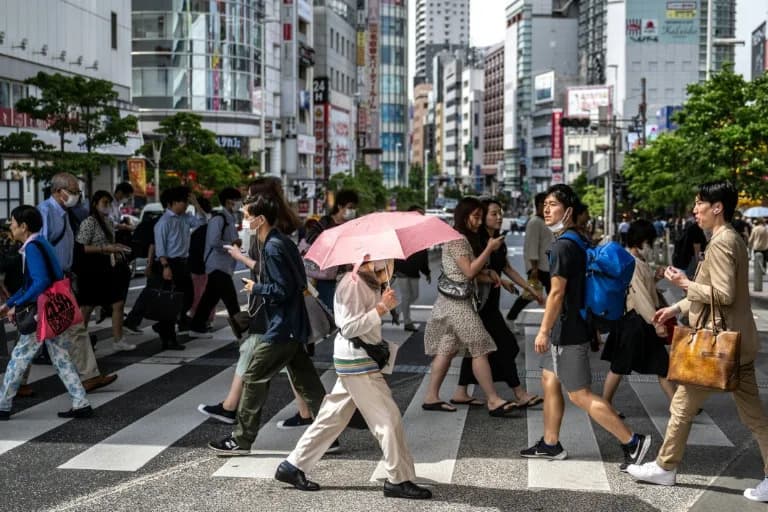
Japan is grappling with an ageing population, one of the world's lowest birth rates and labour shortages across industries (Philip FONG)(Philip FONG/AFP/AFP)
For nearly a decade, a Vietnamese man identified only as Minh laboured in demanding jobs across Japan — sandblasting rust from ships and welding steel — filling gaps created by the country’s rapidly ageing workforce. Now, after overstaying his visa, he faces heightened enforcement under Prime Minister Sanae Takaichi’s pledge to crack down on illegal workers.
Minh arrived in 2015 under the Technical Intern Training Program (TITP), promoted as a way for foreign workers to acquire skills they can use at home. Critics, however, say the scheme functions in practice as a source of inexpensive labourers vulnerable to debt, exploitation and limited freedom to change employers.
Debt, Shortcomings and Absconding
Many trainees arrive heavily indebted from recruitment and broker fees. Minh says he owed about $7,500 and intended to send remittances home after his three-year internship. When local opportunities in Vietnam proved scarce, he took undocumented welding work in Japan rather than return empty-handed.
"Many Japanese people view only the visible outcome — that foreigners committed crimes," Minh told AFP. "They rarely consider the underlying reasons that pushed these people into that situation."
As of June, Japan had roughly 450,000 technical interns; nearly half were from Vietnam, employed across agriculture, construction and food processing. Japan’s population trends — low birth rates and rapid ageing — have pushed employers to increasingly rely on foreign labour, even as public resentment grows amid stagnant real wages and rising living costs.
Crime Statistics and Context
Police reported that foreigners accounted for 5.5% of about 190,000 arrests for penal-code offences in 2024. Separate data show Vietnamese made up more than 30% of foreigners arrested that year (excluding permanent residents and related categories), a share partly explained by a ninefold increase in the Vietnamese population in Japan over the past decade.
Japan’s immigration agency said about 6,500 trainees disappeared from their workplaces last year. Many who flee seek informal work through Facebook groups nicknamed "Bodoi" (slang for "soldiers") or are hired illegally by brokers or unscrupulous employers. Support groups warn that those who fail to secure informal work can be pushed toward criminal activity, while others simply struggle to survive.
Proposed Reforms and Challenges
The government plans to replace TITP with a new system in 2027 that will allow more job mobility for trainees but will require stronger Japanese-language skills and stricter vetting. Experts caution the reforms may not attract higher-quality applicants: the weak yen has reduced remittance values, and competition from other Asian labour markets such as South Korea is growing.
Jiho Yoshimizu, who heads a Tokyo-based nonprofit supporting Vietnamese nationals, said many interns suffer low pay, poor housing and harassment, and often feel they have no option but to escape abusive workplaces. Jotaro Kato, an immigration expert at Meiji Gakuin University, warned that the applicant pool is increasingly composed of people with lower motivation and qualifications than in the past.
Religious and community groups also play a role: nun Thich Tam Tri, whose temple shelters Vietnamese in trouble, acknowledged some trainees make poor choices but emphasized the substantial contribution technical interns make to Japan. "It pains me to see how a single bad headline can shape prejudice," she said, urging her compatriots to rebuild trust through good deeds.
In July, a Vietnamese trainee was arrested on suspicion of robbing and murdering a Japanese woman in her 40s, an incident that intensified calls for tighter enforcement and fed public anxiety.
What remains clear: Japan’s reliance on foreign labour will continue to grow as demographic pressures mount, and policy changes aimed at enforcement and reform will have immediate human and economic consequences for trainees, employers and communities in both Japan and the workers’ home countries.
Help us improve.