Edward Ahmed Mitchell of the Council on American-Islamic Relations warns that Republican governors’ orders labeling CAIR a "terrorist" organization threaten due process and free speech and could set a dangerous precedent for other groups. Texas and Florida have issued proclamations that limit CAIR’s property purchases and access to state contracts; CAIR has filed lawsuits calling the measures unconstitutional. Mitchell links the actions to rising anti-Muslim sentiment since October 2023, draws parallels to historical attacks on the NAACP, and says CAIR’s daily operations continue despite the orders.
Muslim Rights Leader: Republican ‘Terror’ Labels Threaten Free Speech and Due Process
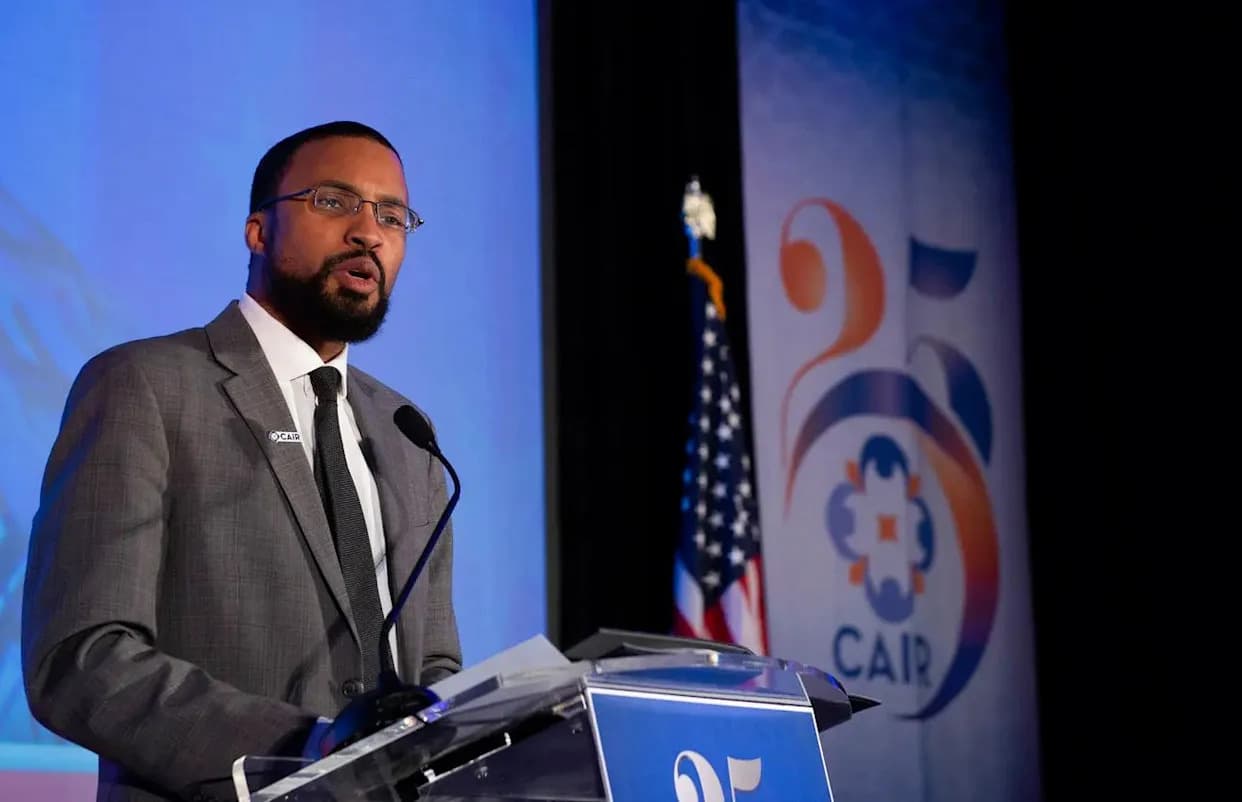
Edward Ahmed Mitchell, deputy director of the Council on American Islamic Relations.Photograph: Cair
The deputy director of the Council on American-Islamic Relations (CAIR), Edward Ahmed Mitchell, warns that recent proclamations by Republican governors labeling CAIR a "terrorist organization" set a dangerous precedent that could undermine civil liberties and put other advocacy groups at risk.
Governors' Orders And Legal Consequences
In November, Texas governor Greg Abbott designated CAIR and the Muslim Brotherhood as "foreign terrorist and transnational criminal organizations." In early December, Florida governor Ron DeSantis issued a similar order targeting the groups. The Texas directive bars the organizations from acquiring property in the state and authorizes Attorney General Ken Paxton to "sue to shut them down." Florida’s order prohibits the groups — and any person known to have provided material support or resources to them — from receiving state contracts, employment, or funding.
CAIR's Response And Legal Action
CAIR, a Washington-based nonprofit founded in 1994, calls the orders "unconstitutional and defamatory" and has filed lawsuits in both states challenging the proclamations. The Texas order alleges ties between CAIR and Hamas (a U.S.-designated terrorist organization), while the Florida order asserts CAIR was founded by people "connected to the Muslim Brotherhood" and links the Brotherhood to Hamas. CAIR has consistently denied any ties to Hamas or to the Muslim Brotherhood.
"No governor should have the power to unilaterally declare a civil rights or advocacy group he disagrees with a terrorist organization," Mitchell told the Guardian. "If any governor can get away with abusing that kind of power, then no organization is safe."
Broader Concerns: Precedent, Politics And Free Speech
Mitchell cautioned that the orders—while limited to two states—could encourage similar measures elsewhere. Prominent conservatives have campaigned against CAIR and the Muslim Brotherhood for years, and some national politicians have suggested federal measures could follow. Senator Marco Rubio, for example, has said similar steps at the federal level are "in the works." Mitchell argued that such executive proclamations bypass due process and threaten free speech, warning that any organization could be targeted by a politically motivated governor.
Historical Echoes And Rising Anti-Muslim Sentiment
Mitchell drew a comparison between the current actions and past efforts to silence civil-rights groups, noting that state governments attempted to shut down NAACP chapters in the 1950s and 1960s until the Supreme Court intervened. He also said CAIR’s advocacy on behalf of Palestinians has inflamed some politicians and groups.
CAIR documents a long-term trend of anti-Muslim incidents in the United States: spikes after 9/11, renewed rises during conspiracy-driven periods and high-profile attacks, declines around 2021, and a sharp increase following the Hamas attacks in October 2023 and Israel’s subsequent war in Gaza. Reported incidents include discrimination in education and employment, verbal harassment, vandalism, and violent attacks. Although CAIR’s full data for 2025 is not yet available, Mitchell said anecdotally that anti-Muslim rhetoric has worsened this year.
Security Concerns And Organizational Resilience
Mitchell emphasized that CAIR has long condemned terrorism and has itself been targeted by violent extremists: in 2016, ISIS included a photo of CAIR’s national executive director, Nihad Awad, on a hit list. Despite the state proclamations, Mitchell said CAIR’s day-to-day operations in Texas and Florida continue: "CAIR Texas is open for business and continues to protect the community and so is CAIR Florida." Still, he warned that the legal and practical restrictions (land purchases, state contracts) have serious constitutional and operational consequences.
What’s next: The states’ orders are being litigated, and their outcomes may shape how far governors can go in using executive proclamations to disrupt civil-rights and advocacy organizations. Observers say the cases will test the balance between state powers, constitutional protections, and politically motivated campaigns against minority organizations.
Help us improve.