
The U.S. State Department announced visa bans for five people it accused of pressuring American platforms to suppress certain viewpoints. Critics say the evidence underlying the action is weak or already addressed: the Supreme Court’s decision in Murthy v. Missouri found no government-directed censorship, and EU institutions publicly rebuked or punished some named actors. Observers argue the bans punish advocacy about content-moderation policy rather than demonstrated government coercion, raising questions about consistency and free-speech principles.
U.S. State Department Bans Five Over Alleged Censorship Campaigns — Critics Call Move Self-Contradictory

Marco Rubio is using real censorship to fight fake censorship
The U.S. State Department announced visa bans for five individuals it accused of leading coordinated efforts to pressure American platforms to censor, demonetize, or suppress viewpoints they oppose. The announcement used the phrase "Announcement of Actions to Combat the Global Censorship-Industrial Complex" and named former European Commissioner Thierry Breton, Imran Ahmed (CEO of the Center for Countering Digital Hate), Clare Melford (cofounder of the Global Disinformation Index), and Anna-Lena von Hodenberg and Josephine Ballon of HateAid as the targets of the action.
Critics say the move is internally inconsistent: the State Department frames the bans as a defense of free expression while penalizing foreign advocates of content-moderation policies. Many observers note that the alleged harms either did not occur or were addressed by other institutions and that private platforms retain ultimate control over moderation decisions.
What the State Department Said
The announcement accused the five of attempting to "coerce American platforms" into censoring viewpoints and presented the visa restrictions as a tool to push back against an international network of actors it described as unduly influencing U.S. speech ecosystems.
Legal And Institutional Context
A central legal touchstone cited by critics is Murthy v. Missouri, a case in which plaintiffs alleged the federal government had pressured social-media companies to remove content. The U.S. Supreme Court rejected those claims by a 6–3 vote; in the majority opinion Justice Amy Coney Barrett concluded the plaintiffs lacked standing because there was insufficient evidence of government-directed suppression and described the platforms as enforcing their own terms of service. A footnote in the opinion characterized the lower court’s contrary finding as a "clearly erroneous" reading of the record.
Because Murthy found no reliable evidence that the government coerced platforms to censor, critics argue it weakens the State Department’s justification for imposing visa bans on private advocates and civil-society actors.
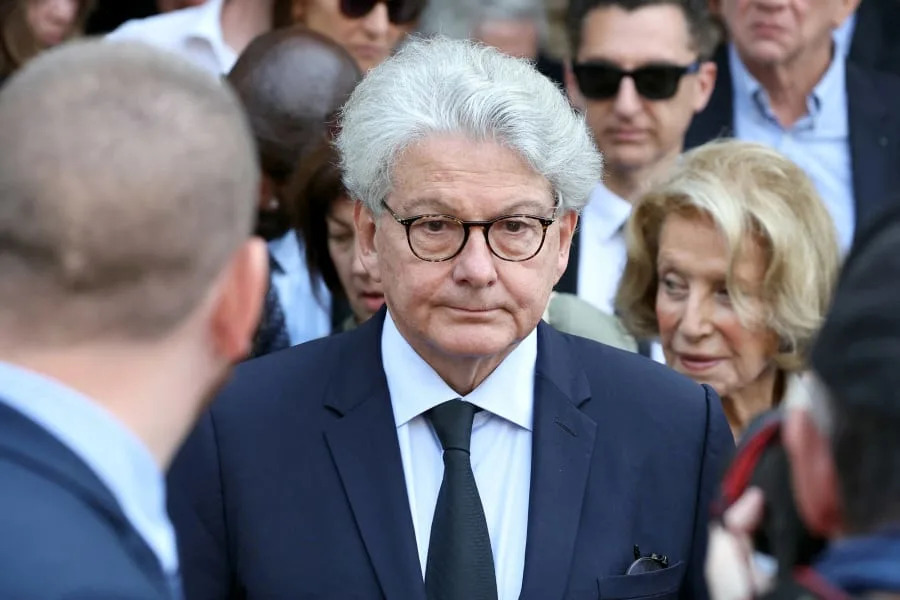
Former European Commissioner for the Internal Market Thierry Breton attends the funeral of the late French journalist Philippe Labro at the Saint-Germain-des-Pres church in Paris on June 13, 2025.Thomas Samson/Thomas Samson/AFP via Getty Images
Case Example: Thierry Breton
Breton attracted attention after sending a letter in August 2024 to Elon Musk that suggested a livestreamed interview with then-candidate Donald Trump could implicate the European Union’s Digital Services Act (DSA). The letter was widely criticized as an attempt to chill speech. EU institutions publicly rebuked Breton, fellow commissioners distanced themselves from the letter, and Breton later resigned amid the controversy — an outcome many free-speech experts pointed to as evidence that existing checks and balances worked.
Nevertheless, the State Department’s visa action singles him out for exclusion from the U.S., prompting criticism that one international response should not be compounded by a second punitive measure from another government.
Advocacy Versus Coercion
Other named individuals are primarily advocates or charity leaders. CCDH publishes research and campaigns urging platforms to change moderation practices; critics say some of its methodology is flawed, but the organization’s core activity is advocacy. HateAid’s leaders were described as "trusted flaggers" under the DSA — a designation that can mean platforms prioritize reviewing their reports because of proven accuracy, not that flagged content is automatically removed.
Observers emphasize that platforms still make final moderation decisions — a fact the Supreme Court highlighted in Murthy — and argue penalizing advocates for urging policy changes risks chilling legitimate public-interest work.
What This Means For Free Speech
The episode raises questions about proportionality and the proper role of visa restrictions. Supporters of the State Department’s move say it defends Americans from foreign efforts to shape speech in opaque ways. Opponents say it conflates advocacy with coercion, ignores the role of private platforms, and uses exclusionary power to punish speech-based activity that other institutions have already addressed.
Whatever one’s view, the action has intensified debate about how democracies should respond to transnational campaigns targeting digital platforms — and how to do so without undermining the very free expression they claim to protect.


