
The Amazon is shifting toward a newly described "hypertropical" state as droughts become longer, hotter and more frequent, according to a multi-decade international study. Models and field data indicate tree mortality could rise by about 55%, with fast-growing, low wood-density species and secondary forests most at risk. If widespread, the transition could flip parts of the Amazon from a carbon sink into a carbon source, amplifying global climate risks. The outcome depends heavily on future greenhouse-gas emissions and policy choices.
Amazon Moving Toward a 'Hypertropical' State — A Climate Regime Unseen for Millions of Years

sun over the amazon
A major international study finds the Amazon rainforest is shifting toward what researchers call a "hypertropical" state as droughts grow longer, hotter and more frequent. Based on more than three decades of field measurements and models, these emerging conditions have "no current analogue" and expose trees to stress levels not seen in the modern record.
The term hypertropical describes a climate regime beyond the historical range of tropical-forest conditions: hotter, drier extremes that could become the norm within the next century. The study combines long-term forest monitoring, soil moisture records and climate modeling to show how trees and soils respond to intensifying heat and drought events.
How Trees Fail Under Hypertropical Conditions
As soil moisture declines during hot droughts, trees become vulnerable to two related failure modes:
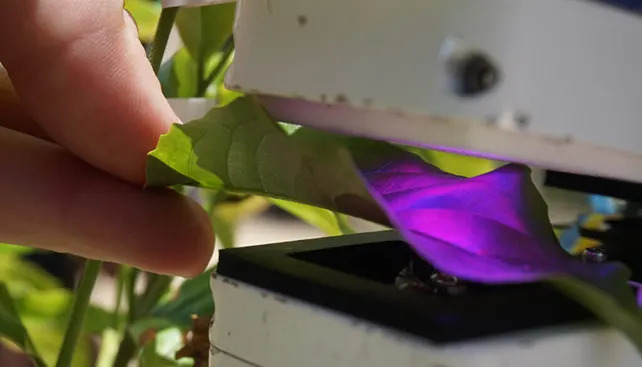
The study used measurements taken in the field over more than 30 years. In this picture, a scientist is measuring a leaf's photosynthesis rate. (Jeff Chambers/UC Berkeley)
- Hydraulic failure: Air bubbles form in xylem vessels and block water transport from roots to leaves.
- Carbon starvation: Trees close stomata to conserve water, reducing photosynthesis and carbohydrate supply.
Field measurements already confirm both processes during recent extreme events. The researchers estimate that, if hypertropical conditions become widespread, tree mortality in the Amazon could increase by roughly 55%.
Which Trees and Forests Are Most At Risk?
The study finds that fast-growing trees with low wood density die in greater numbers than slow-growing, dense-wood species. That pattern suggests secondary forests—which contain a higher share of fast-growing species—may be especially vulnerable to drought-induced die-off.
'When these hot droughts occur, that's the climate that we associate with a hypertropical forest, because it's beyond the boundary of what we consider to be tropical forest now,' says geographer Jeff Chambers of the University of California, Berkeley.
The team analyzed two Amazon sites affected by severe droughts in 2015 and 2023—years associated with unusually warm El Niño events—and found a common critical water threshold at both sites, suggesting the mechanism could be widespread across the basin.

Subscribe to ScienceAlert's free fact-checked newsletter
Broader Implications
Most hypertropical forests are expected to emerge in the Amazon, but similar transitions could occur in parts of Africa and Asia. If significant tree mortality turns forests from carbon sinks into carbon sources, the global carbon balance and future climate trajectories could be strongly affected.
The authors stress that the timing and extent of this shift depend on future greenhouse-gas emissions and human actions. 'It all depends on what we do,' Chambers says. 'If we continue emitting greenhouse gases without control, we're likely to create a hypertropical climate sooner.'
The research has been published in Nature and draws on extensive long-term data, offering a stark reminder of how critical intact forests are for atmospheric stability.


