
The Trump administration is pressing to move a 20-point Gaza ceasefire plan into a more complicated second phase despite unresolved issues and an increased Israeli military presence. Phase two would seek Hamas’ disarmament, the start of reconstruction and interim governance overseen by an international "Board of Peace." Key sticking points include the return of the last deceased hostage, no formal troop commitments for the multinational security force, and the status of the Rafah crossing. Regional distrust and political divisions on all sides continue to stall progress.
Trump Pushes to Advance Gaza Ceasefire to 'Phase Two' as Israeli Forces Consolidate Positions

Palestinian families set out for areas they consider safer after the Israeli army expanded the so-called 'yellow line', where its forces are stationed, on November 21, 2025. - Saeed M. M. T. Jaras/Anadolu/Getty Images
President Donald Trump is pressing to move a 20-point Gaza ceasefire plan into a more complex second phase within weeks, even as key elements of the agreement remain unresolved and Israeli forces tighten their hold across the battered enclave.
With all but one of the deceased hostages reportedly returned from militants — and lingering doubts about whether militants can locate the final remains — the first phase of the framework is nearing completion. But mediators warn the two-month-old truce is fragile, and major obstacles stand between an interim pause and a durable transition.
What Phase Two Would Include
Phase two envisions three central elements: the disarmament or neutralization of Hamas’ military capabilities, the start of rehabilitation and reconstruction across Gaza, and the establishment of interim post-war governance under international supervision. Central to the governance model is a proposed international oversight body dubbed the "Board of Peace," which the White House says will include world leaders and global figures.
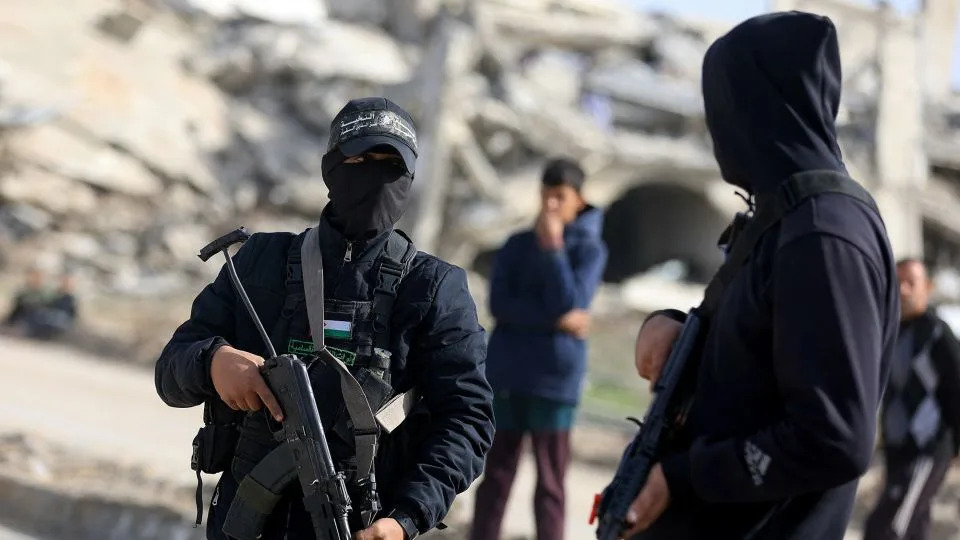
Hamas militants stand at a site in Gaza City as the group says it continues to search for the body of the last deceased hostage, on December 8, 2025. - Dawoud Abu Alkas/Reuters
Diplomatic and Practical Roadblocks
Although Israeli Prime Minister Benjamin Netanyahu publicly endorsed the deal in September, significant gaps remain between Washington and Jerusalem. Israel is conditioning major steps on the recovery of the final deceased hostage and has resisted U.S. efforts to clear an isolated pocket of Hamas militants in southern, Israeli-held Gaza. A senior Israeli official told reporters that "much [of the second phase] is left open to interpretation, which, in the Middle East, is both the best and the worst thing."
Regional mediators — including Qatar, Egypt and Norway — warned the ceasefire is at a "critical moment" and could collapse if momentum stalls. "It’s not yet there, so what we have just done is a pause," Qatar’s Prime Minister Mohammed bin Abdulrahman al-Thani said at the Doha Forum.
Security Force and Troop Commitments
The plan calls for a multinational security force to secure parts of Gaza ahead of any Israeli withdrawal. The U.N. Security Council adopted a U.S.-sponsored resolution endorsing the 20-point plan and authorizing a mandate for a multinational force — but no country has formally pledged troops. Nations that previously indicated openness to contributing, including Indonesia and Azerbaijan, appear less committed now. U.S. officials say the force would initially operate in coordination with Israeli troops in Israeli-held areas, a prospect that could complicate participation by some Muslim-majority countries.
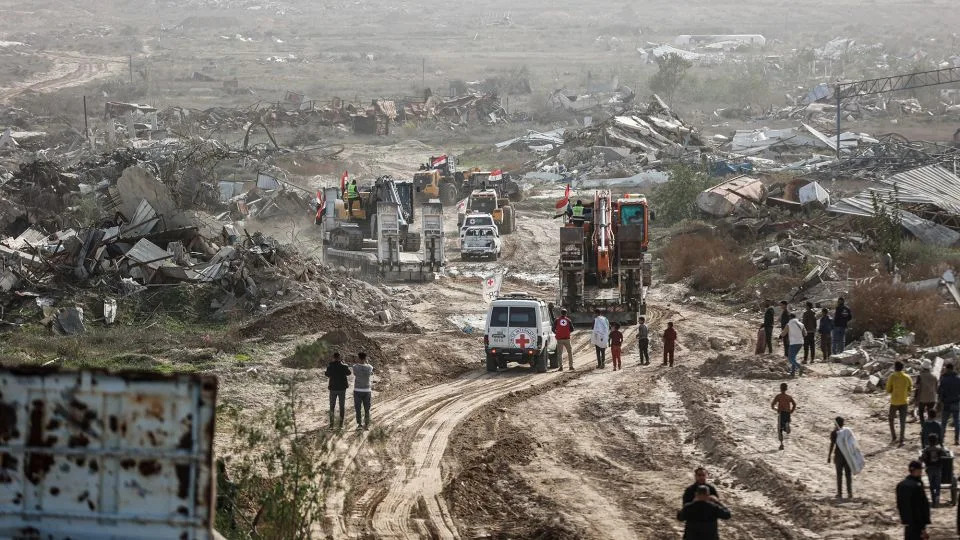
Heavy equipment, accompanied by members of the International Committee of the Red Cross (ICRC), is moved in to search for the remains of the last Israeli hostage amid the rubble of the Zeitoun neighbourhood of Gaza City on December 8, 2025. - Omar Al-Qattaa/AFP/Getty Images
On-the-Ground Tensions and Humanitarian Concerns
The ceasefire has been repeatedly tested: both Hamas and Israel accuse the other of violations. According to the Palestinian Ministry of Health, nearly 400 Palestinians have been killed by Israeli forces since the truce took effect in October; Israeli authorities say three of their soldiers were killed during the same period. Humanitarian groups have accused Israeli forces of restricting aid deliveries and blocking essential supplies such as tents.
Israeli military chief Lt. Gen. Eyal Zamir said forces would remain along the so-called "yellow line" inside Gaza — the positions to which they retreated under the truce — calling it a "new border line" and a "forward defensive line." The Israeli military currently occupies significant portions of Gaza but, under the agreement, is meant to withdraw in later phases; the deal bars permanent occupation or annexation.
Rafah Crossing and Population Movement
Washington is pressing Israel to reopen the Rafah crossing to Egypt, a key component of humanitarian access in the ceasefire terms. Israel said in October the crossing would remain closed "until further notice," and later announced a one-way reopening that would allow Palestinians to leave Gaza but not to enter. That announcement drew strong criticism from Arab and Muslim governments, who warned it risked displacing Palestinians. Some members of Netanyahu’s right-wing coalition have advocated for encouraging emigration from Gaza and promoting Jewish settlement in vacated areas.
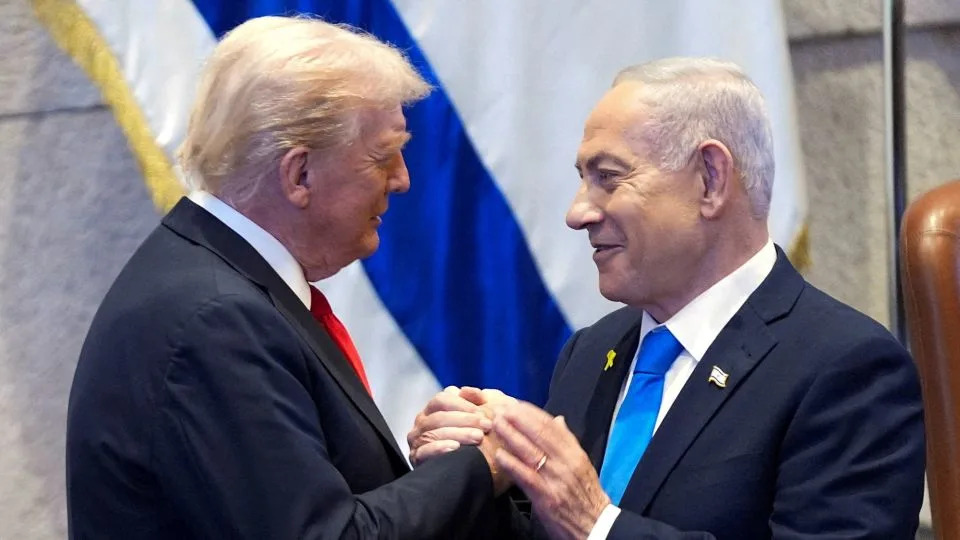
US President Donald Trump talks with Israel's Prime Minister Benjamin Netanyahu at the Knesset, on October 13, 2025. - Evan Vucci/Reuters
Disarmament Talks and Local Dynamics
A senior Hamas official said the group is "very open-minded" about options for its weapons, suggesting possibilities such as freezing, storing or laying them down with Palestinian guarantees not to use them during the truce. Israel seeks full decommissioning of Hamas’ weapons and destruction of militant infrastructure; it is unclear whether partial arrangements would satisfy Jerusalem.
Absent a clear path to full disarmament or an international oversight mechanism, the immediate focus of phase two is likely to be reconstruction in Israeli-held areas. Israel has begun clearing parts of Rafah to allow rebuilding and to encourage relocation to U.S.-designated "alternative safe zones," part of a broader strategy to isolate Hamas.
Governance and Long-Term Prospects
The U.S. is also working to finalize the Board of Peace and a Palestinian technocratic committee to administer Gaza during the transition. At some later point, the plan foresees a reformed Palestinian Authority — currently governing parts of the West Bank — resuming administration of Gaza, offering what the U.N. resolution called a "credible pathway to Palestinian self-determination." Yet long-term prospects remain uncertain: Israel has already rejected full Palestinian Authority responsibility for Gaza and any immediate moves toward statehood.
The coming weeks will test whether mediators can narrow disputes over hostages, security arrangements and reconstruction, and whether the international community will commit the personnel and political will needed to implement the plan.


