
President Trump’s first year back in office brought sweeping executive actions, the One Big Beautiful Bill Act, and the nation’s longest federal shutdown — 42 days beginning Oct. 1 — which ended after eight Senate Democrats broke ranks. The year also saw the Sept. 10 killing of conservative activist Charlie Kirk, partial DOJ disclosures of Jeffrey Epstein records after congressional pressure, escalating military pressure on Venezuela, and Elon Musk’s brief leadership of DOGE to pursue $1 trillion in cuts. Democrats finished 2025 with key local and gubernatorial wins, while intra-GOP feuds — notably between Trump and Rep. Marjorie Taylor Greene — reshaped party dynamics.
Top 10 U.S. Political Stories of 2025: Shutdowns, Scandals, and Sweeping Policy Changes

President Donald Trump’s return to the White House produced a turbulent first year marked by major legislative wins for the administration, notable Democratic victories in local and statewide races, the longest federal shutdown in U.S. history, and renewed concern about political violence.
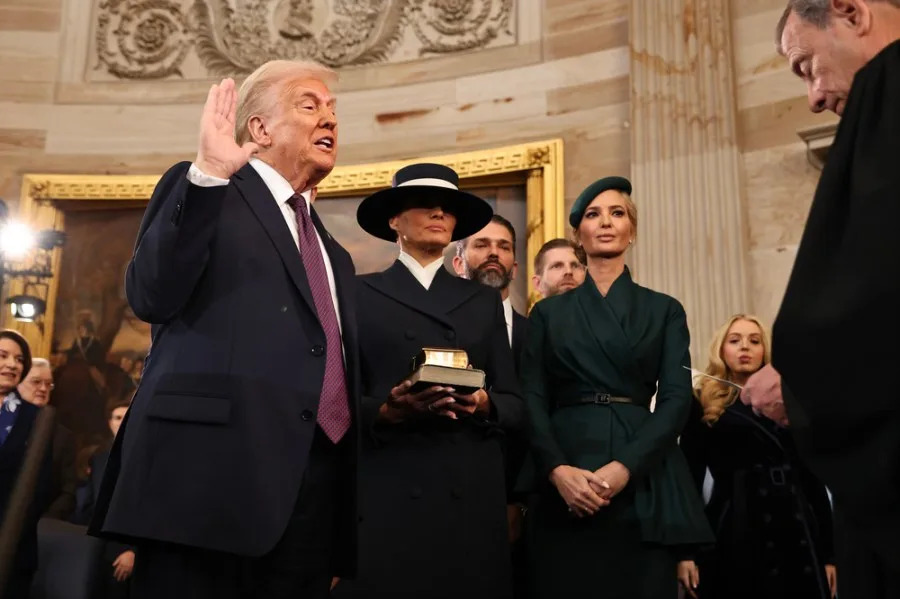
President Trump takes the oath of office from Chief Justice John Roberts during his inauguration ceremonies in the rotunda of the U.S. Capitol on Jan. 20 in Washington, D.C. (Chip Somodevilla, Getty Images pool)
Fast-Moving Executive Agenda
Soon after his Jan. 20 inauguration, Trump signed a series of executive actions reshaping federal policy: tighter immigration enforcement, rollbacks of diversity, equity and inclusion (DEI) programs in business and higher education, measures aimed at reducing prescription drug costs, and reversals of several green-energy initiatives in favor of expanded coal and natural gas development.
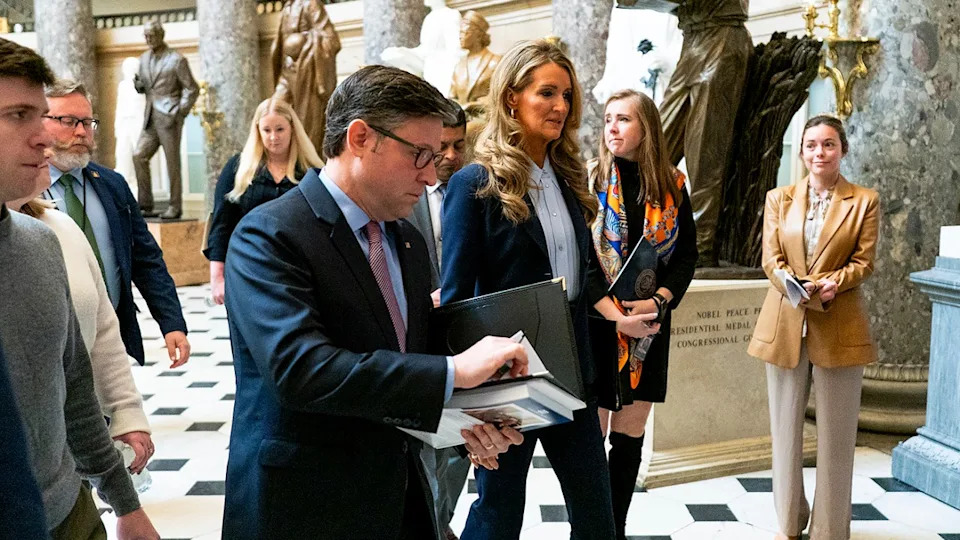
Speaker Mike Johnson (R-La.) and Administrator of the Small Business Administration Kelly Loeffler arrive for a press conference on Oct. 27, the 27th day of the government shutdown.(Greg Nash)
Economic Messaging and Public Sentiment
Trump campaigned on fixing what he called the economic problems left by his predecessor, saying he had "inherited a total mess." By year’s end, however, the administration faced the same political test that dogged the prior presidency — persuading voters that its policies would keep everyday costs down.

Conservative political activist Charlie Kirk takes part in a town hall March 17 in Oconomowoc, Wis. (Jeffrey Phelps, Associated Press)
Longest Government Shutdown
The federal government was partially closed for 42 days beginning Oct. 1 after Senate Democrats blocked a House GOP spending bill that did not extend enhanced Affordable Care Act subsidies set to expire at year’s end. The shutdown became the longest in U.S. history and ended only after eight Senate Democrats broke with their party to pass a Republican spending package. The defections angered many Democrats, though the party successfully used the standoff to highlight health care and the subsidy issue. Lawmakers face another funding deadline on Jan. 31 unless parties reach a new agreement.
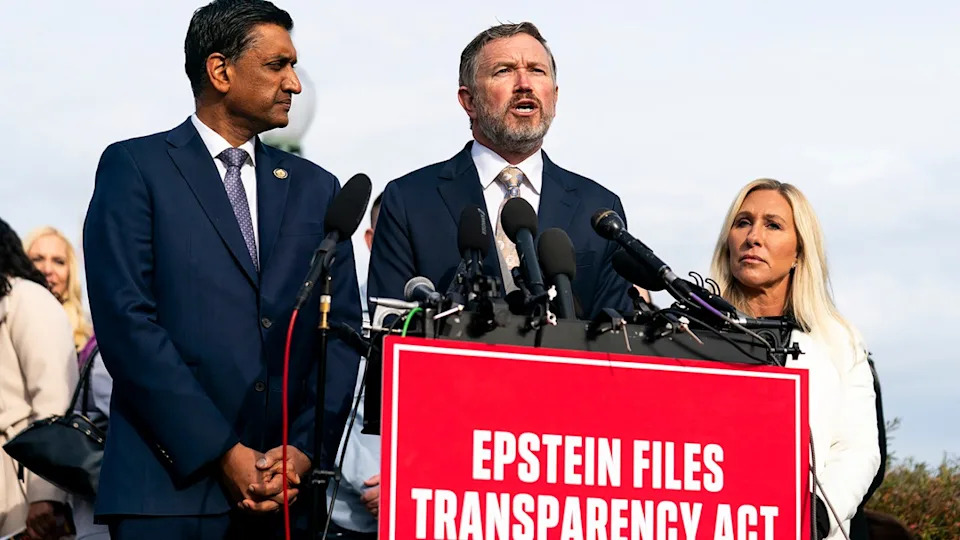
Rep. Thomas Massie (R-Ky.), center, speaks during a press conference at the Capitol in Washington, D.C., on Nov. 18 to discuss the Epstein Files Transparency Act. (Greg Nash)
Political Violence Returns To The Spotlight
On Sept. 10 conservative activist Charlie Kirk was shot and killed while speaking at a Turning Point USA event at Utah Valley University. Police arrested 22-year-old Tyler Robinson, who faces charges that could carry the death penalty. The killing followed a string of politically motivated attacks — including the attempted assassination of Trump in 2024 and the summer murders of a Minnesota state lawmaker and her husband — and renewed national concern about political violence. Kirk’s widow, Erika Kirk, has become a frequent White House visitor and a rising figure in conservative circles.
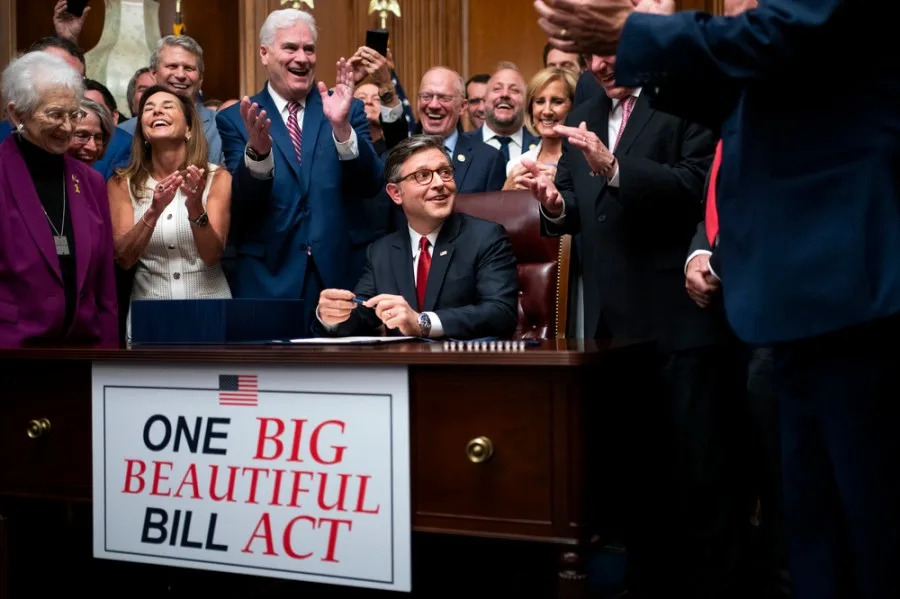
House Speaker Mike Johnson (R-La.) is seen after signing the One Big Beautiful Bill Act during an enrollment ceremony July 3. (Greg Nash)
Epstein Files And Congressional Pressure
A bipartisan group of House members used a discharge petition to force legislation compelling the Department of Justice (DOJ) to release records related to convicted sex offender Jeffrey Epstein. The White House initially opposed the move but, as momentum built, Trump signed the bill after it passed overwhelmingly. Thirty days later the DOJ released a partial cache of documents; sponsors Rep. Ro Khanna (D-Calif.) and Rep. Thomas Massie (R-Ky.) accused the department of failing to meet the law’s deadline. The DOJ said more material would be released, while critics alleged the administration was withholding potentially significant records — claims the president has denied.
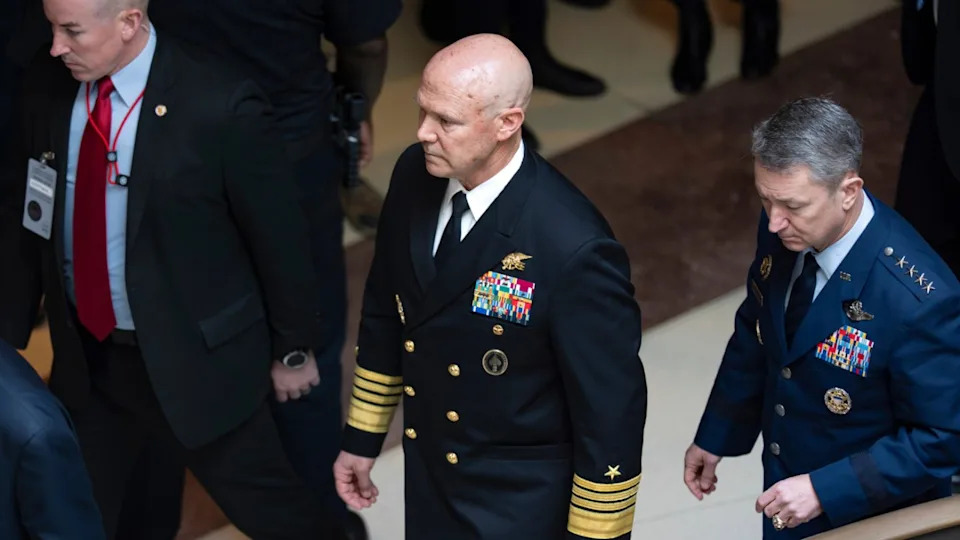
U.S. Navy Adm. Frank Bradley, center, commander of the U.S. Special Operations Command, and Gen. Dan Caine, chair of the Joint Chiefs of Staff, right, are escorted to a classified briefing for top congressional lawmakers overseeing national security as they investigate how Defense Secretary Pete Hegseth handled a military strike on a suspected drug smuggling boat and its crew in the Caribbean near Venezuela Sept. 2, at the Capitol in Washington on Dec. 4. (Scott Applewhite, Associated Press)
The One Big Beautiful Bill Act
One of the administration’s signature legislative achievements was a sweeping reconciliation package nicknamed the One Big Beautiful Bill Act, signed into law on July 4. The measure extended tax cuts from the president’s first term, eliminated some taxes on tipped wages, added roughly $150 billion for a border wall, cut certain low-income health and nutrition programs, and boosted measures to expand domestic oil, coal and natural gas production. The House approved the bill 218–214, and Vice President Vance cast the tie-breaking vote in the evenly divided Senate. Polling suggested the package was unpopular with many voters, and Republicans acknowledged difficulty selling its benefits to the public.

Elon Musk holds up a chainsaw gifted by Argentinian President Javier Milei during the Conservative Political Action Conference at the Gaylord National Resort and Convention Center in National Harbor, Md., on Feb. 20. (Greg Nash)
Escalating Tensions With Venezuela
U.S.-Venezuela relations deteriorated as the administration, led publicly by the president and Defense Secretary Pete Hegseth, pursued military pressure that included a naval blockade and strikes on vessels the U.S. said were involved in drug trafficking. A series of September strikes prompted some Democratic lawmakers to accuse Defense Department officials of potentially committing war crimes and led to calls for Hegseth’s resignation — though he retained GOP support. Seizures of two oil tankers allegedly linked to Venezuela and a reported CIA drone strike further heightened tensions. Maduro warned of escalation while the White House signaled the possibility of further action.
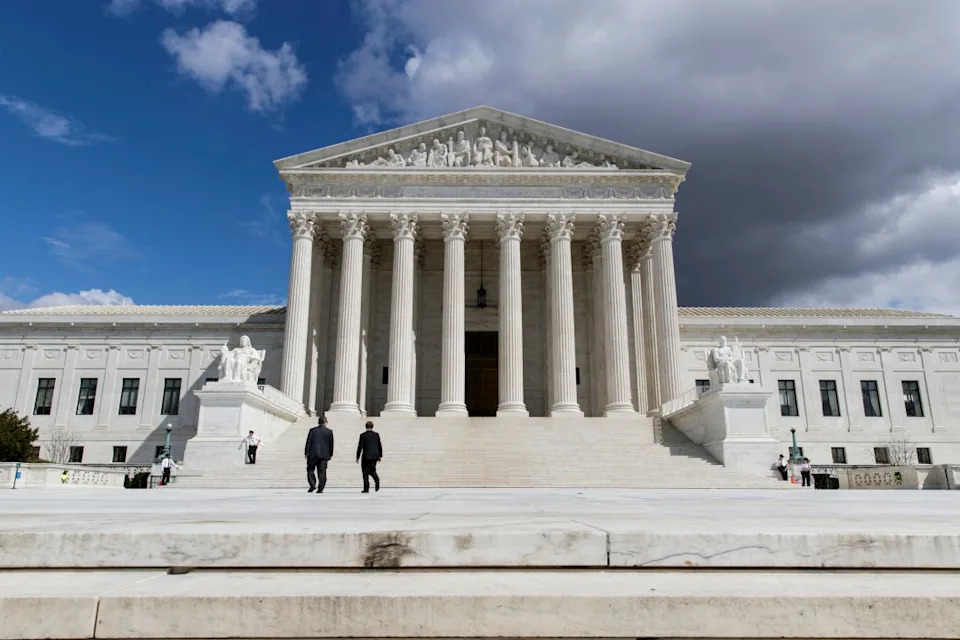
The Supreme Court is seen in Washington on March 28, 2017. (J. Scott Applewhite, Associated Press file)
DOGE, Elon Musk, And Government Cuts
Trump installed tech billionaire Elon Musk as the public face of the newly created Department of Government Efficiency (DOGE), charged with cutting $1 trillion in federal spending and shrinking the federal workforce. Musk attended meetings frequently, publicly promoted dramatic cuts (including reductions to foreign aid and public broadcasting) and staged a memorable appearance at a conservative conference while brandishing a chainsaw as a symbol of cuts. Internal disputes culminated in a public falling-out between Musk and the president over social media; Musk left his role but later appeared to partially reconcile with the administration.

Democrat Abigail Spanberger, left, points out at the crowd after she was declared the winner of the Virginia governor’s race during an election night watch party on Nov. 4 in Richmond, Va. Zohran Mamdani, right, speaks during a victory speech at a mayoral election night watch party, Nov. 4, in New York. (Stephanie Scarbrough and Yuki Iwamura, Associated Press)
Supreme Court And Judicial Rulings
The Supreme Court issued several decisions that sustained elements of the administration’s agenda, addressing issues from gender identity considerations for passports to limits on nationwide injunctions from lower courts. The court remains conservative-leaning, with three of Trump’s earlier appointees still on the bench. The justices blocked the deployment of the National Guard before Christmas and are expected to weigh in soon on the president’s tariff policies — a matter the administration has framed as a national security concern.
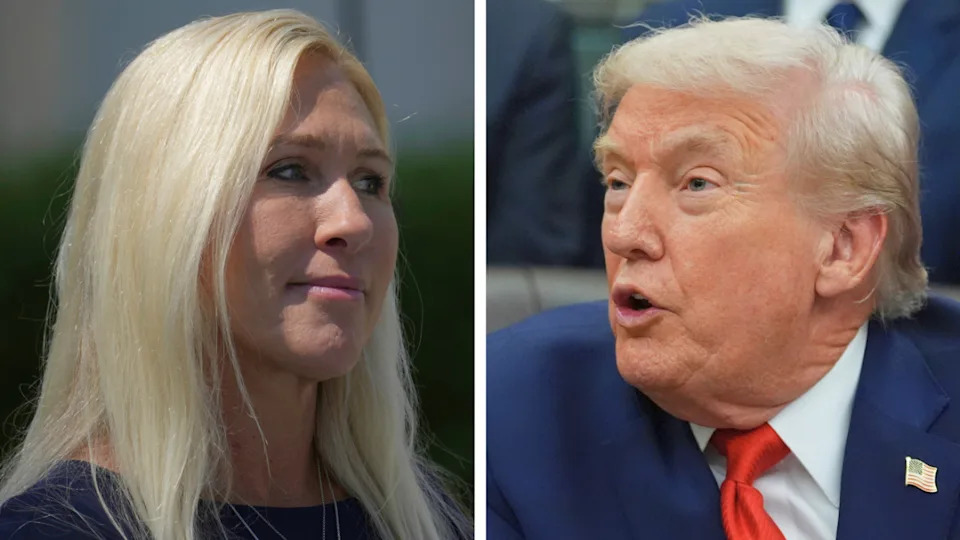
Rep. Marjorie Taylor Greene (R-Ga.), left, and President Trump. (Alex Brandon and Jacquelyn Martin, Associated Press)
Democratic Gains And Intra-GOP Tensions
Democrats closed 2025 with notable local and statewide victories: New York City Mayor-elect Zohran Mamdani (D) and Miami Mayor-elect Eileen Higgins (D) won high-profile mayoral contests, and former U.S. Representatives Abigail Spanberger (D-Va.) and Mikie Sherrill (D-N.J.) were elected governors in their states. Commentators credited concerns about affordability and the shutdown with boosting Democratic prospects. Meanwhile, a public rift between Trump and Rep. Marjorie Taylor Greene (R-Ga.) widened after Greene criticized the president’s initial opposition to the Epstein-files bill; Trump called her a "traitor" and withdrew support. Greene announced plans to resign from Congress in January.
As 2026 approaches, the political landscape remains unsettled: fiscal battles and another possible shutdown loom, the courts may decide key administration initiatives, foreign tensions could further escalate, and questions about political violence and accountability remain central to national debate.
Copyright 2025 Nexstar Media, Inc. All rights reserved.


