Cosmetic surgery chains market procedures such as AirSculpt as low-risk, quick-recovery solutions, yet there is no federal requirement to publish evidence supporting these claims. Multiple patients treated by the same surgeon died or suffered serious complications, prompting lawsuits and a notable settlement. Regulators can act against deceptive medical advertising, but online enforcement is uneven, leaving patients to scrutinize marketing claims and demand evidence about safety and recovery times.
Cosmetic Surgery Ads Promising ‘Dream Bodies’ Face Scrutiny After Patient Deaths and Lawsuits

Ste’Aira Ballard’s mother, Tamala Smith, died less than two weeks after having liposuction and a fat transfer procedure performed at a California cosmetic surgery clinic. (Nic Antaya for KFF Health News)
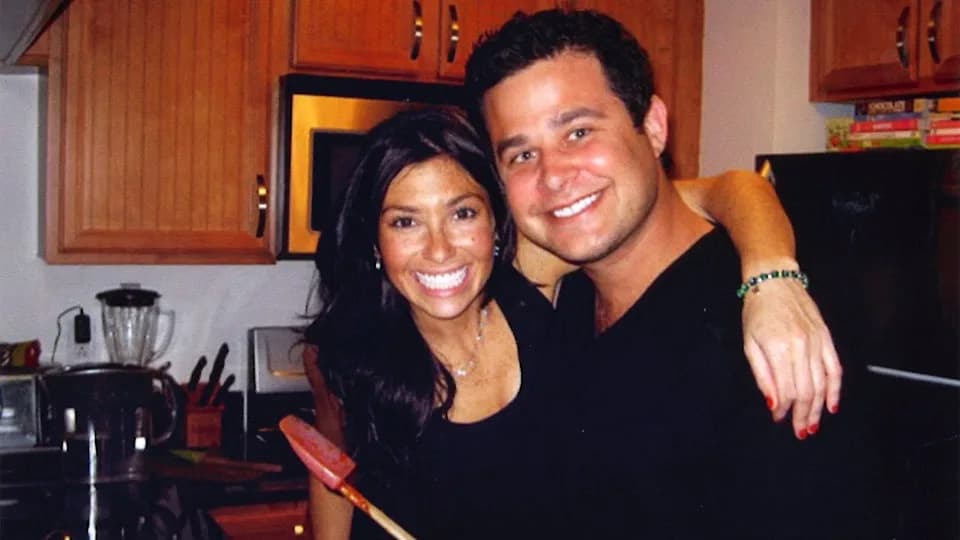
Lenia Watson-Burton, a 37-year-old U.S. Navy administrator, went into a cosmetic procedure expecting the quick, low-risk outcome advertised online. Three days after an AirSculpt procedure at Elite Body Sculpture’s San Diego clinic, she died, court records show.
Advertising, Risk and No Central Oversight
National cosmetic surgery chains rely heavily on marketing — television, print, social influencers and direct messages — to attract patients. Many ads promise dramatic body contouring, minimal pain and a rapid return to normal activities. Yet there is no federal requirement that clinics publish independent evidence substantiating claims about pain, recovery time, or complication rates. No single agency tracks how often patients who choose clinics because of advertising suffer complications, whether staff follow up appropriately, or whether surgeons using new devices are adequately trained.
Deaths, Lawsuits and Settlements
In 2023, Watson-Burton’s husband and six children and stepchildren sued Elite Body Sculpture and board-certified plastic surgeon Dr. Heidi Regenass, alleging that a thin cannula used in the AirSculpt procedure perforated Watson-Burton’s bowel and led to fatal sepsis. The suit also alleged the company’s website described AirSculpt as “gentle on the body” and promised patients would “take the fewest possible risks and get back to their regular routine as soon as 24-48 hours post-operation.”

Tamala Smith died after having cosmetic surgery in California. (Nic Antaya for KFF Health News)
Watson-Burton was one of three patients who died after liposuction and fat-transfer procedures performed by Regenass from October 2022 to February 2023, court records say. Families of all three filed suits; Regenass has denied wrongdoing. The Watson-Burton family settled in August 2024 when Elite Body Sculpture paid $2 million (the limit of its insurance) and Regenass agreed to pay an additional $100,000.
Other Patient Accounts
Court records say at least seven patients have filed suits since March 2023 accusing Elite Body Sculpture of misleading advertising or misrepresenting results, alleging greater pain and slower recoveries than advertised. One plaintiff, Caitlin Meehan, says she suffered subcutaneous emphysema and required a four-day hospital stay after an AirSculpt procedure. Other lawsuits allege severe pain during “awake liposuction” and inadequate post-op responses from clinic staff.
Two other women who underwent procedures by Regenass died; their families have brought wrongful-death suits against the surgeon and, in some cases, the surgery centers where the operations occurred. Those cases remain pending in California courts.
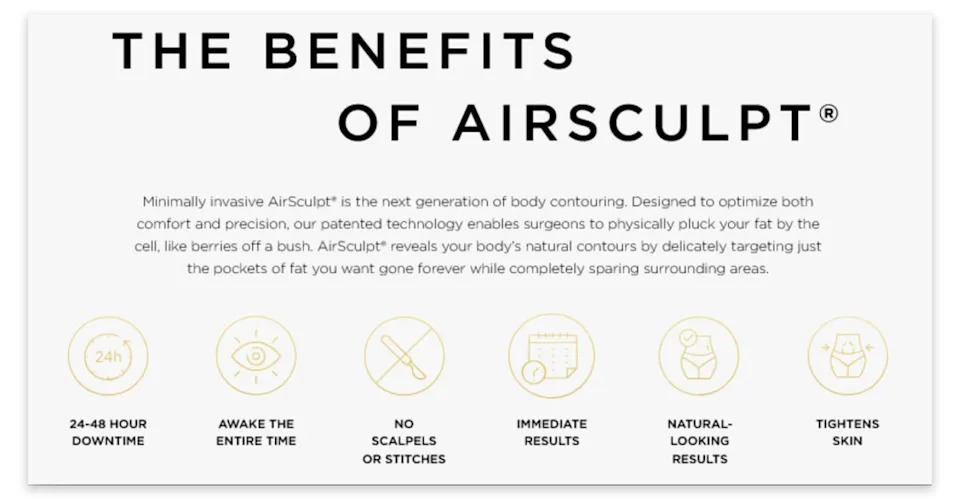
Elite Body Sculpture promotes its AirSculpt brand as "Lunch Time Lipo" with minimal recovery time, according to a lawsuit filed this year by patient Caitlin Meehan. (Meehan v. EBS Pennsylvania, PLLC et al. / Court of Common Pleas, Philadelphia County)
What Regulators and Law Say
Federal Trade Commission guidance requires medical advertising to be "truthful, not deceptive, and backed up by competent and reliable scientific evidence." The FTC also evaluates the "net impression" of ads — including images and before-and-after photos. Still, enforcement is uneven online, and there is no rule forcing clinics to post underlying clinical data on their websites.
“While consumers should be able to trust that ad claims are substantiated because the law requires them to be, the reality is that it pays for consumers to bring a skeptical eye,” said Mary Engle, executive vice president at BBB National Programs.
Industry defenders sometimes label promotional language as "puffery" — subjective, promotional statements consumers should not take literally. But where marketing implies specific medical benefits (for example, measurable reductions in recovery time or a lower risk of complications), experts say advertisers should be able to point to valid clinical evidence.
Money, Marketing and Patient Advice
Elite Body Sculpture reported $43.9 million in selling expenses in 2024 — roughly $3,130 in marketing cost per customer acquisition, according to its SEC filings. That spending underscores how central advertising is to the business model for multi-state cosmetic surgery chains.
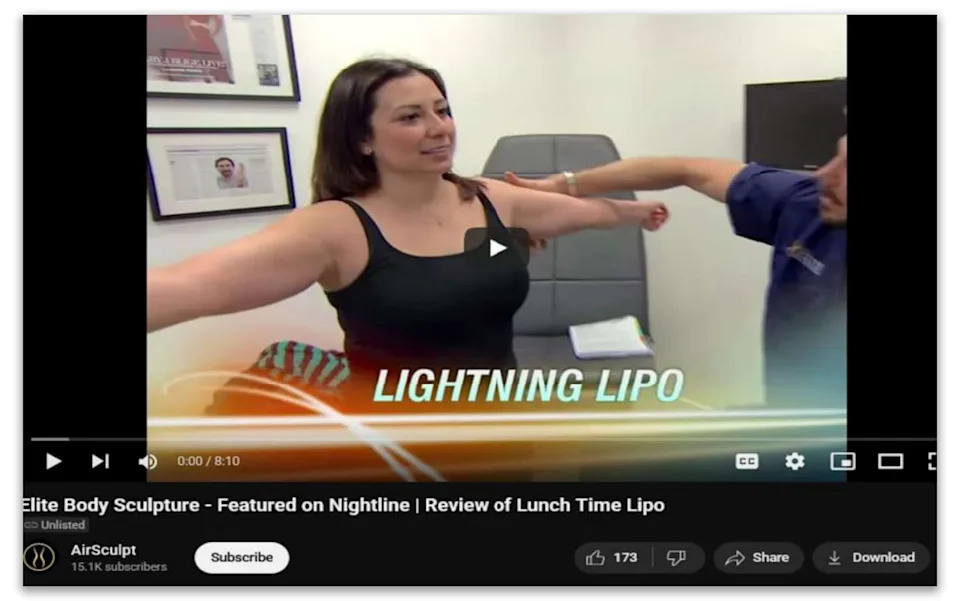
The suit accuses the company of false advertising, alleging it minimizes the risks of the procedure, which the company denies. (Meehan v. EBS Pennsylvania, PLLC et al. / Court of Common Pleas, Philadelphia County)
Medical experts warn that some common advertising claims are unrealistic. Scott Hollenbeck, immediate past president of the American Society of Plastic Surgeons, said the idea of returning to work 24 hours after meaningful liposuction "seems like extremely bad advice" given typical bruising and swelling. Patients should ask clinics for published evidence supporting recovery-time claims, details about complication rates, and specific information about the training and credentials of the operating surgeon.
Bottom Line
The cases involving AirSculpt, Elite Body Sculpture and Dr. Regenass highlight a broader problem: aggressive marketing that may outpace publicly available evidence about safety and outcomes. With enforcement of online medical advertising uneven, experts advise consumers to research surgeons’ track records, read independent reviews, seek second opinions, and demand clear, evidence-based information before consenting to cosmetic procedures.
This article draws on court filings, medical examiner reports, interviews and regulatory guidance and was originally reported by NBC News.
Help us improve.