Researchers at the University of Helsinki report a new superbase-plus-alcohol material that captures CO2 directly from ambient air. One gram of the compound absorbs about 156 mg of CO2 and releases it when heated to roughly 158°F (≈70°C), a much lower regeneration temperature than many existing capture solvents. The material retains ~75% capacity after 50 cycles and ~50% after 100 cycles. Next steps include near-industrial scale tests to determine whether the lab performance can translate into cost-effective, durable carbon removal at scale.
University Of Helsinki Develops Superbase Material That Captures CO2 Directly From Air
How Scientists Are Planning to Pull Carbon Straight Out of the Air
Bill Nye — familiar to many as the “Science Guy” — recently highlighted climate risks in the SYFY special The End Is Nye. Among the many threats he discusses, climate change from elevated atmospheric carbon dioxide remains the most immediate danger to modern society. Researchers are now racing not only to cut emissions but also to remove CO2 that’s already in the air.
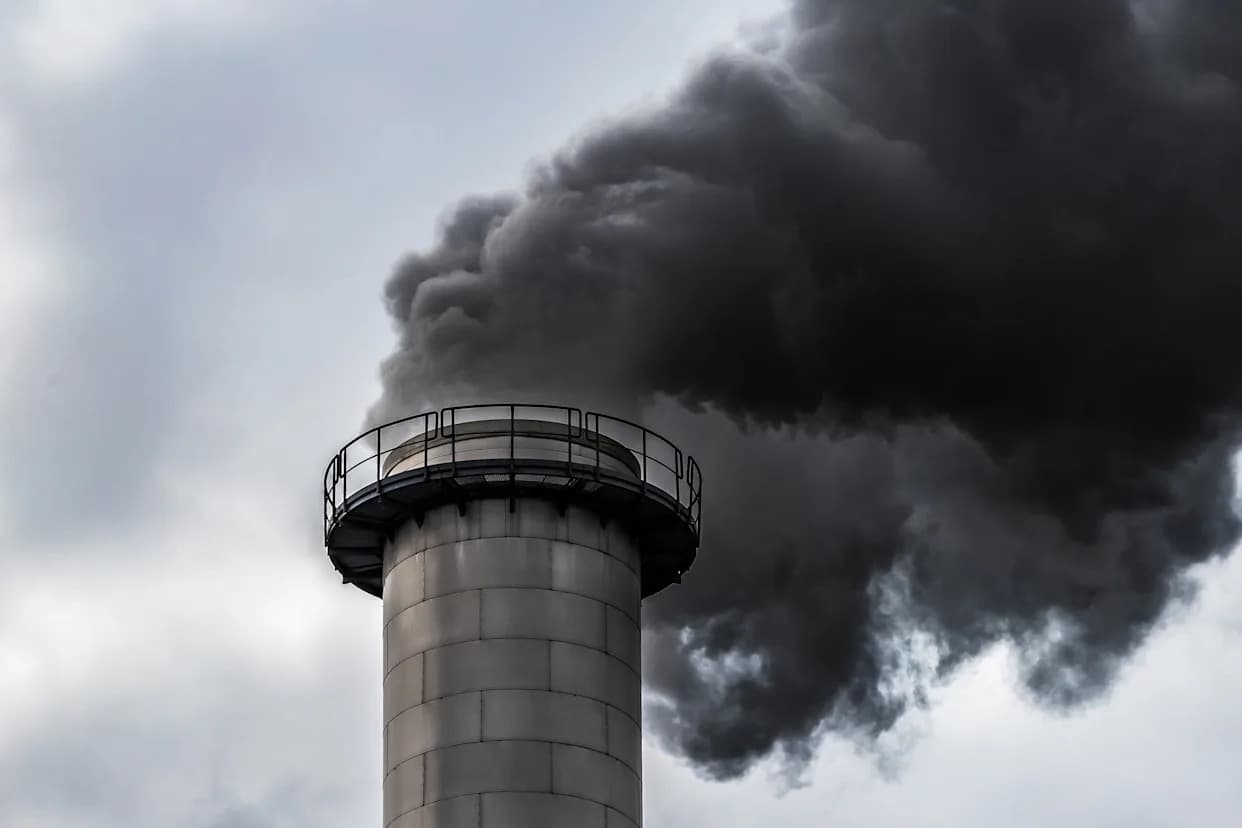
Known collectively as carbon capture and storage (CCS), technologies can capture CO2 at its source (for example, from power plants) or directly from ambient air. Captured carbon can be stored underground, converted into useful products, or used to feed industrial microbes. Each approach carries trade-offs in cost, energy use and environmental risk.
New Material From Helsinki
In a study published Dec. 4 in Environmental Science & Technology, a team at the University of Helsinki reports a promising new direct-air-capture material made from a combination of a so-called superbase (a compound highly reactive to protons) and an alcohol. The compound selectively binds CO2 while largely ignoring major atmospheric gases such as nitrogen and oxygen.

GettyImages 2150088416
Key lab results reported by the authors include:
- One gram of the material captures ~156 milligrams of CO2 from ambient air.
- CO2 can be released from the material by heating to about 158°F (about 70°C), which is far lower than the regeneration energy required for many existing capture solvents.
- The material is reusable: it retains roughly 75% of its capacity after 50 full capture–release cycles and about 50% after 100 cycles.
Compared with some current solvents and sorbents, the Helsinki formulation appears less energy-intensive to regenerate and shows strong initial recyclability. That said, lab performance does not always translate directly to industrial cost-effectiveness or durability under real-world conditions.
Next Steps and Context
The researchers plan near-industrial-scale tests to assess real-world performance, throughput and material lifetime. Today’s commercial CCS projects remove on the order of 50 million tons of CO2 per year—a meaningful amount but small compared with the global scale of emissions—so breakthroughs that lower energy use and cost could be important if they scale successfully.
Critics of CCS caution that carbon removal should not delay aggressive emissions reductions or the transition to renewable energy. Supporters counter that capture technologies, especially low-energy solutions, will likely be necessary to reach net-zero targets because some emissions are difficult to eliminate entirely.
Bottom line: The Helsinki superbase–alcohol compound is an encouraging lab-scale advance in direct-air capture: it can pull CO2 from ambient air, regenerate at relatively low temperature, and sustain multiple reuse cycles. Scaling, lifecycle energy costs and long-term durability remain open questions.
Help us improve.