Ben Nighthorse Campbell, a Northern Cheyenne leader, master jeweler and longtime Colorado lawmaker, has died at 92 of natural causes surrounded by family. He served three terms in the U.S. House (beginning 1987) and two terms in the Senate (1993–2005), and was notable for championing Native American issues and upgrading the Great Sand Dunes to a national park. Campbell famously switched from the Democratic to the Republican Party in 1995, retired after a 2004 health scare, and returned to jewelry, consulting and advocacy work.
Ben Nighthorse Campbell, Pioneering Native American Lawmaker and Master Jeweler, Dies at 92
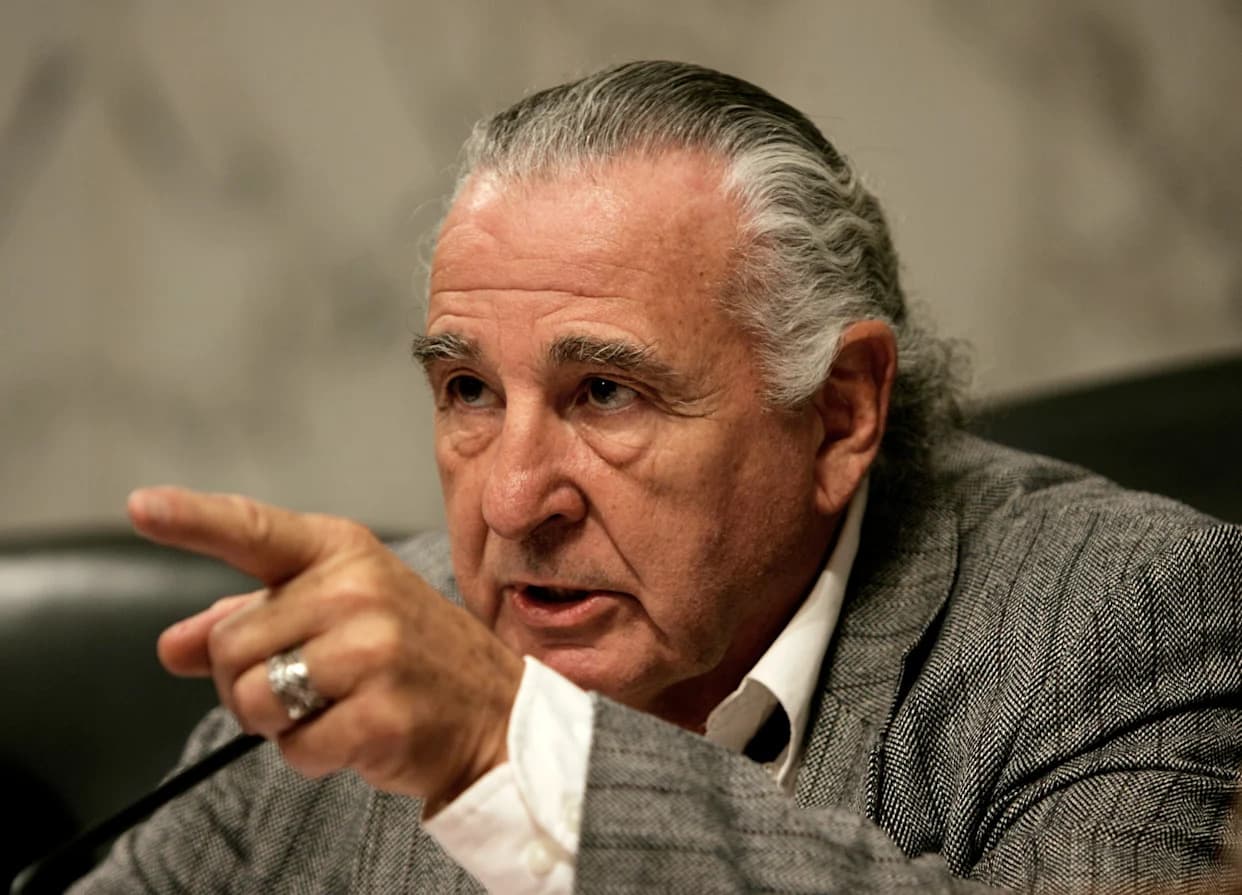
FILE - Sen. Ben Nighthorse Campbell, R-Colo., chairman of the Senate Committee on Indian Affairs, delivers a parting statement to witness Michael Scanlon, President of Capitol Campaign Strategies, as he takes the fifth at an oversight hearing on the In Re tribal lobbying matters in Washington, Nov. 17, 2004. (AP Photo/Gerald Herbert, File)
Ben Nighthorse Campbell, the Northern Cheyenne member of Congress who became one of Colorado’s most recognizable and unconventional lawmakers, has died at 92. His daughter, Shanan Campbell, confirmed to The Associated Press that he died of natural causes at home surrounded by family.
Campbell built a long and varied public life that combined advocacy for Native American rights, a record of support for children and organized labor, and an unmistakable personal style — cowboy boots, bolo ties and a ponytail. He served three terms in the U.S. House of Representatives beginning in 1987 and two terms in the U.S. Senate from 1993 to 2005.
Party Switch and Independent Streak
Originally elected as a Democrat, Campbell surprised colleagues and the public when he switched to the Republican Party in March 1995 after Democrats blocked a balanced-budget amendment in the Senate. The move angered Democratic leaders and was viewed as a political gain for Republicans, but Campbell described himself as a maverick who resisted polarization: “I get hammered from the extremes. I’m always willing to listen ... but I just don’t think you can be all things to all people, no matter which party you’re in.”
Advocate for Native Americans and the Great Sand Dunes
A member of the Northern Cheyenne tribe, Campbell frequently highlighted Native American history and rights in his work. He said his ancestors were among the more than 150 Native Americans — largely women, children and elderly men — killed while camped under a flag of truce on Nov. 29, 1864. He helped sponsor legislation that upgraded Great Sand Dunes National Monument in southern Colorado to national park status, a move tied to the region’s history.
Private Life and Post-Politics Career
After withdrawing from the 2004 Senate race following a health scare, Campbell retired to focus on other pursuits. He returned to his work as a jeweler — his pieces were displayed at the Smithsonian Institution’s National Museum of the American Indian — collaborated with outdoor brand Kiva Designs, and founded Ben Nighthorse Consultants, advising on federal policy, Native affairs and natural resources. He also served as a senior policy adviser for the law firm Holland & Knight and on occasion drove the Capitol Christmas Tree to Washington, D.C.
Early Life and Athletic Achievements
Born April 13, 1933, in Auburn, California, Campbell served in the U.S. Air Force during the Korean War (1951–1953) and earned a bachelor’s degree from San Jose State University in 1957. He studied at Meiji University in Tokyo from 1960 to 1964, captained the U.S. judo team at the 1964 Olympics and won a gold medal at the Pan American Games.
Controversies and Ethics Matters
Campbell referred allegations involving a former aide, Ginnie Kontnik, and lobbying questions to the Senate Ethics Committee. Kontnik later pleaded guilty in 2007 to failing to report $2,000 in income. Campbell said those episodes did not drive his decision to retire and expressed disappointment while noting the steady flow of controversies that accompany Washington life.
Legacy and Tributes
Colleagues praised Campbell’s craftsmanship and kindness. Colorado Sen. John Hickenlooper wrote on X, “He was a master jeweler with a reputation far beyond the boundaries of Colorado. I will not forget his acts of kindness.” Rep. Diana DeGette called him “truly one of a kind” and extended condolences to his family. A motorcycle-riding rancher and former sheriff’s deputy, Campbell remained a distinctive and widely admired figure in Colorado politics.
“I thought it was a heart attack. It wasn’t,” Campbell said of the 2004 health scare. “But when I was lying on that table in the hospital... I decided then, ‘Do I really need to do this six more years after I’ve been gone so much from home?’”
Campbell’s life — from orphanage and field work to Olympic judo and the halls of Congress — shaped an independent political outlook that mixed social liberalism with fiscal conservatism. He is survived by his family, who were with him at his passing.
Help us improve.