
The Naval Air Systems Command investigation finds that safety risks in the V‑22 Osprey accumulated for nearly 20 years because fixes were not implemented quickly or uniformly. Two primary transmission problems—a power‑imbalance failure mode and a long‑standing gear manufacturing defect—were linked to recent deadly crashes. The report cites uneven maintenance, human error (81% of ground accidents), and slow program office action, and recommends consolidated maintenance standards, improved oversight, and a midlife upgrade program; fixes are projected through 2033–2034.
Navy Report: Years of Neglected Safety Problems Raised Risk in the V‑22 Osprey

FILE - A Boeing V-22 Osprey is seen on Aug. 13, 2022, in Senja, Norway, after an emergency landing due to a clutch issue. (Norwegian Armed Forces via AP, File)(ASSOCIATED PRESS)
A Navy investigation released by the Naval Air Systems Command (NAVAIR) concludes that safety problems with the V‑22 Osprey accumulated for nearly two decades and were not fixed quickly or uniformly. The report links unresolved mechanical faults and inconsistent maintenance and oversight to a recent string of deadly accidents that killed 20 service members over four years.
Key Findings
“The cumulative risk posture of the V‑22 platform has been growing since initial fielding,”the report states, adding that the office charged with the aircraft "has not promptly implemented ... fixes to mitigate existing risks." It finds the V‑22 carries the second‑highest number of catastrophic risks among Naval Aviation platforms and that those risks remained unresolved for an average of more than 10 years compared with six years for other aircraft.
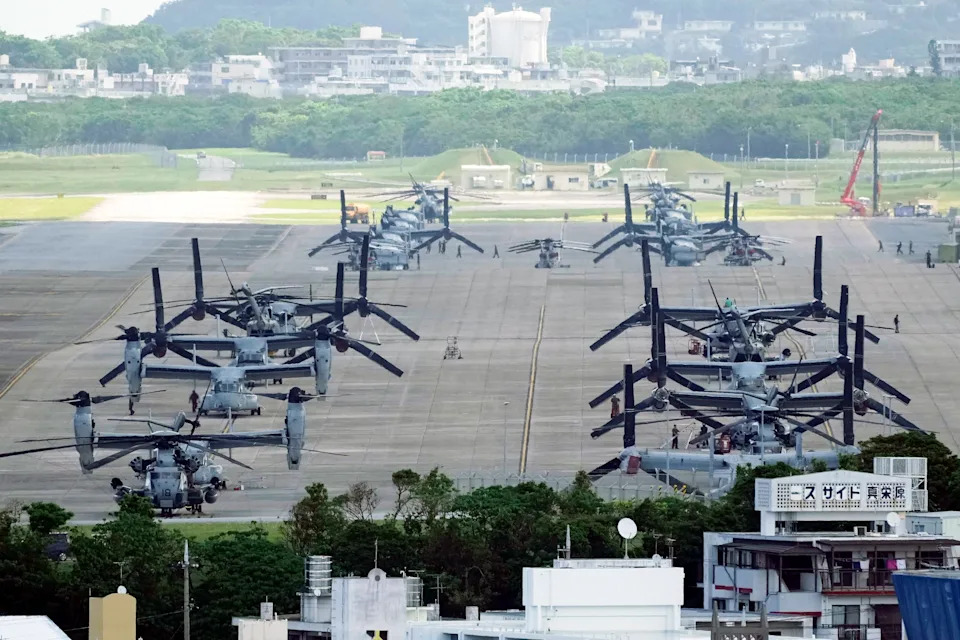
FILE - U.S. MV-22 Osprey transport aircraft are parked at the U.S. Marine Corps Air Station Futenma in Ginowan, south of Okinawa, southern Japan, Sept. 6, 2023. (AP Photo/Hiro Komae, File)(ASSOCIATED PRESS)
The investigation assigns substantial responsibility to the V‑22 Joint Program Office (JPO) within NAVAIR, concluding the office did not manage or address identified risks in a timely, consistent way across the Marine Corps, Navy, and Air Force.
Mechanical Problems Identified
Two central transmission-related problems were linked to fatal crashes:
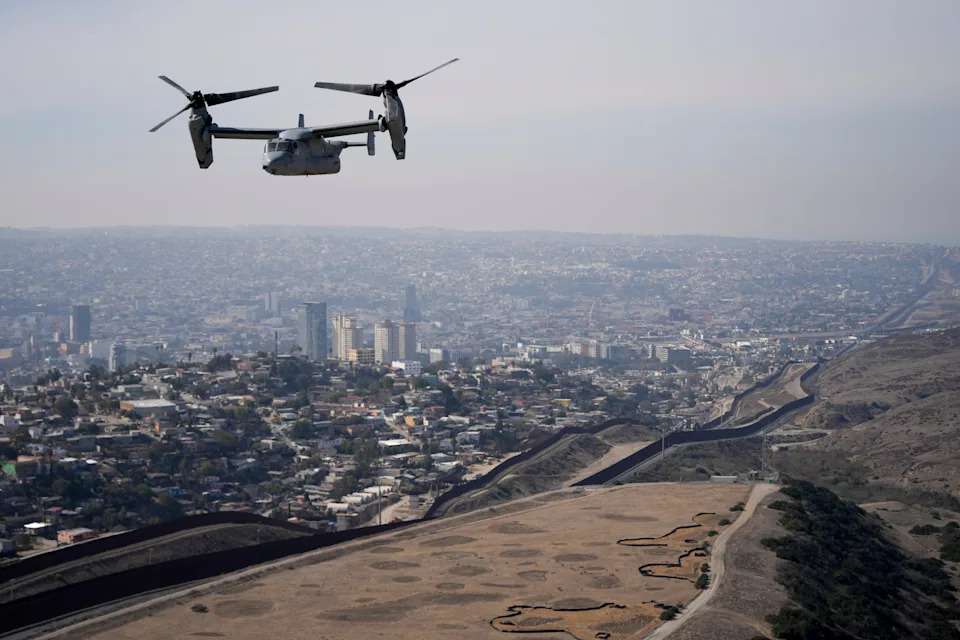
A U.S. Marine Osprey is flown over the border, Jan. 31, 2025, near San Diego. (AP Photo/Jae C. Hong, File)(ASSOCIATED PRESS)
- Power-imbalance failure: A mismatch in engine power can create internal stress that effectively shreds the transmission from the inside. That failure mode was blamed for a 2022 crash in California that killed five Marines.
- Manufacturing defect in gears: A long‑standing flaw in transmission gears makes them more brittle and prone to cracking. That defect was implicated in a November 2023 crash off Japan that killed eight Air Force personnel. The defect traces back to 2006, but the JPO did not formally assess and accept the risk until March 2024.
Maintenance, Human Error, and Oversight
Investigators found uneven maintenance standards across services and concluded that 81% of ground accidents involving the V‑22 were attributable to human error. The report also says the JPO faced challenges implementing fixes consistently across all three services.
Recommendations and Timelines
The report lists short‑term and programmatic recommendations, including consolidating maintenance best practices, improving risk tracking and accountability, and creating a midlife upgrade program for the fleet. Mechanical fixes for the two major transmission issues are projected to be fully implemented by roughly 2033–2034.
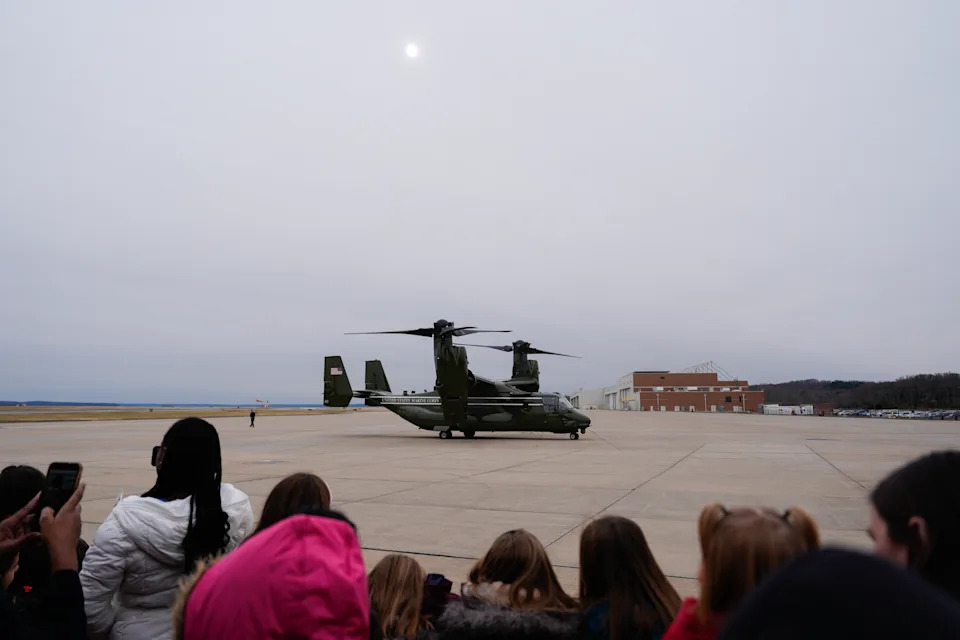
A U.S. Marine Corps MV-22 Osprey, carrying first lady Melania Trump, lands before a Toys for Tots charity drive event at Marine Corps Base Quantico, Monday, Dec. 8, 2025, in Quantico, Va. (AP Photo/Julia Demaree Nikhinson)(ASSOCIATED PRESS)
Independent Watchdog Echoes Concerns
The Government Accountability Office (GAO) issued a separate report with similar conclusions, finding most Osprey accidents stemmed from part failures and human error and urging the Pentagon to improve risk identification, oversight, and cross‑service information sharing.
NAVAIR Response
Vice Adm. John Dougherty, commander of NAVAIR, said the command is committed to improving V‑22 performance and protecting aircrews. The report and public statements, however, provide few details about past accountability actions for the long‑standing unresolved risks.
The investigation underscores both the technical complexity of the V‑22 tiltrotor and the consequences of delayed risk mitigation. It calls for faster, more consistent action to address legacy material defects, human factors, and program oversight failures.


