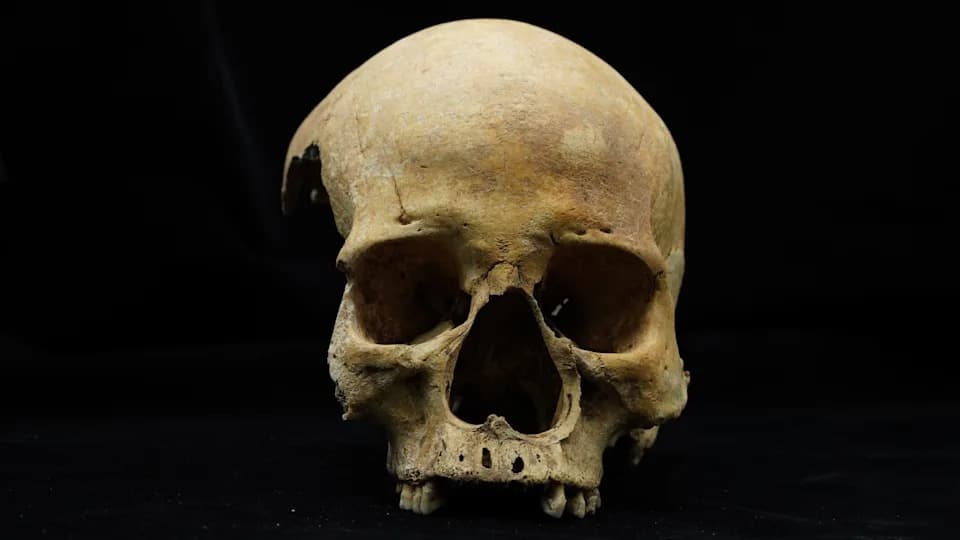
Archaeologists from Mexico’s INAH have recovered a cube‑shaped skull from the Sierra Madre Oriental dating to the Mesoamerican Classic period (400–900 AD). The remains, of a man aged over 40, confirm the practice of intentional cranial deformation—performed in infancy with boards, bandages, caps and cradleboards—to alter appearance and accentuate adult regalia. Researchers documented a previously unrecorded square silhouette variant, distinct from the more common conical forms, and say the find may indicate wider cultural links across the northern Huasteca, Gulf Coast lowlands, northern Mexico and parts of the southern United States.
Cube-Shaped Skull Discovery in Mexico Reveals New Variant of Ancient Cranial Deformation

INAHCube-shaped skull found by archeologists in Mexico
Archaeologists working with Mexico’s National Institute of Anthropology and History (INAH) have uncovered an unusually shaped human skull — described as cube‑shaped — at a site in the Sierra Madre Oriental. The remains date to the Mesoamerican Classic period (400–900 AD) and belonged to a man estimated to be over 40 years old at his death.
Intentional Cranial Deformation
INAH reports that the skull is the result of intentional cranial deformation, a cultural practice carried out during infancy. Specialists say the modification was achieved in the first years of life using boards, bandages, fitted caps and cradleboards, which gradually altered the shape of the developing skull. Such changes were intended to modify appearance and to emphasize headdresses, ornaments and other markers of social identity in adulthood.
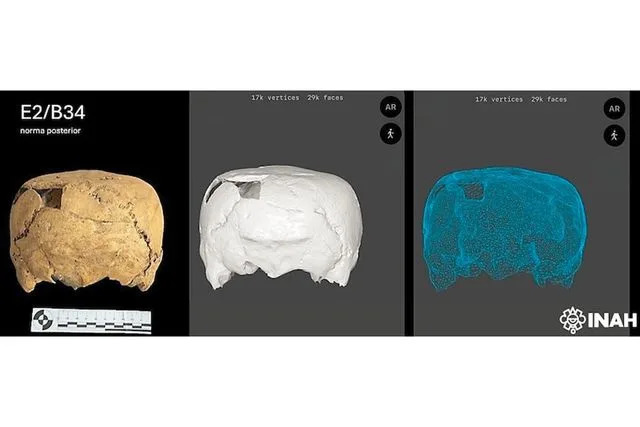
INAHImaging of cube-shaped skull found at archeological site in Mexico
A Previously Unreported Square Variant
Anthropologist Jesús Ernesto Velasco González, quoted in the INAH release, noted that this discovery represents the first identification of intentional cranial deformation at this type of site and documents a variant not previously recorded in the area. “The variant observed produces a markedly square head silhouette, unlike the more commonly documented conical forms,” he said.
Broader Cultural Implications
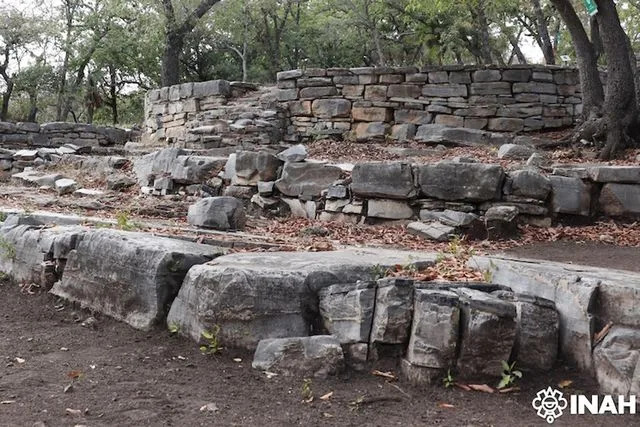
INAHArcheological site in Mexico where cube-shaped skull was found
Researchers suggest the find may support theories of cultural and historical connections between mountain communities of the northern Huasteca and Mesoamerican groups of the Gulf Coast lowlands. They also propose potential links to populations in northern Mexico and regions that are now part of the southern United States, highlighting the possibility of broader interregional contact and exchange during the Classic period.
Significance
This discovery expands understanding of regional variation in cranial modification practices across Mesoamerica and invites further study into how head shaping functioned as social signaling, identity formation and evidence of cultural connections between distant communities.
“Not only was intentional cranial deformation identified for the first time for this type of site, but also a variant with respect to the models recognized in Mesoamerica not reported until now in the area,” — Jesús Ernesto Velasco González, INAH.
Help us improve.