Archaeologists uncovered a 1,400-year-old Zapotec tomb in San Pablo Huitzo, Oaxaca, dating to about A.D. 600. The entrance features a dramatic owl sculpture that frames the painted face of a Zapotec lord, while interior polychrome murals depict a funeral procession carrying copal. Stone slabs engraved with calendrical names and carved guardian figures flank an elaborately decorated doorway. INAH teams are conserving the tomb and will study ceramics, iconography and the small number of human remains to learn more about Zapotec funerary practices.
1,400-Year-Old Zapotec Tomb in Oaxaca Reveals Giant Owl Sculpture Holding a Lord's Portrait
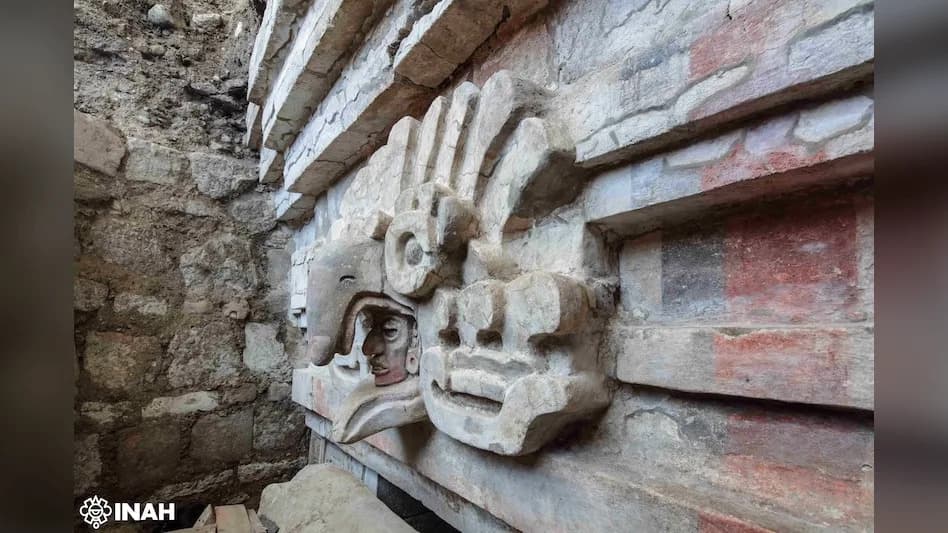
A sculpted owl, whose beak covers the painted face of a Zapotec lord, decorates the front of a 1,400-year-old tomb in Oaxaca. | Credit: Luis Gerardo Peña Torres/INAH
Archaeologists in Mexico have uncovered a remarkably well-preserved 1,400-year-old Zapotec tomb in San Pablo Huitzo, Oaxaca, featuring a monumental owl sculpture whose open beak frames the painted face of a Zapotec lord, vivid polychrome murals and carved calendrical inscriptions.
Discovery and Context
The burial was located after investigators followed up on an anonymous tip about looting. At a Jan. 23 news conference, President Claudia Sheinbaum Pardo described the find as "the most significant archaeological discovery in a decade in Mexico." The tomb was excavated in 2025 and dates to roughly A.D. 600, during a flourishing period of Zapotec civilization — a culture that emerged around 700 B.C. and persisted until the Spanish conquest in the 16th century. Hundreds of thousands of Zapotec-speaking people still live in Mexico today.
Entrance and Iconography
At the tomb entrance archaeologists documented a large carved owl with an open beak that reveals the painted face of a man interpreted as a high-ranking ancestor or lord. According to a translated statement from Mexico's National Institute of Anthropology and History (INAH), the owl in Zapotec belief symbolized death and authority, suggesting the sculpture intentionally presents the deceased as an ancestor invested with power.
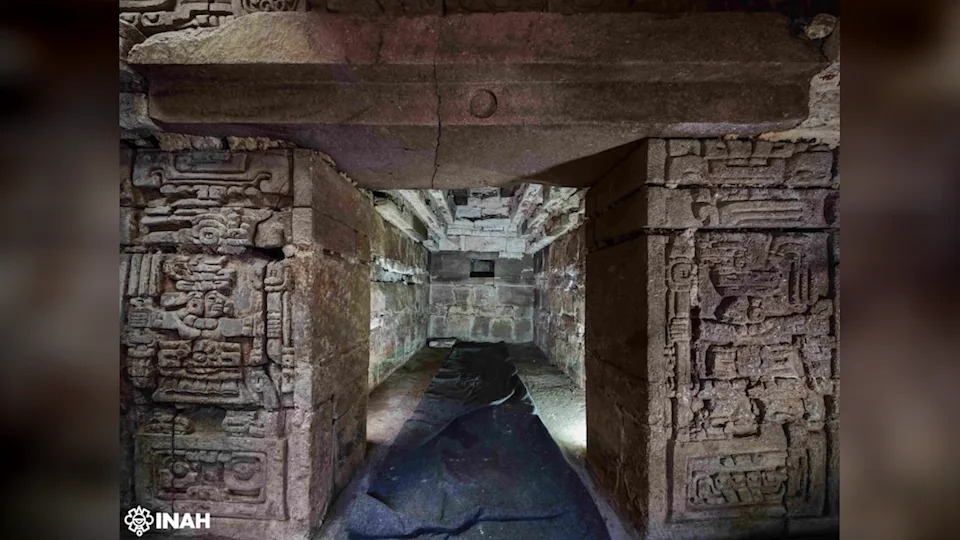
Inside the tomb, there is a chamber flanked by carved male and female figures. | Credit: Luis Gerardo Peña Torres/INAH
Architecture and Murals
Inside the tomb a threshold dividing two chambers features an elaborately carved doorway. The lintel is made of stone slabs engraved with "calendrical names" — the Zapotec naming system that linked deities and important individuals to symbols tied to birth dates. Flanking the doorway are carved figures of a man and a woman, which INAH suggests may represent ancestors interred in the tomb or guardians of a ritual space.
The burial chamber's walls preserve polychrome murals in white, green, red and blue. The paintings depict a funeral procession whose participants carry bags of copal, the resin burned as incense during pre-Hispanic Mesoamerican ceremonies, offering rare and vivid insight into Zapotec funerary ritual and visual language.
Conservation and Research
An interdisciplinary INAH team is conserving and protecting the site. Ongoing research will analyze associated ceramics, the tomb's iconography and the small number of human bones recovered during excavation to better understand the individual's social role, burial rites and regional connections.
"An exceptional discovery," said Claudia Curiel de Icaza, Mexico's Secretary of Culture, highlighting the tomb's state of preservation and the cultural insights it yields.
The Huitzo tomb joins about a dozen other ancient Zapotec tombs found across Oaxaca in the past decade — many of which were sadly looted before archaeologists could document them. INAH and Mexican authorities emphasize the importance of conservation and community collaboration to protect archaeological heritage.
Help us improve.