Britain will rejoin the EU’s Erasmus student‑exchange program beginning January 2027, allowing UK students and apprentices to study or train in EU countries without extra international tuition fees. The U.K. will pay about £570 million ($860 million) for the first year, with future costs to be determined. The move expands opportunities for pupils, adult learners, educators and sports coaches and is part of efforts to repair post‑Brexit ties, even as other negotiations — including on defense funding — remain unresolved.
UK to Rejoin EU’s Erasmus Exchange Program — Major Step in Resetting Post‑Brexit Ties

FILE - Dr. Peter Sotonyi, rector of the University of Veterinary Medicine in Budapest, Hungary, gives an anatomy lecture for first-year students, using chalk to mark the body of live horses, Monday, Sept 9. 2024. (AP Photo/Denes Erdos, File)
LONDON (AP) — Britain will rejoin the European Union’s flagship Erasmus student-exchange scheme, the government announced Wednesday, a move intended to help reset the U.K.’s post‑Brexit relationship with the 27‑nation bloc.
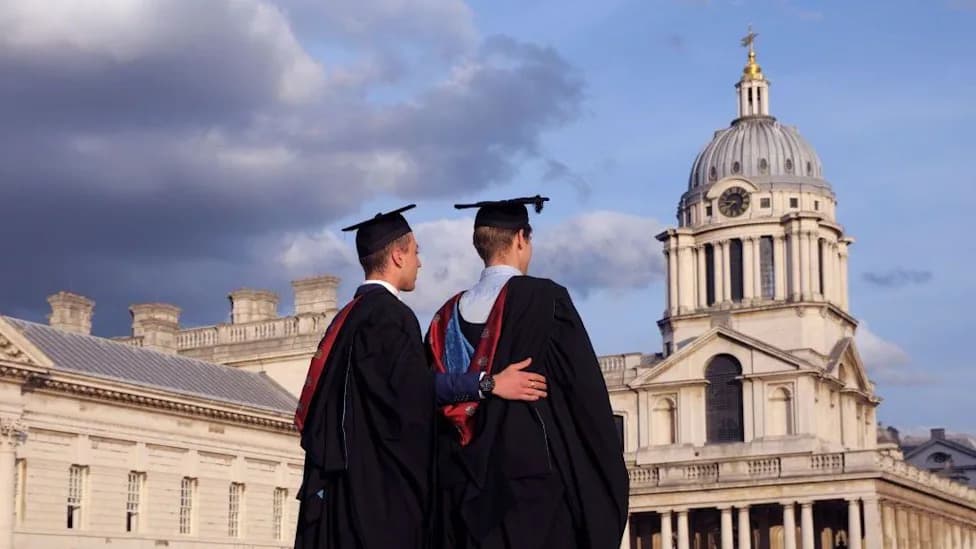
When it starts: Participation begins in January 2027. Under the agreement, British university and college students and apprentices will be able to study or train in EU countries without paying extra international tuition fees, and students from EU member states will again be eligible to study in the U.K.
Who benefits: The arrangement extends beyond higher education. School pupils, adult learners, educators, apprentices and sports coaches will all have opportunities to study, train or teach abroad through the program.
Cost and commitment: The U.K. will contribute about £570 million (roughly $860 million) for the first year, with the payment levels for subsequent years to be determined later.
The nearly four‑decade‑old Erasmus program is among the EU’s most popular initiatives, enabling millions of young Europeans to study and live temporarily in other countries. The scheme already includes several non‑EU members, such as Iceland and Norway.
Britain’s EU Relations Minister Nick Thomas‑Symonds called the deal “a huge win for our young people, breaking down barriers and widening horizons to ensure everyone, from every background, has the opportunity to study and train abroad.”
The U.K. voted in 2016 to leave the EU and formally exited in 2020 under a narrow trade agreement that ended the automatic right for British citizens to live, study and work freely across the bloc. Then‑Prime Minister Boris Johnson withdrew Britain from Erasmus at the time, saying it did not represent good value for money.
Prime Minister Keir Starmer’s centre‑left Labour government has made repairing ties with the EU a priority after years of Brexit‑related tensions. In May, the U.K. and EU announced new accords on trade, travel and defense, and negotiators have continued talks to reduce trade barriers for food and drink and to develop a broader youth‑mobility scheme.
However, negotiations on the U.K. joining a major EU defense fund recently collapsed amid disagreement over how much Britain would be expected to contribute.
What to watch next: Officials will negotiate the longer‑term financial settlement for continued participation, the exact program rules for different learner groups, and how Britain’s reentry will interact with parallel mobility and trade measures under discussion.
Help us improve.