In al-Mufaqara, nights are dominated by the Mountain Guardians Committee — about 30 young men who rotate watches on a ridge to protect 23 families from settler attacks. Their presence, combined with community solidarity and improvised defences, has reduced opportunistic assaults and helped shepherd women and children to safety. Residents continue to face demolitions, land seizures and violence, yet they remain determined to stay on ancestral land.
Night Guardians: How Al-Mufaqara’s Villagers Keep Watch Against Settler Attacks

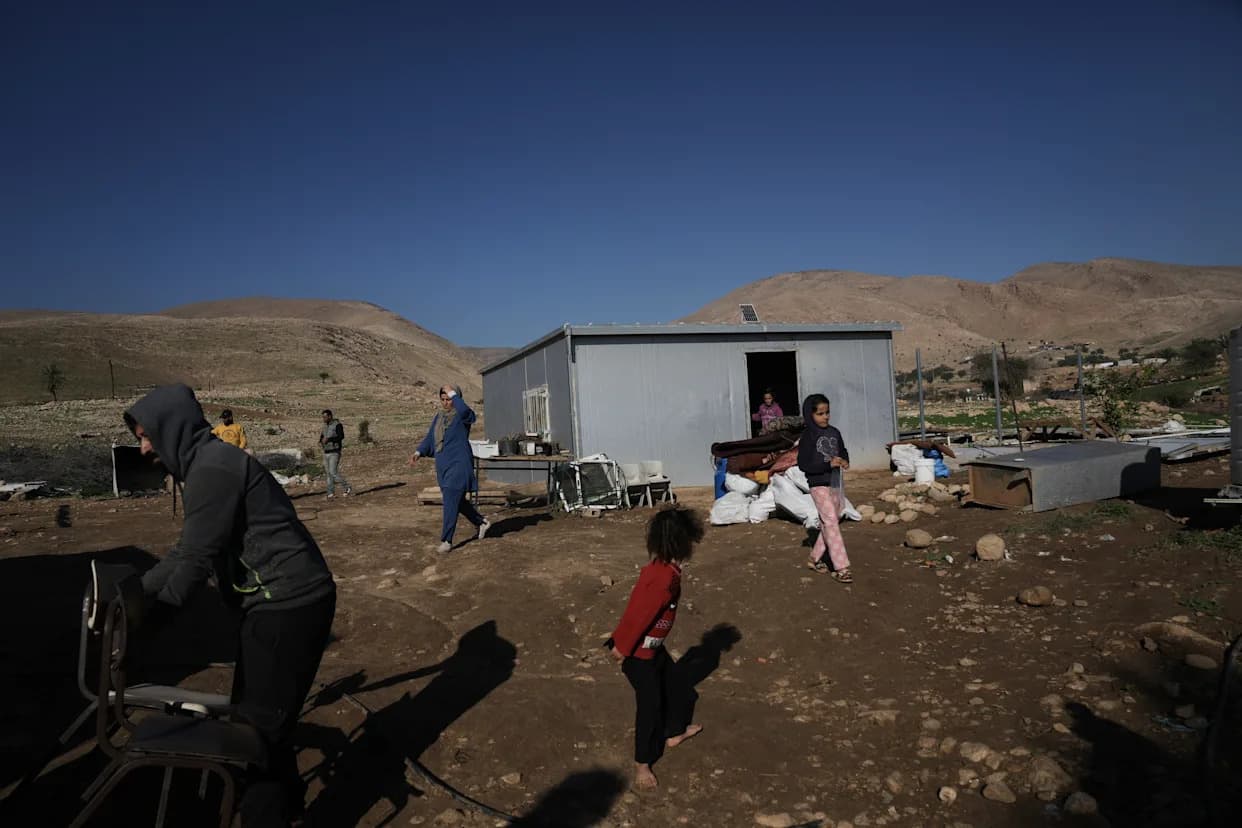
Hamida Hamamda in her yard with her grandchildren. Her granddaughters stand in the house, behind the metal grates they had to install to try to protect themselves from settlers [Mosab Shawer/Al Jazeera]
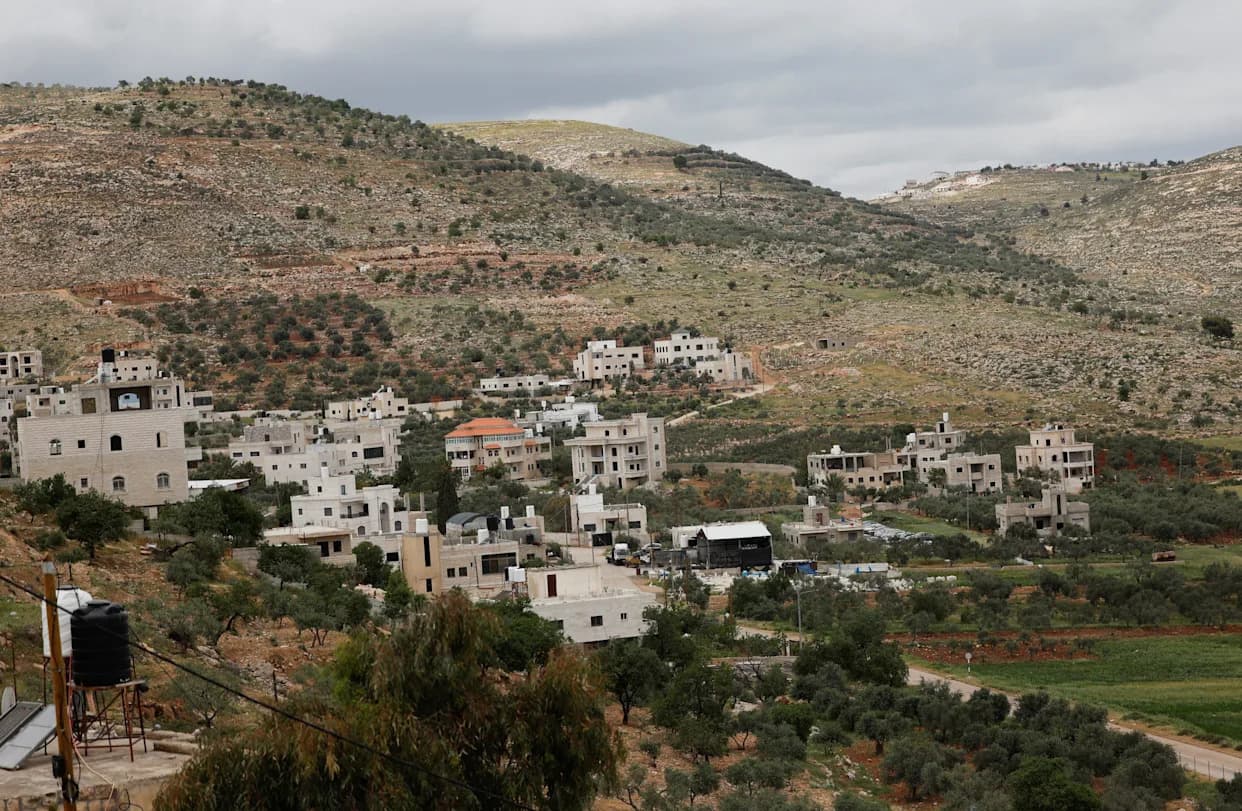
In al-Mufaqara, a small village in Masafer Yatta south of Hebron in the occupied West Bank, night is not a time for rest but for vigilance. From sunset to dawn, groups of men take shifts on a high ridge overlooking the hamlet, watching for incursions from nearby settlements and hastily erected outposts.
A Community On Watch
The Mountain Guardians Committee — roughly 30 young men — patrols the ridge each night. They sit behind makeshift windbreaks of stacked tyres, keep torches lit, tend small cooking fires and keep a pot of sage tea simmering to stay warm through the long hours. Their routine is organised: scouts scan the hills, a team manages lights and improvised alarms, a kitchen crew prepares food and hot drinks, and a support group coordinates logistics and communications.
“Our task isn't easy, but it’s also not impossible,” one guard says. “The night is ours, as long as we guard it.”
Why They Watch
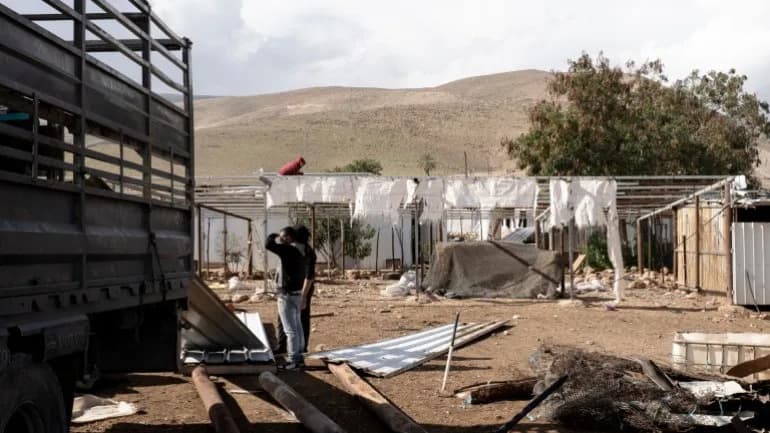
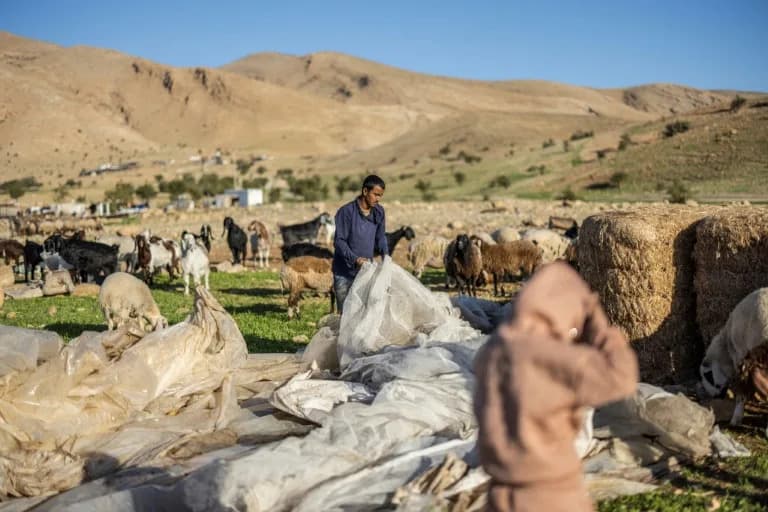
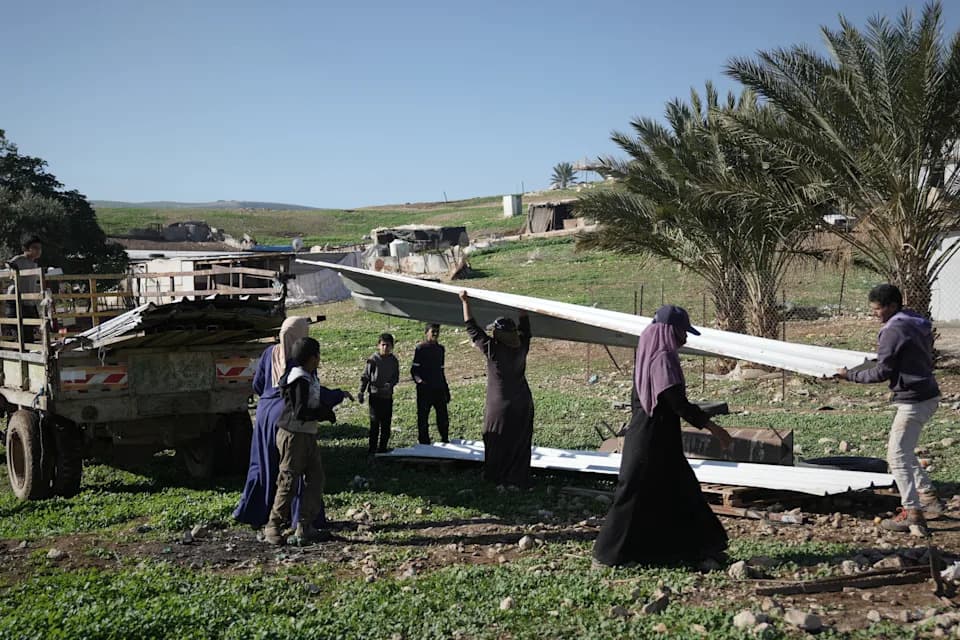
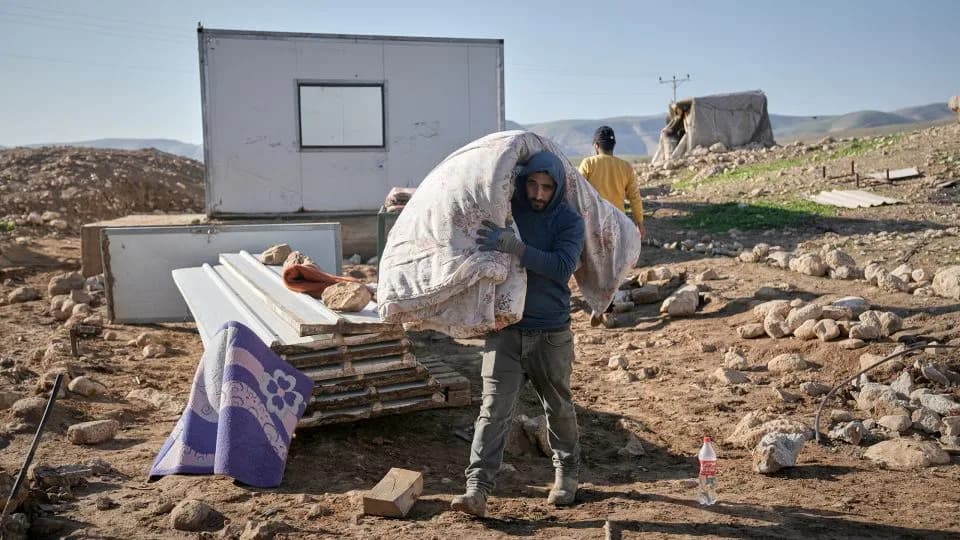
Al-Mufaqara — home to about 23 families, roughly 220 people including some 50 children — depends on herding, agriculture and animal husbandry. That way of life has been repeatedly threatened by settler violence and actions attributed to Israeli authorities: homes demolished, farmland damaged or seized, dwellings burned and, in some cases, residents killed. The recent shooting of Awda al-Hathalin by an Israeli settler has become a stark symbol of the dangers villagers face.
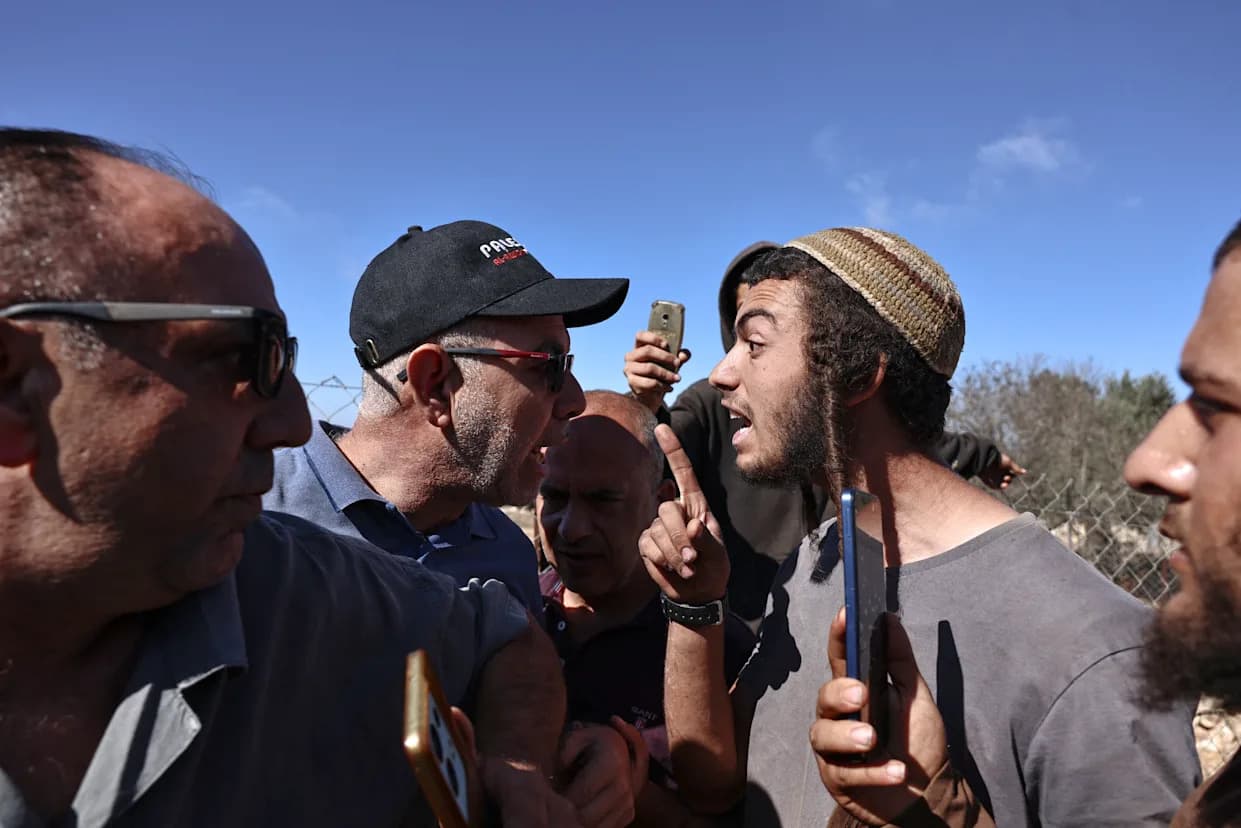
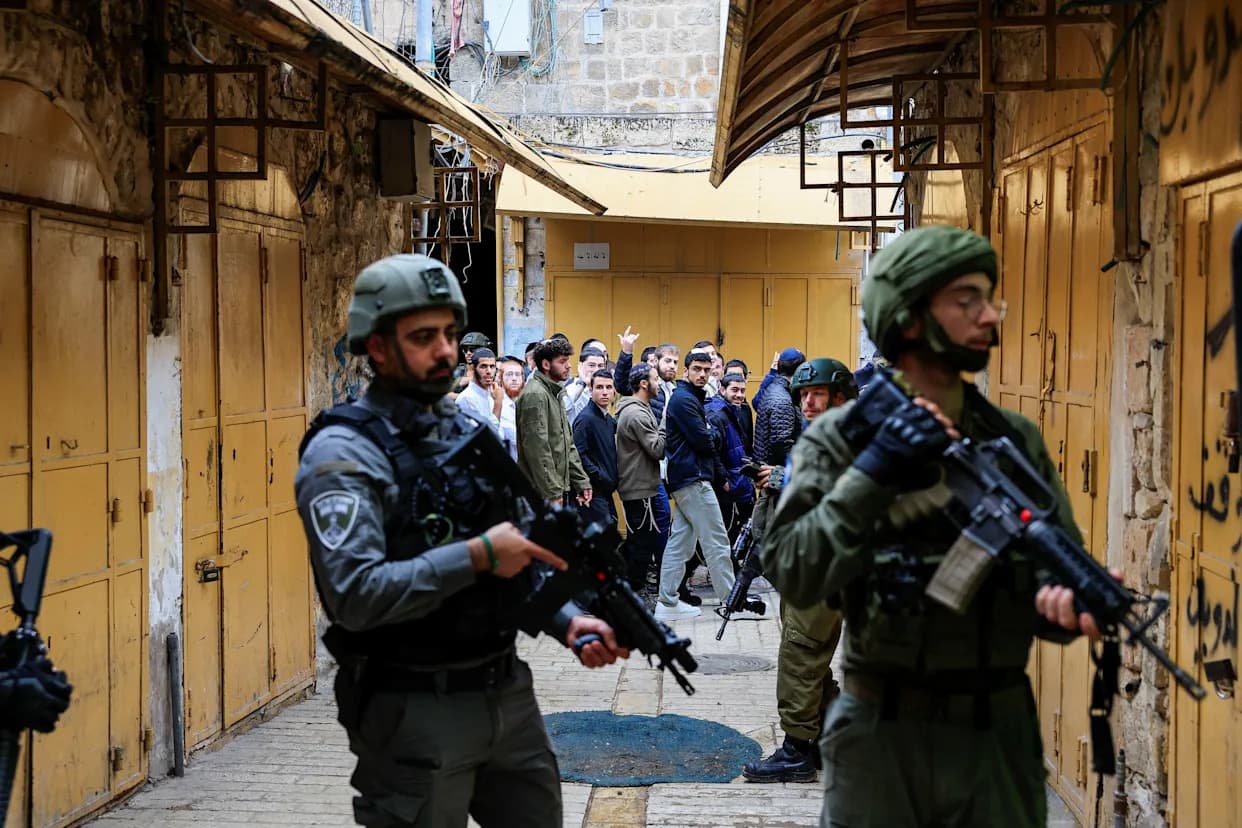
Villagers report that since October 7, 2023, tensions and incidents have intensified: settlers breaking into homes, throwing stones, shouting threats, and releasing flocks onto Palestinian fields to trample crops and fruit trees that owners cannot safely access. On several occasions, settlers have seized caves and nearby terrain, raising the risk of eviction.
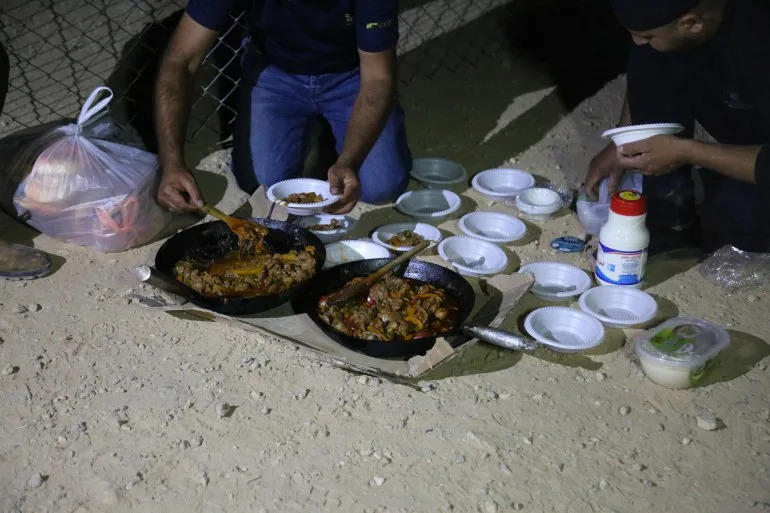
Some of the guardians are in charge of preparing food for the group, to keep everyone going all night [Mosab Shawer/Al Jazeera]
Life Between Vigilance And Home
At home, families take small protective measures — barbed wire on windows, barking dogs in yards, and underground caves used as refuges during attacks. Eleven-year-old Asala describes hiding in a nearby cave with her siblings when settlers approach: “When the settlers attack the village, we run here… to the cave.” She adds, “I wish I could live my childhood and go to school without fear.”
Women and elders support the guards in practical ways: bringing coffee, sunflower seeds and homemade sweets. Hamida Ali Hamamda, a 51-year-old mother of nine, asks a neighbour who bakes traditional cakes to send treats up the hill each night as a small comfort to the watchers. “They guard us, and we send them sweets… At least we share something small to ease their burden,” she says.
Organization And Response
The committee’s presence has changed how attacks unfold. Guards estimate that visible night watches have reduced opportunistic attacks because settlers no longer find the village unguarded. When incidents occur, the committee follows a clear protocol: one team escorts women and children to caves, another secures livestock pens, and a third attempts to confront or delay attackers until outside reinforcements or help arrive.
Members stress that their aim is to protect life and property while keeping the community on its ancestral land. “We all know that the settler is merciless,” says Muath al-Hamamda, 32. “But the Palestinian will not abandon his land. Even the children here know that the land is life.”
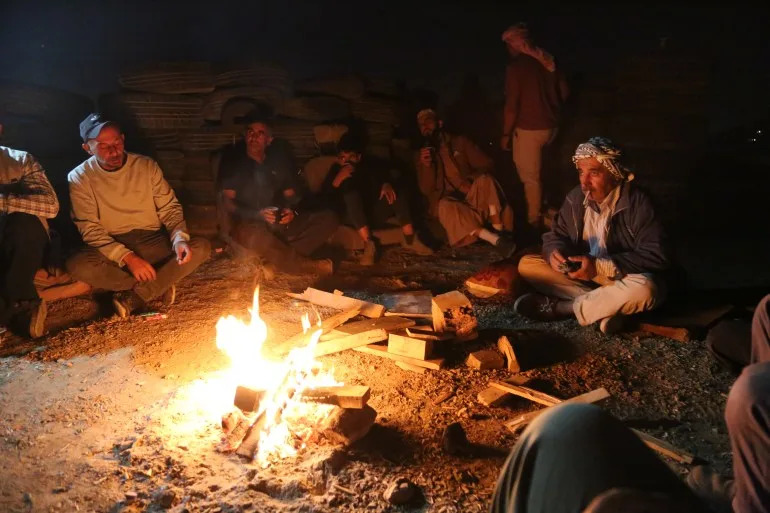
The night guardians around their fire [Mosab Shawer/Al Jazeera]
Encroachment And Official Responses
Residents say the village is increasingly encircled: in addition to nearby Avigail and Havat Ma’on, five new outposts — described locally as illegal even under Israeli law — have appeared around the horizon. Several villagers report that when they sought police assistance after evictions or other incidents, they were told an area was a “closed military zone,” limiting access to remedies.
Small Acts Of Resistance
Near the guard post, 47-year-old Jalal al-Amour cooks nightly for the watchers, stirring a pot while gesturing to a cave marked by a Star of David and an Israeli flag. “I was born in this cave,” he says. “Until the settlers came, they forcibly evicted us, they destroyed everything.” Still, the nightly meals, fires and shared stories help sustain morale: “Fire and smoke are all that remain of the scent of home,” he says.
Dawn And Determination
As dawn breaks, the ridge quiets and the guards descend for sleep, chores or to care for animals. Between moonrise and sunrise the Mountain Guardians Committee keeps watch: a grassroots defence born of necessity, rooted in an insistence to remain on land passed down through generations.
Help us improve.