The fatal shooting of 15-year-old Nabil Safiya in Kafr Yasif has reignited anger over a surge of gang violence affecting Israel's Palestinian citizens. Activists and data from Abraham Initiatives say crime-related killings in Arab communities far outpace those in Jewish communities, while arrests and prosecutions lag. Thousands have marched and Arab towns have staged strikes demanding effective policing, prosecutions and long-term investment to break the cycle of impunity. Authorities say investigations are ongoing and blame internal feuds, but residents demand stronger, sustained state action.
“They Can Kill You Anywhere”: Palestinian Citizens Demand Action After Surge in Gang Violence
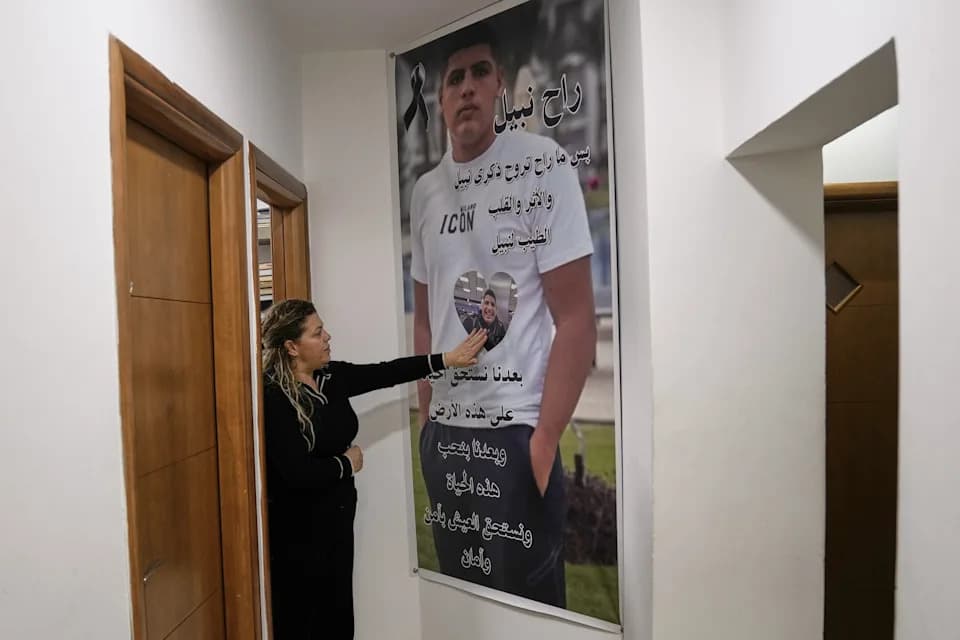
Raweah Safiya palms a poster bearing the image of her son, Nabil, who was shot dead in last November in a case of mistaken identity, a victim of gang-related violence, in Kafr Yasif, northern Israel, Sunday, Jan. 18, 2026. (AP Photo/Mahmoud Illean)(ASSOCIATED PRESS)
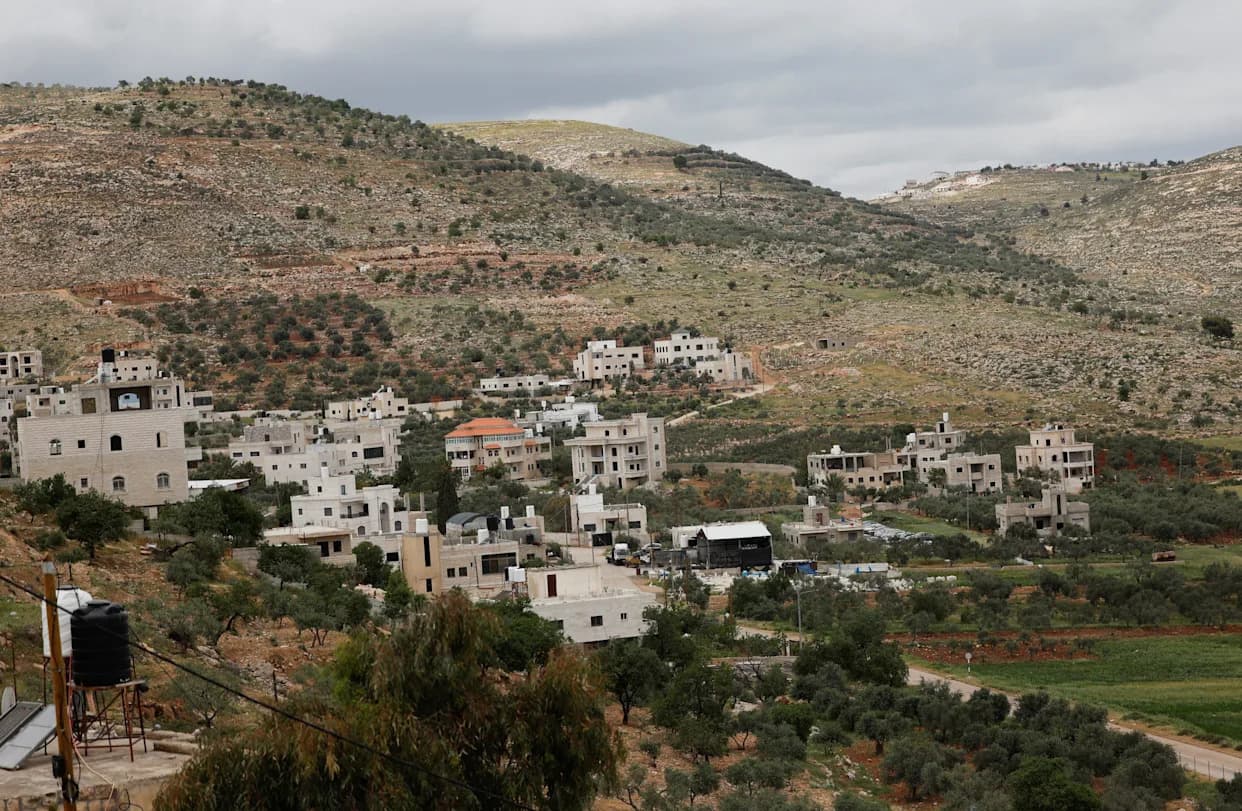
KAFR YASIF, Israel — Nabil Safiya had paused studying for a biology exam to meet a cousin at a pizza parlor when a motorcyclist pulled up and opened fire, killing the 15-year-old as he sat in a black Renault. Police later described the shooting as an apparent case of mistaken identity, but the slaying shocked Kafr Yasif — one of many Palestinian communities in Israel battered by a rising wave of gang-related violence and long‑running family vendettas.
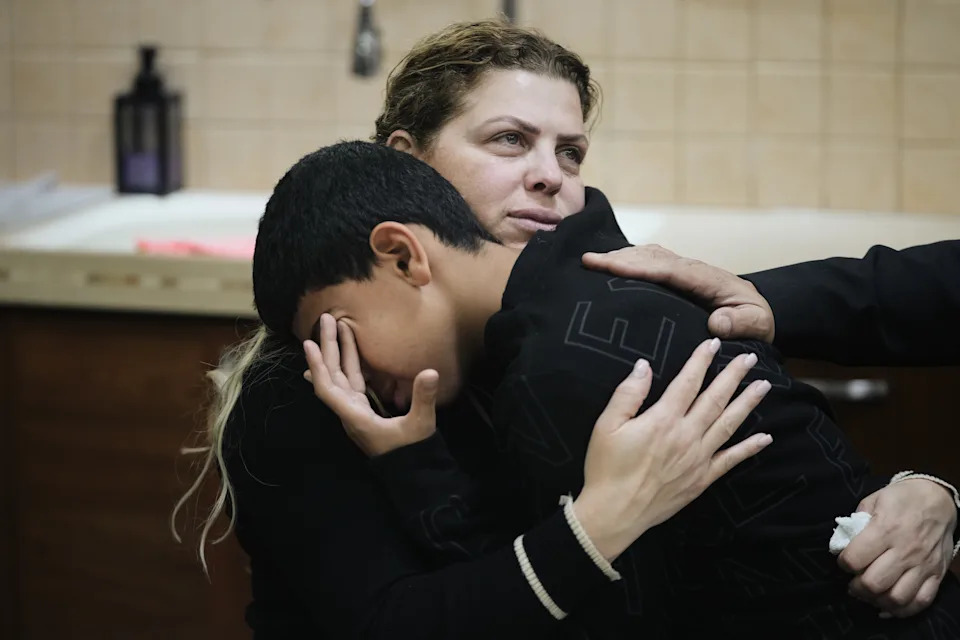
Raweah Safiya consoles one of her children as he cries over the death of his brother, Nabil Safiya, at the family's home in Kafr Yasif, northern Israel, Sunday, Jan. 18, 2026. (AP Photo/Mahmoud Illean)(ASSOCIATED PRESS)
A Community in Mourning
"There is no set time for the gunfire anymore," said Nabil's father, Ashraf Safiya. "They can kill you in school, they can kill you in the street, they can kill you in the football stadium." Residents turned the Safiya home into a memorial and staged marches, strikes and school boycotts after the November killing.
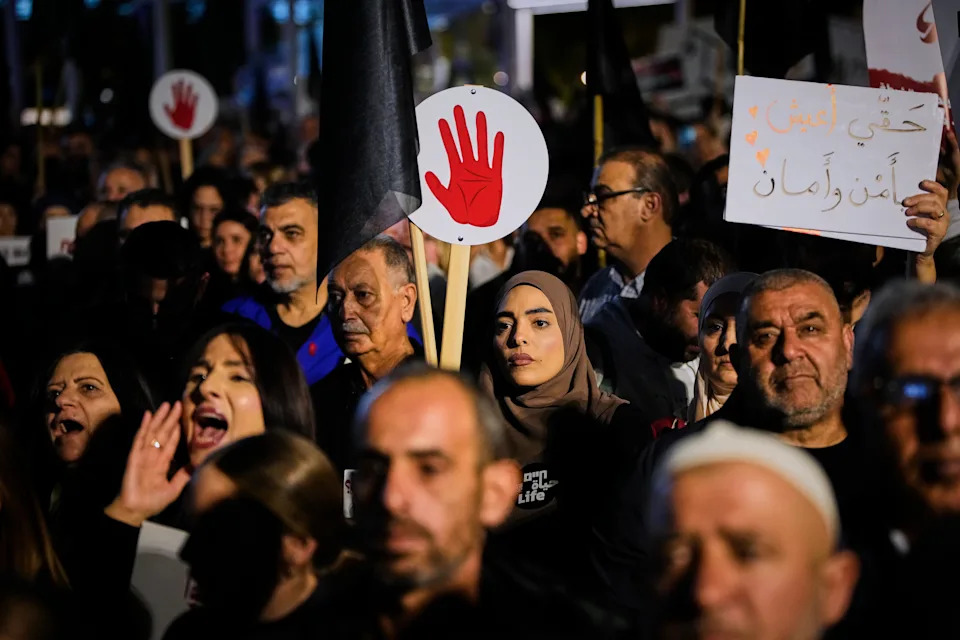
Palestinian citizens of Israel participate in a rally calling for greater security amid rising crime in their communities, in Tel Aviv, Israel, Saturday, Jan. 31, 2026. (AP Photo/Ohad Zwigenberg)(ASSOCIATED PRESS)
Alarming Disparities and a Rising Toll
Advocates point to stark disparities: about one in five Israeli citizens is Palestinian, yet crime-related killings in Arab communities are reported at a rate more than 22 times higher than among Jewish Israelis. Nonprofit Abraham Initiatives recorded a record 252 Palestinian citizens killed in Israel last year, with at least 26 additional crime-related killings reported in January.
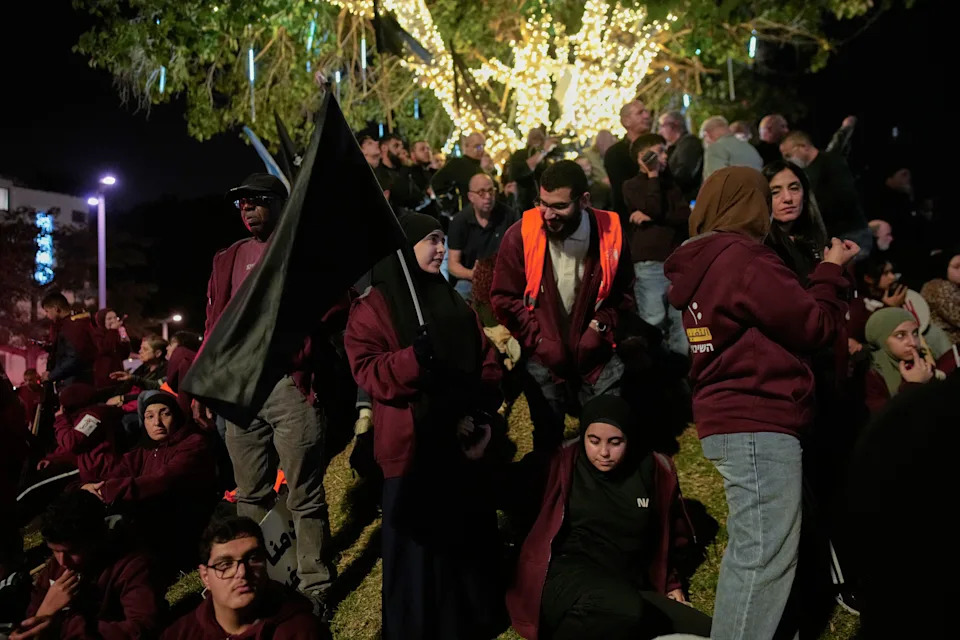
Palestinian citizens of Israel participate in a rally calling for greater security amid rising crime in their communities, in Tel Aviv, Israel, Saturday, Jan. 31, 2026. (AP Photo/Ohad Zwigenberg)(ASSOCIATED PRESS)
"There's a law for the Jewish society and a different law for Palestinian society," said Ghassan Munayyer, a political activist from Lod, reflecting widespread frustration over what many see as selective enforcement.
Why Gangs Thrive
Criminologists and former security officials point to weapons trafficking, loan‑sharking, extortion and limited legitimate credit as engines of gang profit. Walid Haddad, a criminologist at Ono Academic College, said interviews with incarcerated gang members show operatives can earn anywhere from a few thousand to hundreds of thousands of dollars depending on the work — from torching cars to carrying out assassinations.
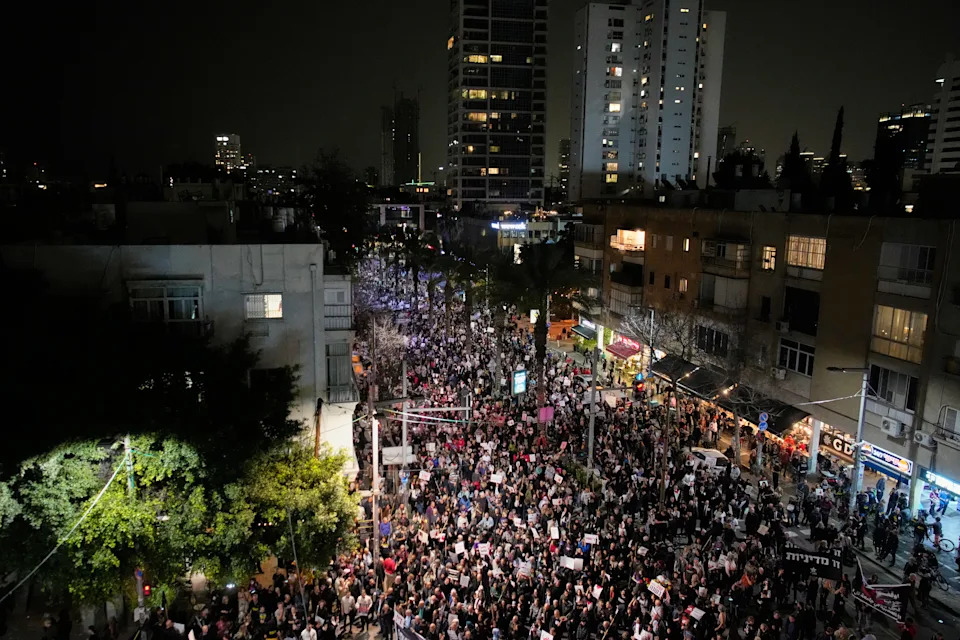
Palestinian citizens of Israel participate in a rally calling for greater security amid rising crime in their communities, in Tel Aviv, Israel, Saturday, Jan. 31, 2026. (AP Photo/Ohad Zwigenberg)(ASSOCIATED PRESS)
Prosecutions and Policing
Prosecutions lag: Abraham Initiatives reports that only 8% of killings of Palestinian citizens led to charges last year, compared with 55% in Jewish communities. Activists say long‑standing mistrust of police discouraged residents from calling for more stations or officers — though many now demand increased policing to restore safety.
Police reject claims of bias, saying investigations are prioritized and guided by evidence and that probes are often hampered when witnesses refuse to cooperate. Still, critics argue enforcement and resources have been uneven — a problem they say has deepened under the current government.
Public Response and Political Pressure
Thousands marched in Tel Aviv and dozens of Arab towns staged strikes to demand decisive state action. Palestinian-led political parties and local leaders have made the killings a central political issue, calling for concrete measures to break cycles of impunity and to invest in local economic and social infrastructure.
Back in Kafr Yasif, the Safiya family and community leaders insist Nabil's death must serve as a turning point. Authorities say they intend to indict a 23-year-old arrested in a neighboring town and describe the killing as tied to intra-community blood feuds — a characterization that many locals say overlooks wider structural failures.
What residents want now: urgent, sustained state intervention that combines effective policing, fair prosecutions, community investment and efforts to curb weapons trafficking and organized crime.
Help us improve.