Verdict Due Monday: Hong Kong is poised to announce its verdict in the 156-day trial of Jimmy Lai, the Apple Daily founder charged with sedition and colluding with foreign forces under the national security law. Prosecutors allege Lai solicited foreign sanctions through articles and meetings with U.S. officials; his lawyers say his statements were opinion protected by free expression. If convicted, Lai faces penalties ranging from years in prison to life; sentencing would come later and an appeal is possible.
Verdict Due in Jimmy Lai’s National Security Trial — A Key Test For Hong Kong’s Press Freedom

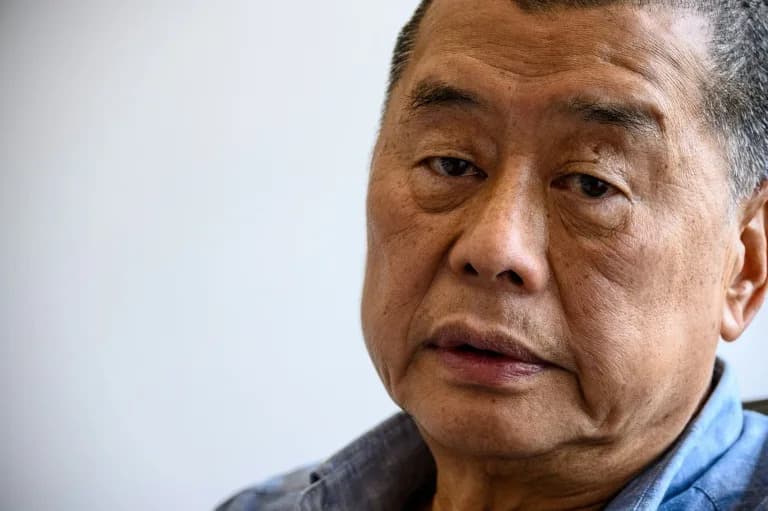
FILE - Hong Kong publisher Jimmy Lai speaks in his Hong Kong office at the Apple Daily newspaper, Nov. 28, 2000. (AP Photo/Vincent Yu, File)(ASSOCIATED PRESS)
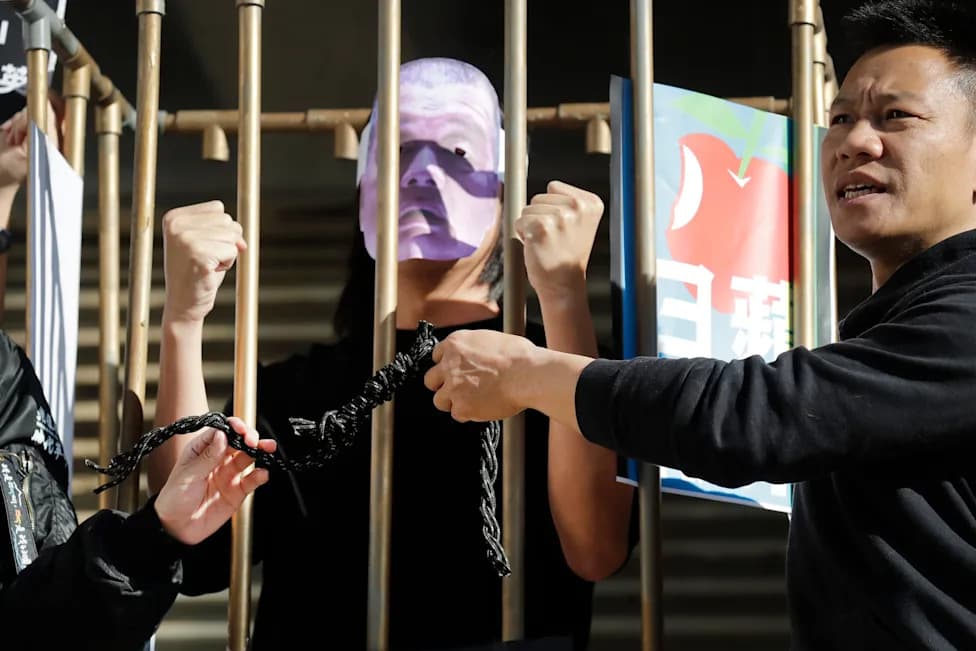
A Hong Kong court is set to hand down its verdict on Monday in the long-running trial of 78-year-old media entrepreneur Jimmy Lai, who faces charges of conspiring to commit sedition and colluding with foreign forces under the city’s national security law. The 156-day trial has become a flashpoint for international concern about judicial independence and media freedom in the semi-autonomous city since Beijing’s post-2019 crackdown on dissent.

FILE - Students rest in the litter of Tiananmen Square as their strike for government reform enters its third week May 28, 1989, in Beijing. (AP Photo/Jeff Widener, File)(ASSOCIATED PRESS)
Background
Lai, a British national who built a business empire that included the Giordano clothing chain, turned to publishing after the 1989 Tiananmen Square crackdown. He founded Apple Daily, a tabloid-style newspaper known for its outspoken pro-democracy stance and frequent calls for public protest. Authorities raided Apple Daily in August 2020 — about 200 police officers entered the newsroom — and Lai has been in custody since December 2020.

FILE - Jimmy Lai, owner of the Hong Kong newspaper Apple Daily, poses next to dry runs of a soon to be launched Taiwanese newspaper taped to his office wall, April 7, 2003, in Taipei. (AP Photo/Jerome Favre, File)(ASSOCIATED PRESS)
Impact On Apple Daily
Within a year of the raid, prosecutors used the national security law to target senior Apple Daily executives, freeze roughly $2.3 million in assets and effectively force the paper to close. Apple Daily’s final print run of 1 million copies sold out within hours as readers collected the last issues.

FILE - Copies of Hong Kong's Apple Daily sit at a stand in Hong Kong, Sept. 10, 2020. (AP Photo/Kin Cheung, File)(ASSOCIATED PRESS)
Charges And The Prosecution's Case
Prosecutors argue Lai and others invited foreign governments, including the United States, to impose sanctions or other punitive measures on China and Hong Kong under the guise of advocating for freedom and democracy. The prosecution focused on Lai’s published articles, online broadcasts and his meetings with foreign officials — notably former U.S. Secretary of State Mike Pompeo and then-Vice President Mike Pence —during the 2019 unrest to show an intent to solicit foreign action.

FILE - Riot police work to disperse protesters with fire tear gas outside the Legislative Council June 12, 2019, in Hong Kong. (AP Photo/Vincent Yu, File)(ASSOCIATED PRESS)
Defense And Key Arguments
Lai’s defense concedes he once called for sanctions before the national security law took effect but says he stopped thereafter. Lawyer Robert Pang described Lai’s public comments as opinion and punditry — "armchair commentary" comparable to talk "over the dim sum table." Lai told the court he wrote "without any sense of hostility or intention to be seditious." Pang also urged the court to consider freedom of expression as a fundamental right.
Judge Esther Toh responded: "It’s not wrong not to love the government, but if you do that by certain nefarious means, then it’s wrong."
Witnesses, Co‑accused And International Reactions
Six senior Apple Daily executives pleaded guilty in 2022; some later testified for the prosecution. Other witnesses linked to advocacy groups such as "Fight For Freedom Stand With Hong Kong" also gave evidence, though Lai’s team challenged the credibility of some testimonies. The Inter-Parliamentary Alliance on China publicly rejected what it called "false claims" about Lai’s ties to its network.
The trial has drawn statements of concern from foreign governments. U.S. and U.K. officials have urged fair treatment or release; the article notes that former U.S. President Donald Trump said he had raised the case with China and that U.K. Prime Minister Keir Starmer described securing Lai’s release as a priority. Beijing, for its part, has labeled Lai "an agent and pawn of anti-China foreign forces." Pretrial controversy also included the barring of a British lawyer from Lai’s defense on national security grounds, prompting a postponement of the trial.
Health, Potential Sentences And Next Steps
Lai’s legal team has raised concerns about his health — his lawyer said he experienced heart palpitations and was fitted with a monitor — while authorities maintain custodial medical care has been adequate. Under the national security law, sentences range from a minimum term of three years for less serious conduct up to 10 years or life imprisonment for the most grave offenses. If convicted, Lai would be sentenced on a later date and retains the right to appeal.
Verdict day is expected to be closely watched both inside Hong Kong and internationally, as observers assess what the outcome may signal for press freedom and the city’s legal autonomy under Chinese rule.
Help us improve.