
2026 is a rich year for stargazers: highlights include a January supermoon and Jupiter opposition, a six-planet parade in February, a total lunar eclipse on March 3, and a major total solar eclipse on August 12 that crosses parts of mainland Europe. The Perseid peak on August 12–13 coincides with a new moon, offering excellent meteor-viewing conditions. The year also features two supermoons (Nov 25 and Dec 23), several close planetary pairings, and occultations of the Pleiades.
12 Must-See Night-Sky Events in 2026 — From a Total Solar Eclipse to Dazzling Auroras
09:39 PM, 12/10/2025

Solar prominences and their associated magnetic loops of plasma can be seen within the sun's corona during a total solar eclipse photographed from Clarksville, Texas. In 2026, another eclipse will dazzle those stargazers lucky enough to be in the path of totality.Miguel Claro
If you’re looking for reasons to start watching the night sky, 2026 delivers. The year opens with a January supermoon, includes a rare six-planet parade and a total lunar eclipse before St. Patrick’s Day, and builds to a midyear total solar eclipse that crosses parts of mainland Europe for the first time since 1999. Add moonless Perseid peak nights, striking planetary pairings, and repeat occultations of the Pleiades, and you’ve got a calendar full of memorable evenings under the stars.
January: Supermoon and a Bright Jupiter
On the evening of January 3, a supermoon (the full moon near perigee) rises near Jupiter. The moon looks larger and brighter because it is closer to Earth in its orbit. For the most dramatic view, watch the moonrise at sunset — the moon illusion makes it appear especially big near the horizon.
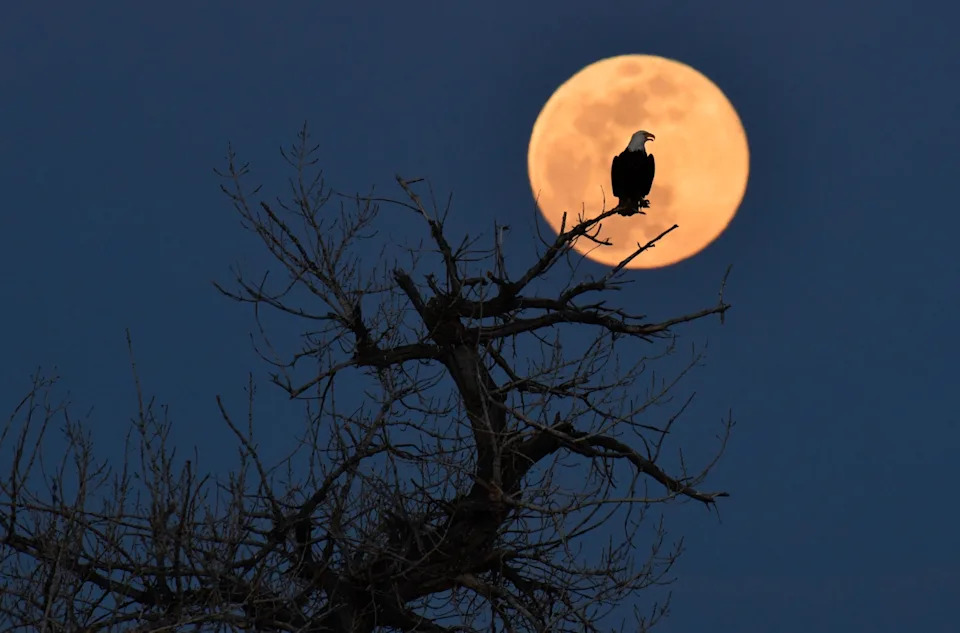
A bald eagle sits near its nest while the super pink moon rises in the distance at Chatfield State Park in Littleton, Colorado on April 7, 2020. The first supermoon of the new year will take place on January 3, 2026, also known as the "wolf moon."Eric Lutzens, MediaNews Group/The Denver Post/Getty Images
Jupiter reaches opposition on January 10, meaning Earth sits between the gas giant and the Sun. The planet will appear brighter and larger during January 9–10 — its most prominent appearance since December 2024 — and won’t look this bold again until 2027. Face east around sunset to find Jupiter; this month it sits in Gemini and remains observable all night.
Late February: Six-Planet Alignment
The last week of February brings a six-planet parade visible shortly after sunset. Look west for Venus, Mercury, and Saturn low near the horizon (all visible to the unaided eye). Neptune is nearby but requires a telescope, while Jupiter will sit higher in the southern sky and Uranus will lie near the Pleiades — the latter needs binoculars or a telescope.
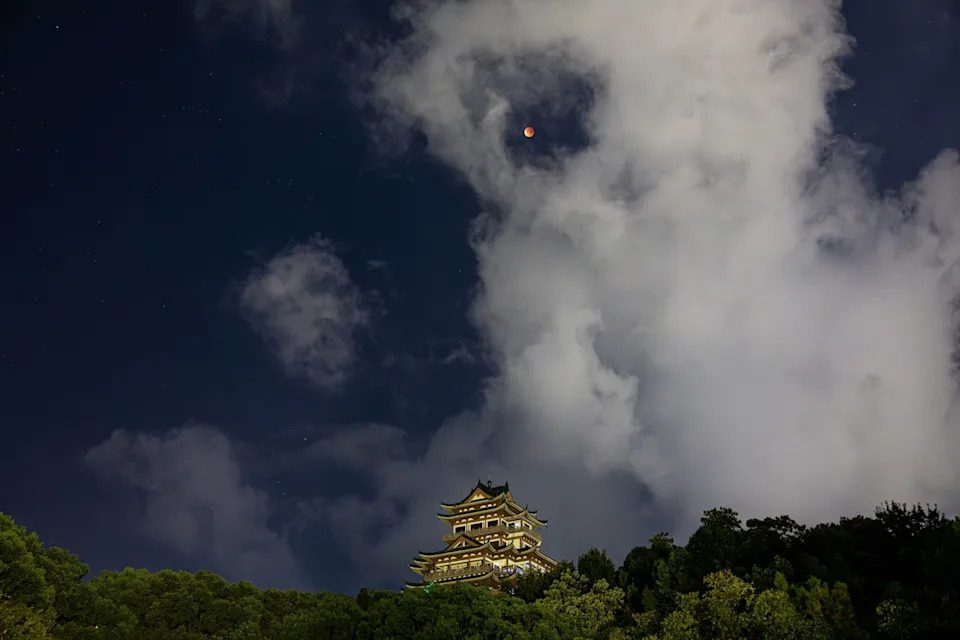
The moon is seen during a lunar eclipse in the sky over Wenling City in China's Zhejiang Province. Stargazers will get a chance to see another total lunar eclipse, known as a blood moon, in March 2026.Xu Weijie, Xinhua/eyevine/Redux
Tip: Wait until full darkness before pointing telescopes toward the western horizon, and choose a location with an unobstructed western view.
March 3: Total Lunar Eclipse (Blood Moon)
Early on March 3 the Moon will experience a total lunar eclipse, often called a blood moon because the lunar surface takes on deep orange-red tones. The color results from sunlight refracting through Earth’s atmosphere and bathing the Moon in reddened light.
A stargazer admires aurora near Fairbanks, Alaska in March, 2025.Marc Rassel
Much of the Americas, the Pacific, and large parts of Asia and Oceania can see the event. Observers in the western U.S., western Canada, Pacific islands, and New Zealand will enjoy the most complete, start-to-finish views. Continental U.S. viewers will still see much of the eclipse, though sunrise may cut the finale short.
Spring Auroras
The spring equinox can favor auroral activity, and the Sun’s heightened cycle (peaking in 2024–2025) continues to increase the odds of vivid northern lights into 2026. March is often a strong month for aurora-chasing in Alaska, where clearer nights and boosted solar activity align for excellent viewing opportunities.
Aurora are seen near Fairbanks, Alaska in March, 2025.Marc Rassel
June 8–9 and June 17: Venus and Jupiter Conjunctions
On June 8 and 9, Venus and Jupiter will appear very close — just over 1 degree apart — above the western horizon, with Mercury briefly visible after sunset. Their near-pairing remains impressive for days, and on June 17 the two planets align with Mercury and a thin crescent Moon for a photogenic grouping.
August 7 (Pre-Dawn) and October 27: Moon Occults the Pleiades
Just after midnight on August 7, a crescent Moon will pass in front of the Pleiades star cluster, sequentially hiding and revealing the cluster's brightest stars. This occultation will be visible across much of the contiguous United States, and it repeats soon after sunset on October 27. Occultations help astronomers refine positions and motions of celestial objects.
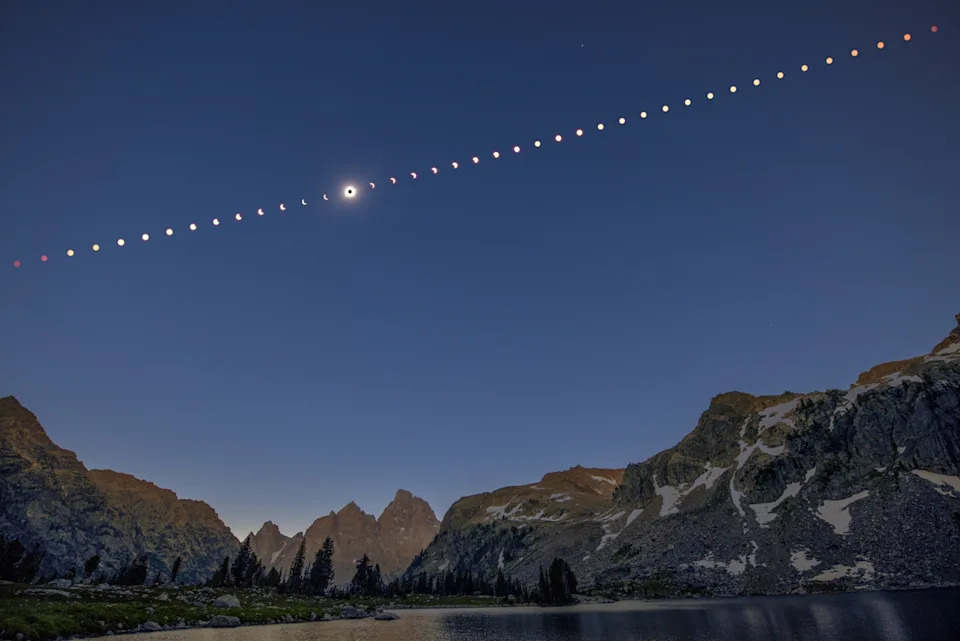
A composite image of the total solar eclipse sequence photographed above the Grand Teton mountains and Lake Solitude in 2017.Babak Tafreshi, Nat Geo Image Collection
August 12: Total Solar Eclipse Across Parts of Europe
The centerpiece astronomical event of 2026 is the total solar eclipse on August 12. The path of totality crosses parts of the Arctic Ocean, eastern Greenland, western Iceland, a narrow stretch of remote Portugal, and northern Spain — making it mainland Europe’s first total solar eclipse since 1999.
Observers in the path will experience daylight dim to dusk and can view the Sun's corona during totality. Totality lasts roughly one to two minutes in most locations along the track. People just outside the path will see a dramatic partial eclipse. Important: use proper solar filters for any viewing except during the brief interval of totality.
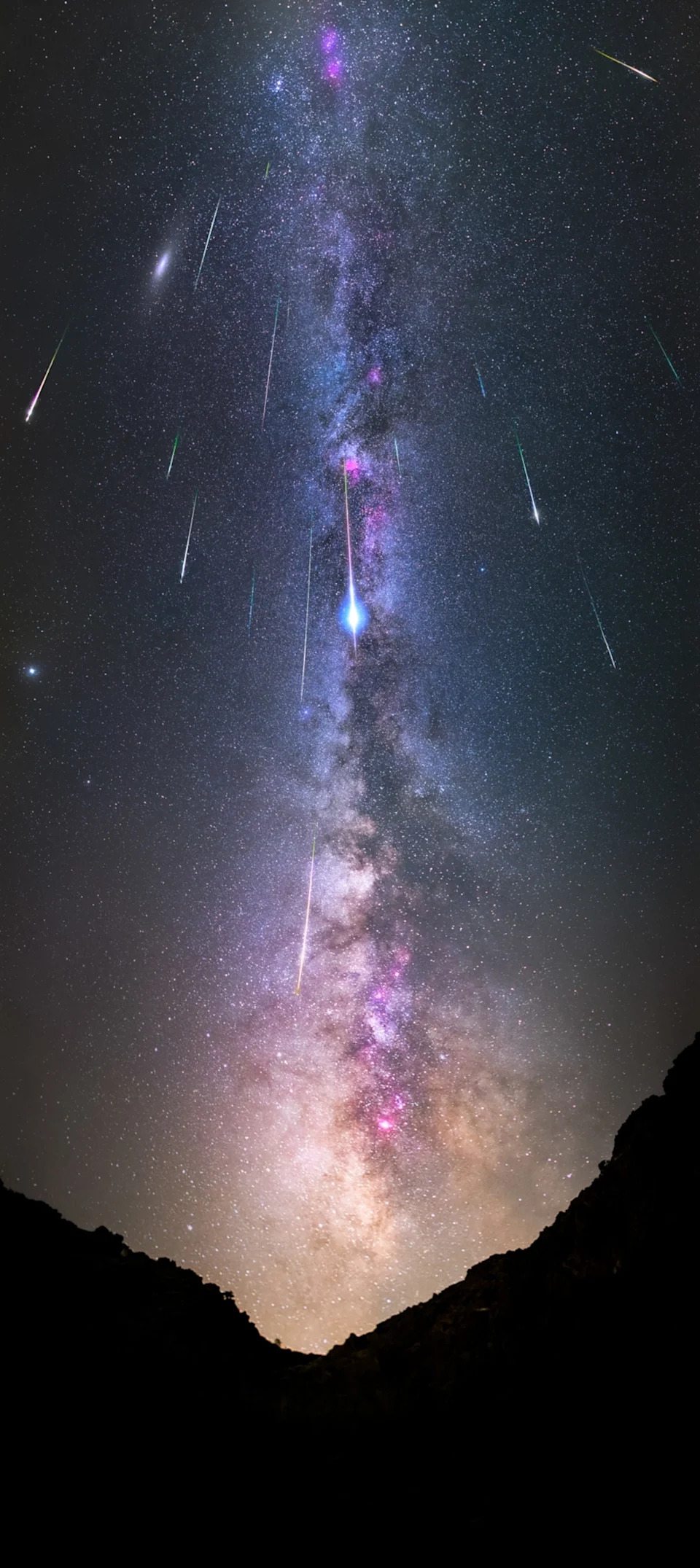
A composite image showing the Milky Way and some of the brightest meteors captured during the peak of Perseids meteor shower in 2021 as seen from Dark Sky Aldeias do Xisto, the second Starlight Tourist Destination in Portugal.Migue Claro
August 12–13: Moonless Perseid Peak
The Perseid meteor shower peaks on the night of August 12–13 in 2026, and the peak coincides with a new moon — ideal conditions because there will be no moonlight to wash out fainter meteors. From a dark, remote site the shower could produce around 90 meteors per hour at peak, with the best viewing window from midnight until dawn.
November 25 and December 23: Supermoons
A second supermoon rises November 25, traditionally called the beaver or frost moon. The year's closest supermoon arrives on December 23 — the 'cold moon' — appearing especially large and bright at moonrise in the early evening. Around late December, Jupiter and Mars will sit just below the Moon before midnight while Saturn remains visible after sunset in the west.
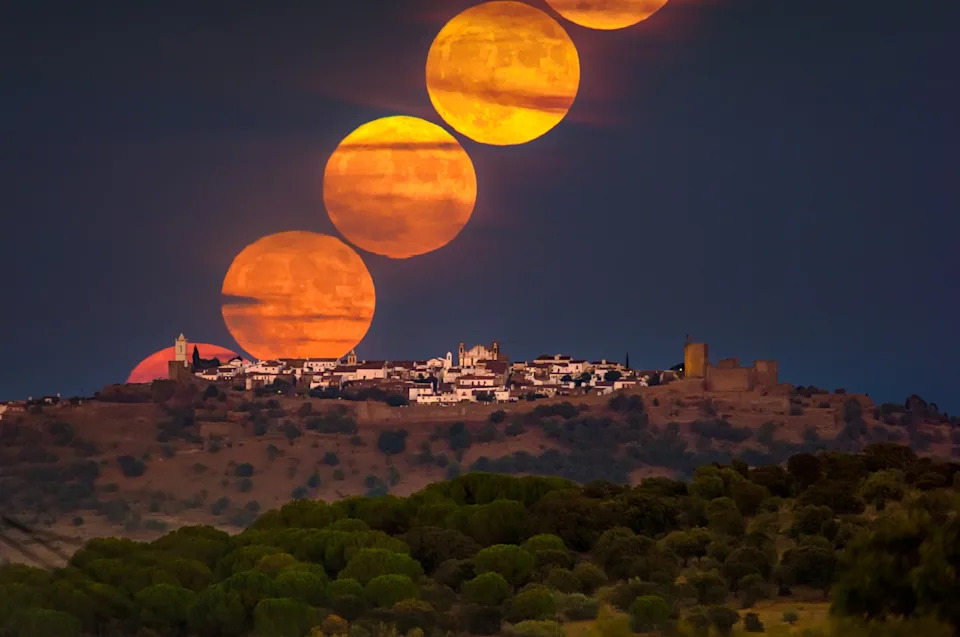
This sequence shows the August 2023 super “blue” moon, the largest super moon of that year, rising above Monsaraz castle at Dark Sky Alqueva in Portugal.Miguel Claro
Late December: Year-End Planet Parade
The year closes with another strong planetary alignment. Around 10 p.m. local time in late December, Mars, Jupiter, Uranus, Saturn, and Neptune appear together while the bright Moon moves among them during the holiday week. Saturn and Neptune set before dawn as Venus rises to create a second pre-sunrise alignment. December 25–26 are particularly photogenic, with Mars, Jupiter, and a waning gibbous Moon forming a diagonal procession above the eastern horizon before dawn.
Viewing Tips
Check local timing, weather, and light-pollution maps. Use binoculars for many conjunctions and a small telescope for Uranus and Neptune. Never look at the Sun without an approved solar filter — except during the moments of totality when the Sun is fully blocked. For meteor showers, find a dark site, give your eyes 20–30 minutes to adapt, and look toward the part of the sky opposite the Moon.
With events spanning the globe and offering a mix of short spectacles and long-running shows, 2026 is an excellent year to plan night-sky outings. Whether you prefer photographing eclipses, chasing auroras, or simply watching a bright planet cross the sky, there’s something for every stargazer.
Similar Articles

2026 Skywatching Guide: Full Moons, Supermoons, Eclipses and Meteor Showers
2026 offers a packed celestial calendar: 13 full moons (including a blue moon on May 31), three supermoons, four eclipses (an...

9 December Night‑Sky Events You Can’t Miss — From a Supermoon to an Interstellar Comet
December’s skies deliver a mix of accessible and rare sights: a year‑end supermoon, an early‑morning Mercury elongation, the ...

2026 Skywatching Guide for New Mexico: Full Moons, Meteor Showers and Eclipses
Quick guide: New Mexico skywatchers can look forward to a full slate of celestial events in 2026, including monthly named ful...

December 2025 Sky Guide: Supermoon, Geminids Peak, Winter Solstice and Ursids
December 2025 offers several notable night-sky events: a supermoon on Dec. 4–5, the strong Geminid meteor shower peaking over...

Look Up in December: Great Square of Pegasus, Geminid Peak and the Winter Solstice
The Sky Guy column celebrates its 18th year and highlights December’s top sky events. Look for the Great Square of Pegasus an...

2025 Full Moon Calendar: Dates, Names, Super Moons and What To Watch This Year
The Full Moon happens when Earth sits between the Sun and the Moon, lighting the Moon’s near side. This article lists every F...

Total Lunar Eclipse on March 3, 2026 — When to Watch and What to Expect
The total lunar eclipse on March 3, 2026 will take the Moon through Earth’s shadow, with totality running from about 6:04 a.m...

Geminid Meteor Shower 2025 Tonight: When, Where and How to Watch the Spectacular Display
The Geminid meteor shower begins the night of Dec. 4, 2025, and remains active through Dec. 17, peaking on Dec. 13-14. A brig...

2025 Full Moon Calendar — Dates, Traditional Names and When to Watch (Super Moons Highlighted)
The Full Moon occurs when Earth is positioned between the Sun and the Moon, fully illuminating the Moon’s near side. This gui...

Alabama’s December Sky: Supermoon, Mercury, Geminids, Comet 3I/ATLAS and More
Alabama will enjoy multiple celestial events in December, including a supermoon on Dec. 4, Mercury at greatest elongation and...

Tonight's Northern Lights: Where to See Auroras Across 15 U.S. States (NOAA Storm Watch)
NOAA warns a coronal mass ejection (CME) headed to Earth could spark brighter auroras across parts of the U.S. tonight. A sto...

When to See the Cold Moon — Final Supermoon of 2025 Peaks Dec. 4
Cold Moon (final supermoon of 2025) peaks on Dec. 4 at 6:14 p.m. local time and should appear slightly larger and brighter th...

Why the 2 August 2027 Solar Eclipse Is Being Called the 'Eclipse of the Century'
2 August 2027: A total solar eclipse will cross North Africa, with the greatest point of totality near Luxor, Egypt. The ecli...

2025 Full Moon Calendar: Dates, Traditional Names, Phases and What To Watch
The Full Moon occurs when Earth nearly aligns between the Sun and Moon, fully illuminating the lunar near side. This article ...

Cold Moon Supermoon Rises Dec. 4, 2025 — When and How to See It
The Cold Moon — the December full moon — will rise on Dec. 4, 2025 at 6:14 p.m. It is part of a series of supermoons; a super...