Trump’s post-2024 coalition shows signs of strain. Analysts point to three overlapping explanations: low-propensity (swing) voters who are less politically engaged; voters prioritizing affordability and cost-of-living who are defecting over economic pain; and a roughly 30% "New Entrant" Republican cohort whose views diverge from core MAGA positions. How the GOP interprets and responds to these trends will shape the party’s prospects heading into 2026.
Why Trump’s 2024 Coalition Is Fraying: Three Theories Driving Recent Declines

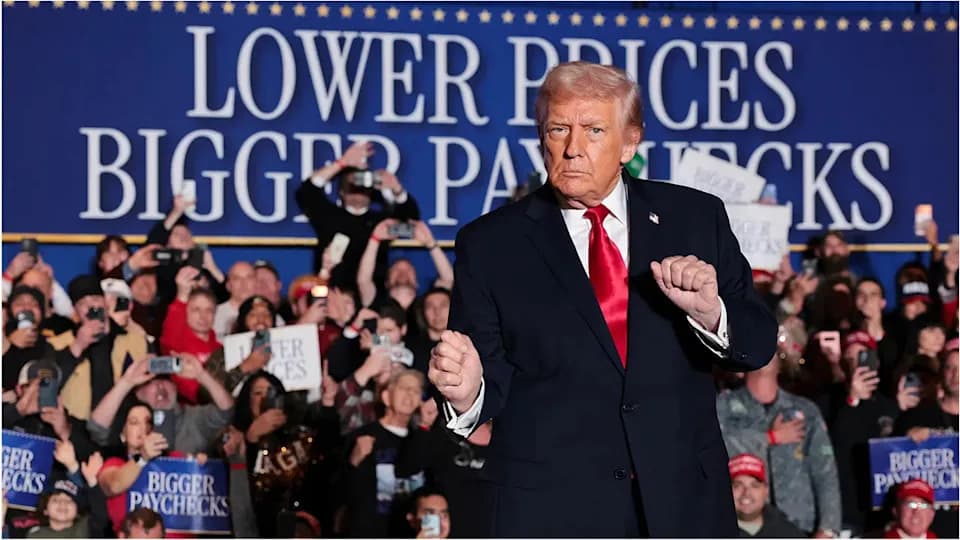
President Donald Trump delivers remarks about his administration's economic agenda and its efforts to lower the cost of living during an event on December 9, 2025, in Mount Pocono, Pennsylvania. | Alex Wong/Getty Images
The second Trump administration began with momentum: gains among multiracial and working-class voters in 2024, high-profile executive actions, and a cooperating Republican Congress. But today the political atmosphere looks different. Public frustration over the economy, disputes among high-profile supporters, and disappointing results for Republicans in state and local races suggest the coalition that propelled Trump in 2024 is weakening.
The Three Leading Explanations
1) Low-Propensity Voters
This theory holds that many of the voters who swung to Trump in 2024 were low-propensity or low-information voters: younger, more racially diverse, less politically engaged and more likely to move between parties. Patrick Ruffini of Echelon Insights calls this the "low-propensity theory of everything," arguing that small shifts among these swing independents produce large changes in headline approval numbers. Ruffini notes that among core supporters Trump still posts near-95% approval in Echelon polling, suggesting the apparent fracturing is concentrated outside the base.
2) Affordability-Focused Voters
Analysts such as Lakshya Jain emphasize economics as the decisive factor. In The Argument's polling, 60% of respondents rank cost of living among their top-two issues—far ahead of other concerns. Voters who prioritized affordability swung from supporting Trump by a six-point margin in 2024 to disapproving by a 13-point margin more recently. Rising costs for housing, groceries, utilities and health care are driving defections, especially among younger, nonwhite and non-college voters who hoped Trump would improve their material circumstances.
3) "New Entrant" GOP Voters
A Manhattan Institute study describes a roughly 30% segment of Trump’s 2024 coalition as "New Entrants": newer Republican voters who are younger, more diverse and politically idiosyncratic. Many hold views at odds with core MAGA positions—more pro-choice on abortion, less supportive of tariffs, and more open to immigration—while simultaneously being more receptive to conspiracy thinking and extreme rhetoric. The study finds lower future loyalty among New Entrants: 70% of Core Republicans say they would "definitely" back a GOP candidate in 2026, compared with 56% of New Entrants.
How The Theories Overlap—and Why It Matters
These explanations are not mutually exclusive. New Entrants tend to overlap with low-propensity and affordability-focused voters: younger, more diverse, and less tied to partisan institutions. The strategic choices Republicans make to shore up one segment—for example, pivoting on tariffs or moderating social positions—could alienate other segments of the coalition. Democrats are also recalibrating, which raises the stakes for both parties ahead of 2026 contests.
Key Data Points
Notable figures raised in reporting include: Echelon polling showing Trump near 95% approval among his core backers; The Argument finding 60% list cost-of-living as a top-two issue and a swing from +6 to -13 among affordability-prioritizing voters; and Manhattan Institute analysis estimating New Entrants make up about 30% of the coalition and show weaker future GOP loyalty.
Conclusion
Whether the coalition can be rebuilt depends first on acknowledging voter discontent—especially on the economy—and then on making trade-offs in messaging, policy, and outreach. The 2024 coalition appears fluid, and attempts to win back one group may risk losing another. For Republicans, the immediate strategic challenge is deciding which of these voter dynamics to prioritize; for Democrats, the question is how to capitalize on these shifts without overreaching.
Help us improve.