President Trump announced a $12 billion one-time aid package for farmers hurt by low commodity prices and trade disruptions after China cut U.S. agricultural purchases. Farmers welcomed short-term relief but say the payments—capped at $155,000 and limited to operations with under $900,000 AGI—won’t solve structural problems. Producers are calling for expanded market access, more domestic uses for crops and action to reduce input costs and anti-competitive practices in the food supply chain.
Trump Unveils $12 Billion Farm Aid; Farmers Call It a Temporary Fix Amid Trade Uncertainty

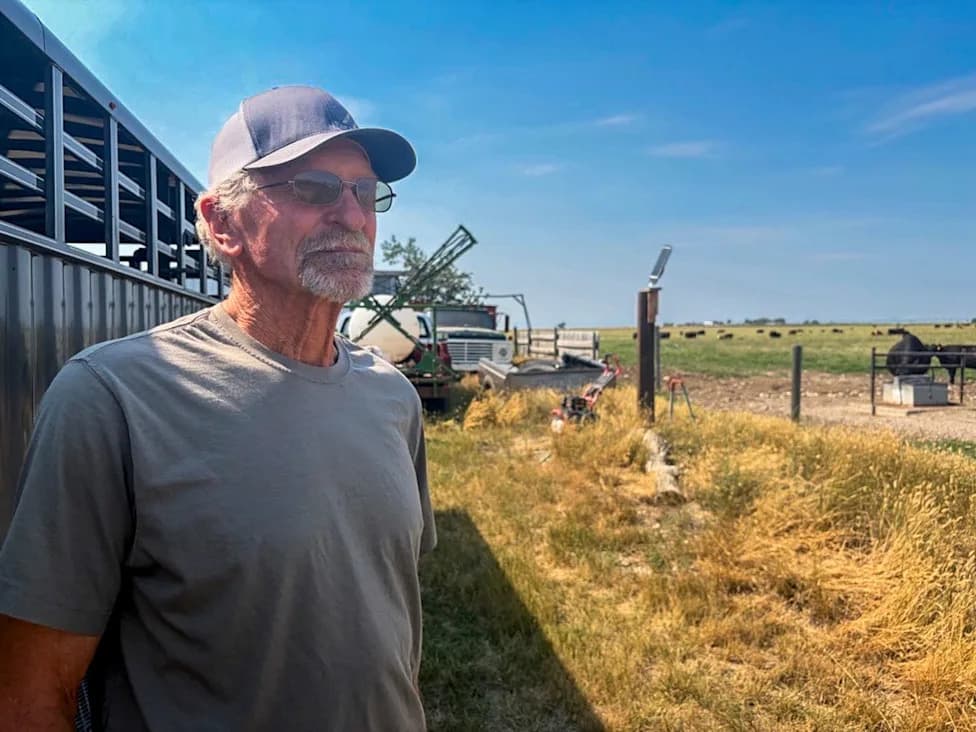
Charlie Radman, a corn and soybean farmer, stands for a photo on the land his family has owned since 1899, near Randolph, Minn., Wednesday, Dec. 10, 2025. (AP Photo/Mark Vancleave)
RANDOLPH, Minn. — President Trump announced a one-time $12 billion aid package for U.S. farmers on Monday, aiming to cushion growers hit by low commodity prices, rising input costs and lost export sales after China curtailed agricultural purchases during the trade dispute.
Farmers See Aid as a Stopgap
Many farmers welcomed the payments but described them as a temporary bridge rather than a durable solution. "Maybe this will all come out to be better at the end, but I can tell you right now, it certainly isn’t the case at the moment," said Gene Stehly, a corn, soybean and wheat grower near Randolph.
Charlie Radman, a fourth-generation farmer, echoed that sentiment: "It’s a bridge. It’s not the ultimate solution we’re looking for. What we really want is a little more certainty and not have to rely on these ad hoc payments." Farmers are already budgeting for next season, ordering inputs and meeting with lenders, and fear that the checks will be immediately spent on operating costs.
What the Aid Covers
The administration said the one-time package would be distributed to help producers who have seen earnings squeezed by weak prices and reduced exports. Payments will be capped at $155,000 per farmer or entity, and only operations with adjusted gross income under $900,000 will be eligible. Officials noted safeguards, but during the previous administration some large operations found ways around payment limits.
Trade Fallout and Market Concerns
U.S. soybean and sorghum producers—who typically export at least half of their output—were hit hardest by the trade dispute with China, the world’s largest soybean buyer. U.S. officials had said China would buy 12 million metric tons of soybeans by the end of February, but so far Beijing has purchased only about a quarter of that amount, raising questions about whether pledged purchases and a reported commitment to buy 25 million metric tons annually will be honored.
"In general, I don’t trust their motives and integrity of their promises," said Bryant Kagay, a farmer in northwest Missouri. Others say the administration should diversify market access beyond China and expand domestic demand through biodiesel, ethanol, aviation fuel and animal feed.
Policy Moves Beyond Direct Payments
Over the weekend the president signed an executive order directing the Justice Department and the Federal Trade Commission to investigate anti-competitive practices across the food supply chain, beginning with fertilizer, seed and equipment and extending to meatpackers and grocery chains. Farmers say actions to lower input costs and curb consolidation would deliver longer-term benefits than one-off checks.
"I think most farmers would tell you that they don’t want to go to the mailbox and get a check from the government. That’s not why we farm," said Dan Keitzer of southeast Iowa. "We need more demand for our product."
Trump previously authorized $22 billion in farm aid in 2019 and a larger $46 billion package in 2020 to address trade and pandemic-related disruptions. Farmers and industry groups say the $12 billion announcement mirrors those earlier stopgap measures and underscores the need for more sustainable market solutions.
— Funk reported from Omaha, Nebraska. Associated Press writers Hannah Fingerhut in Des Moines, Sarah Raza in Sioux Falls, and Didi Tang in Washington contributed to this report.
Help us improve.