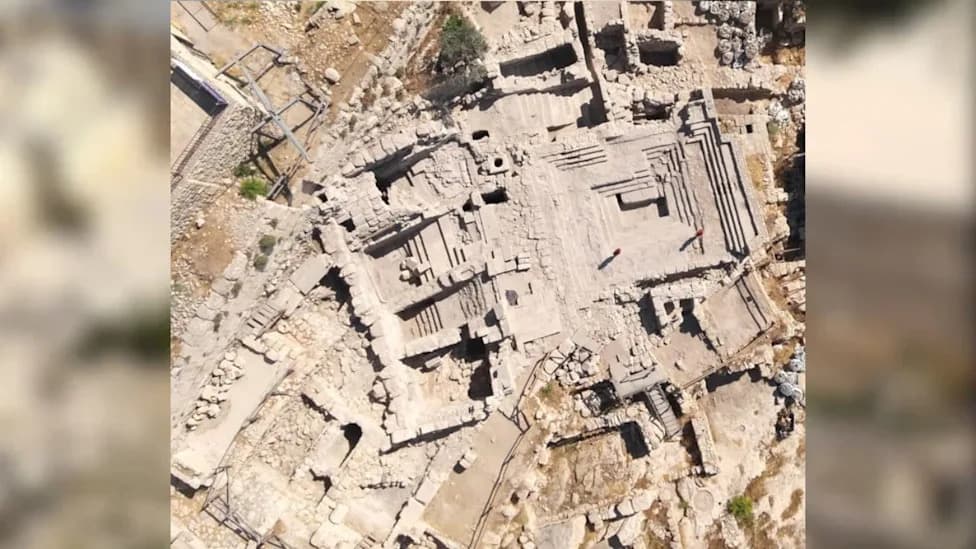
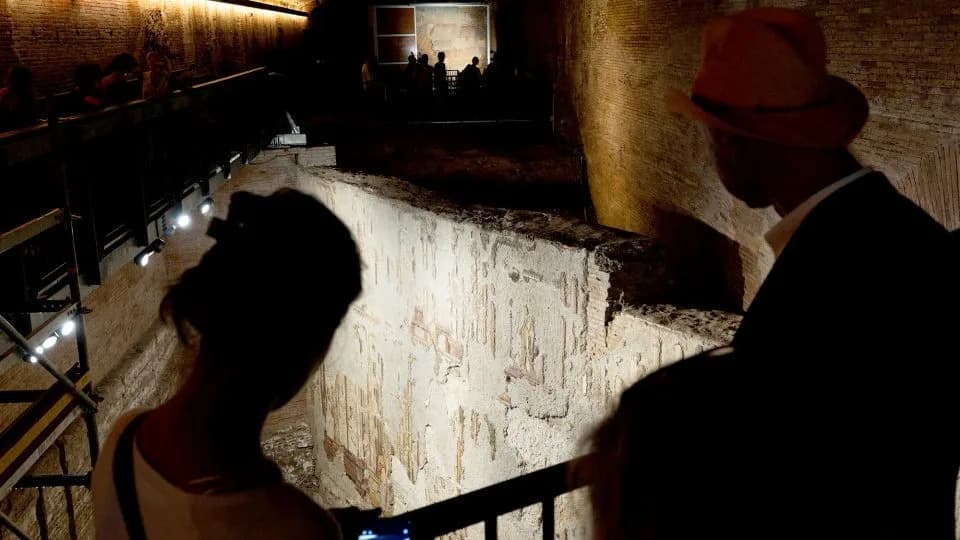
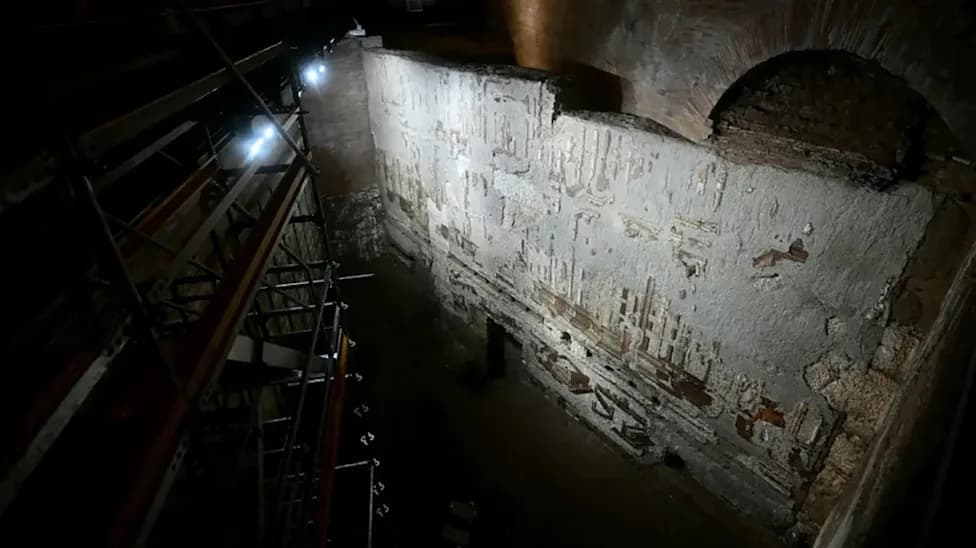
The Israel Antiquities Authority has exposed a more than 40-metre segment of a Hasmonean (Maccabean-period) city wall at Jerusalem’s Tower of David. The section stands about five metres high today but was originally over ten metres tall and is among the longest intact stretches found in the city. Archaeologists say damage patterns indicate deliberate, systematic demolition and suggest either a Maccabean dismantling tied to Antiochus VII Sidetes or later alterations by King Herod. The stones will be visible to visitors in the museum’s new Schulich Wing, where a transparent floor will allow direct viewing.
Massive Hasmonean Wall Unearthed: Over 40 Metres of Maccabean-Era Fortification Revealed at Jerusalem’s Tower of David

Archaeologists excavating on the grounds of Jerusalem’s Tower of David have revealed a substantial segment of a Hasmonean (Maccabean-period) city wall, in a find the Israel Antiquities Authority described as among the longest and most intact of its kind in the city.
What Was Found
The exposed stretch runs for more than 40 metres and currently stands about five metres high, though experts estimate the original wall rose to over ten metres. The masonry is notable for its large, heavy stones with a chiseled boss — a hallmark of Hasmonean construction — and the section is unusually well preserved for its age (roughly 2nd–1st centuries BCE).
“The wall is meticulously built of large, heavy stones, with a chiseled boss typical of this period,” said Dr. Amit Re’im and Dr. Marion Zindel, excavation directors for the Israel Antiquities Authority. “Originally, the massive wall rose to a height of more than ten metres; today, only a stump remains. During the Second Temple period the Hasmonean city wall also surrounded Mount Zion — sections of it have been identified there and in the City of David, in the Citadel of David courtyard, and alongside the outer façade of the western city wall of Jerusalem’s Old City.”
Evidence of Deliberate Destruction
Excavators report damage patterns that point to systematic, intentional demolition rather than gradual decay or a single battle. "It is clear that it was systematically destroyed and razed to the ground," the directors said, adding that the destruction appears planned and methodical, raising questions about who ordered it and why.
Two Leading Theories
Researchers have proposed two main explanations: one is that the wall was partially dismantled by the Maccabees themselves as part of a political settlement with Antiochus VII Sidetes. The other theory suggests that King Herod later removed or altered the Hasmonean fortification as a political statement during his extensive building campaigns and reordering of Jerusalem.
Museum Integration and Public Display
The excavation was conducted ahead of the Tower of David Museum’s expansion — the new "Schulich Wing of Archaeology, Art and Innovation." Museum director Eilat Lieber says the design will let visitors stand on a transparent floor above the exposed stones, combining archaeological context with contemporary artistic interpretation.
“In the new wing, visitors will stand on a transparent floor above these ancient stones, and, together with interpretations of contemporary artists, this wing will bring a new connection to the history and heritage of the city,” Lieber said.
Israeli Heritage Minister Rabbi Amichai Eliyahu called the discovery “tangible and moving evidence” of Jerusalem’s importance in the Hasmonean era and said the finds reinforce a sense of historical continuity tied to the city.
Why It Matters
Beyond its size and preservation, this segment offers rare physical evidence of urban defenses from a formative period in Jewish history. The deliberate nature of its destruction — and the competing explanations for who ordered it — provide archaeologists and historians with material clues that can sharpen our understanding of political and military events in late Second Temple Jerusalem.
Help us improve.