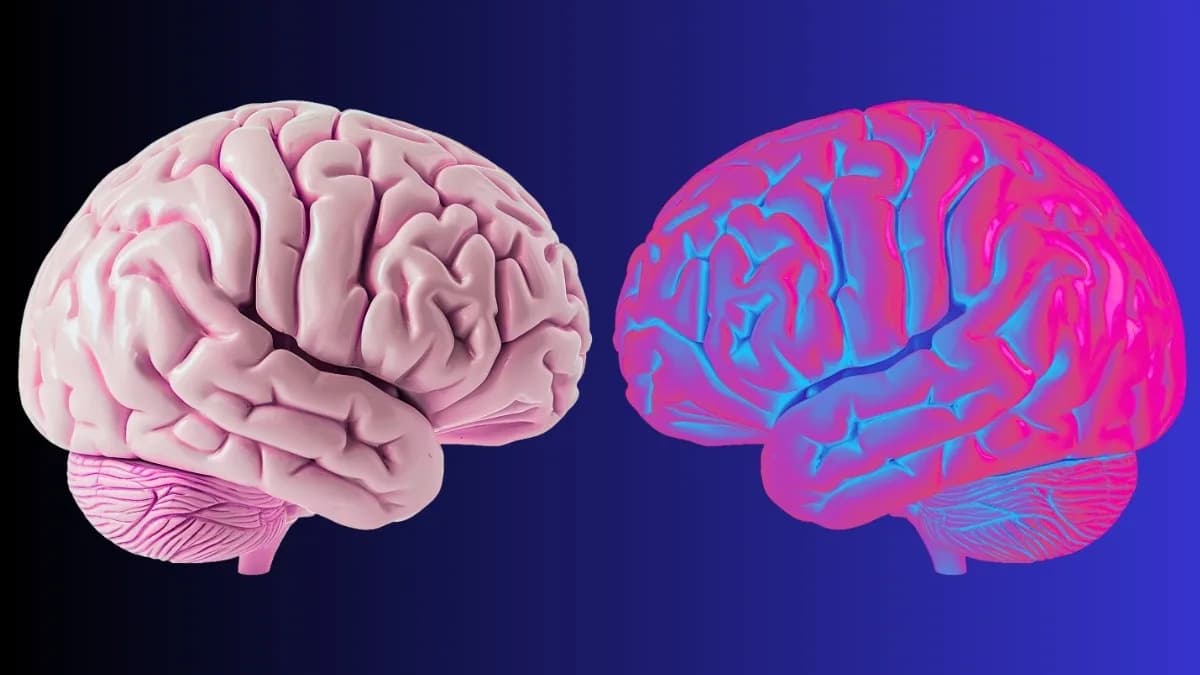
Two papers from Ruhr University Bochum examine why advanced consciousness evolved in some animals. The ALARM theory outlines three ascending levels—basic arousal, general alertness, and reflexive self-consciousness—that build on one another. A companion study shows that birds, using a different brain structure (the NCL), can exhibit high-level cognitive and self-other differentiation. Together, the findings portray consciousness as graded, multidimensional, and widespread across species.
Why Higher Consciousness Evolved: The ALARM Theory and Evidence From Birds

Why Higher Consciousness Evolved: The ALARM Theory and Evidence From Birds
Two recent papers from researchers affiliated with Ruhr University Bochum ask an intriguing question: why did advanced forms of consciousness evolve in some animals but not others? Published in Philosophical Transactions of the Royal Society B, the studies shift the focus from how consciousness arises to why evolution produced varying degrees of conscious experience across species.
The ALARM Theory: Three Core Phenomena
Philosophers Albert Newen (Ruhr University Bochum) and Carlos Montemayor (San Francisco State University) propose the ALARM theory, which describes phenomenal consciousness as a progression through three core phenomena:
- Basic Arousal: A primitive alarm state that readies an organism to respond to potential threats.
- General Alertness: Enhanced capacity to detect and learn correlations in the environment, from simple causal links (e.g., smoke → fire) to more complex patterns.
- Reflexive (Self-)Consciousness: A capacity for self-representation across time, allowing an organism to register aspects of itself relative to past experiences and future possibilities.
"Targeted alertness lets us identify complex, scientific correlations," Montemayor said in a press statement. "Reflexive consciousness moves beyond perceiving the environment to consciously registering aspects of oneself," Newen added.
Avian Cognition: Different Brains, Similar Outcomes
The companion study, led by neuroscientist Onur Güntürkün and Ph.D. student Gianmarco Maldarelli, examines how these levels of consciousness appear in birds. Although birds lack a mammalian prefrontal cortex, many species possess a functionally powerful region called the nidopallium caudolaterale (NCL).
"The NCL is immensely connected and allows the brain to integrate and flexibly process information," Güntürkün said. The authors argue that the avian forebrain connectome—the pattern of information flow across regions—shares important functional similarities with mammalian brains, enabling comparable cognitive outcomes despite different architectures.
Behavioral Evidence: The Mirror-Audience Test
The researchers considered a variety of species, from problem-solving corvids to everyday birds such as pigeons and chickens. One illustrative experiment was a mirror-audience test with roosters: when a live conspecific was visible behind a transparent barrier and a simulated raptor shadow passed overhead, the test rooster produced alarm calls to warn its partner; when alone, it did not. When the transparent barrier was replaced by a mirror, the rooster did not warn the reflected partner, despite the apparent presence of another bird. This behavior suggests the rooster could distinguish itself from another individual rather than reflexively responding to any perceived “bird” image.
Implications: Consciousness as Graded and Multidimensional
Taken together, the studies support a view of consciousness as graded and multidimensional, not an all-or-nothing trait. The authors conclude that conscious capacities may be widespread across the animal kingdom, including species that are phylogenetically distant from humans and that possess very different brain structures.
Bottom Line: Evolution can produce high levels of conscious processing in diverse neural architectures; the ALARM framework helps explain how incremental levels of awareness could emerge and provide adaptive benefits.
Help us improve.