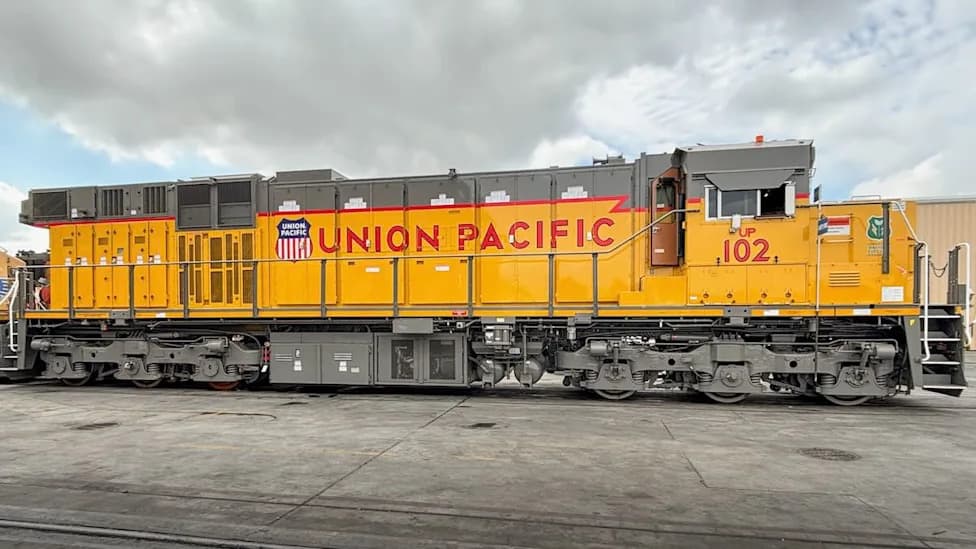
Walmart Chile funded and built Latin America’s first long‑haul green‑hydrogen truck after a $15 million investment. The vehicle stores 165 lb of electrolytic hydrogen (~75 kg), travels about 465 miles (~748 km) and carries 54 tons of cargo, and will be refueled from Walmart’s Quilicura plant. Developed through the HydroHaul public‑private program, the truck is certified for Chilean roads and aims to help the company reach 40% low‑emission routes by 2029 while serving as a nationwide pilot for wider adoption.
Walmart Chile Unveils Latin America’s First Long‑Haul Green‑Hydrogen Truck

Walmart Chile has funded and developed Latin America’s first long‑haul truck designed to run on green hydrogen after a $15 million investment. The vehicle runs on hydrogen produced by water electrolysis using renewable electricity and emits no carbon dioxide during operation.
Key facts
The truck stores 165 pounds of hydrogen (~75 kg), giving it an approximate range of 465 miles (~748 km) and a cargo capacity of 54 tons. Walmart Chile will refuel the vehicle from its Quilicura green‑hydrogen plant in Santiago, which can produce up to 530 pounds of hydrogen per day (~240 kg/day).
Public‑private collaboration and certification
The vehicle was developed through the HydroHaul Technology Program, a collaborative effort that combined private partners with public financial support coordinated by Chile’s Economic Development Agency. The truck has been certified by Chile’s Ministry of Transport to operate on public roads, and a hydrogen refueling station is being prepared at Walmart’s Quilicura Distribution Center.
Ana María Ruz, executive director of the Green Hydrogen Industry Development Committee at the development agency, said the innovation is unique for Chile and can stimulate local knowledge, manufacturing and service capabilities.
Operational benefits and next steps
Walmart Chile says the project advances its logistics decarbonization goals and supports a target of having 40% of its routes be low‑emission by 2029. Related deployments at the Quilicura Distribution Center — such as hydrogen‑powered forklifts — reportedly boosted production by about 5% due to shorter refueling downtimes.
Other pilots are investigating hydrogen use for refrigerated container trucks, which could help decarbonize parts of the food supply chain that currently lack low‑emission alternatives.
Víctor Pérez, sustainability specialist and professor at the Adolfo Ibáñez University School of Engineering and Sciences, emphasized that early, supply‑chain‑linked pilot projects are essential to test range, refueling times, maintenance and environmental conditions, helping to make green hydrogen competitive.
Strategic context
Chile is investing in green‑hydrogen production to reduce dependence on fossil fuels and pursue a national goal of cutting greenhouse gas emissions by 25% by 2050. Experts note that the country’s abundant solar and wind resources — from the Atacama Desert to the winds of Magallanes — position Chile to produce green hydrogen competitively and potentially become a global supplier.
The truck is intended as a replicable model nationwide: as technological and economic results emerge from pilots, other industries may evaluate adopting green‑hydrogen solutions where technically and financially viable.
Help us improve.