A JetBlue Airbus A320 suddenly lost altitude over Florida on Oct. 30, injuring at least 15 passengers and forcing an emergency landing. Airbus temporarily grounded roughly 6,000 A320-family jets to deploy a software fix after suggesting "intense solar radiation" may have corrupted flight-control data. University of Surrey expert Clive Dyer says solar activity that day was normal and proposes a cosmic-ray strike on avionics — a rare single-event upset — as a plausible cause. The incident highlights how high-energy particles from space can occasionally disrupt aircraft electronics and why manufacturers are updating protections.
Cosmic Ray Suspected After JetBlue A320's Sudden Drop — Airbus Grounds A320s for Software Fix

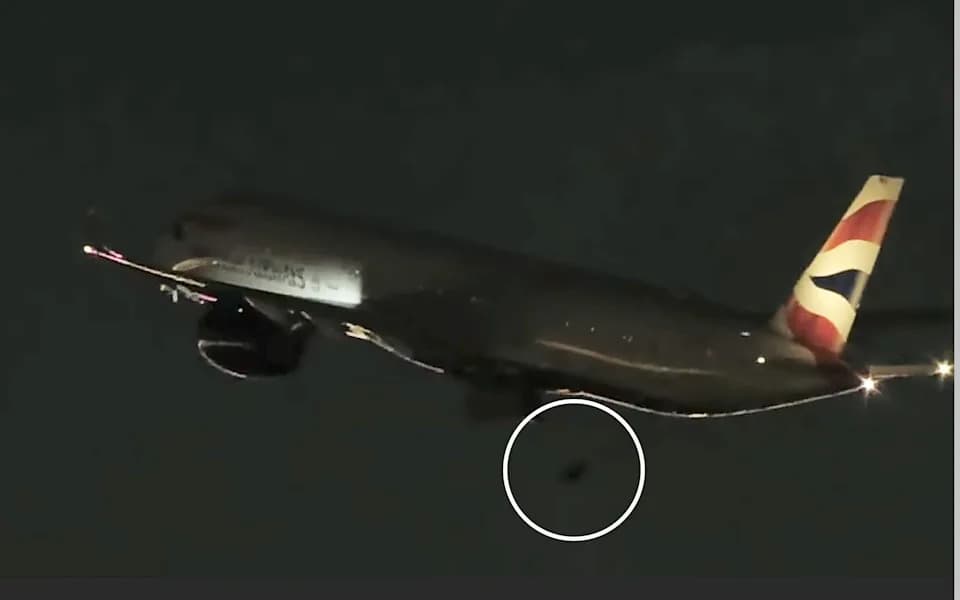
On Oct. 30 a JetBlue Airbus A320 flying from Cancun to Newark suddenly lost altitude while cruising above Florida, injuring at least 15 passengers and forcing an emergency landing at Tampa International Airport. Pilots regained control, but the event prompted Airbus to temporarily ground roughly 6,000 A320-family aircraft to deploy software updates intended to prevent similar anomalies.
What investigators are saying
Airbus suggested the incident could be linked to "intense solar radiation" that corrupted data critical to flight controls. However, space-weather specialist Clive Dyer of the University of Surrey says solar activity that day was unremarkable and unlikely to have caused the event. Instead, Dyer told investigators that a single high-energy particle — a cosmic ray — striking avionics could plausibly have flipped a bit in an onboard computer or sensor and triggered the malfunction.
How cosmic rays can affect electronics
Cosmic rays are high-energy particles accelerated by violent astrophysical events such as supernovae. When they hit Earth’s atmosphere they create cascades of secondary particles (muons, neutrons, positrons) that can reach aircraft altitudes. If one of these particles hits a microelectronic component it can produce a single-event upset: a change of state (a "bit flip") or, in more extreme cases, a transient current that damages hardware.
"[Cosmic rays] can interact with modern microelectronics and change the state of a circuit," Dyer said. "They can cause a simple bit flip, like a 0 to 1 or 1 to 0. They can mess up information and make things go wrong. But they can cause hardware failures too, when they induce a current in an electronic device and burn it out."
Context and precedent
Such particle-induced upsets are rare but known. Dyer points to the 2008 Qantas Flight 72 incident — when an Airbus A330 made two uncommanded nose-down dives in cruise, injuring passengers — as an example where investigators traced problems to electronic sensors but never definitively identified a root cause for a suspected bit flip.
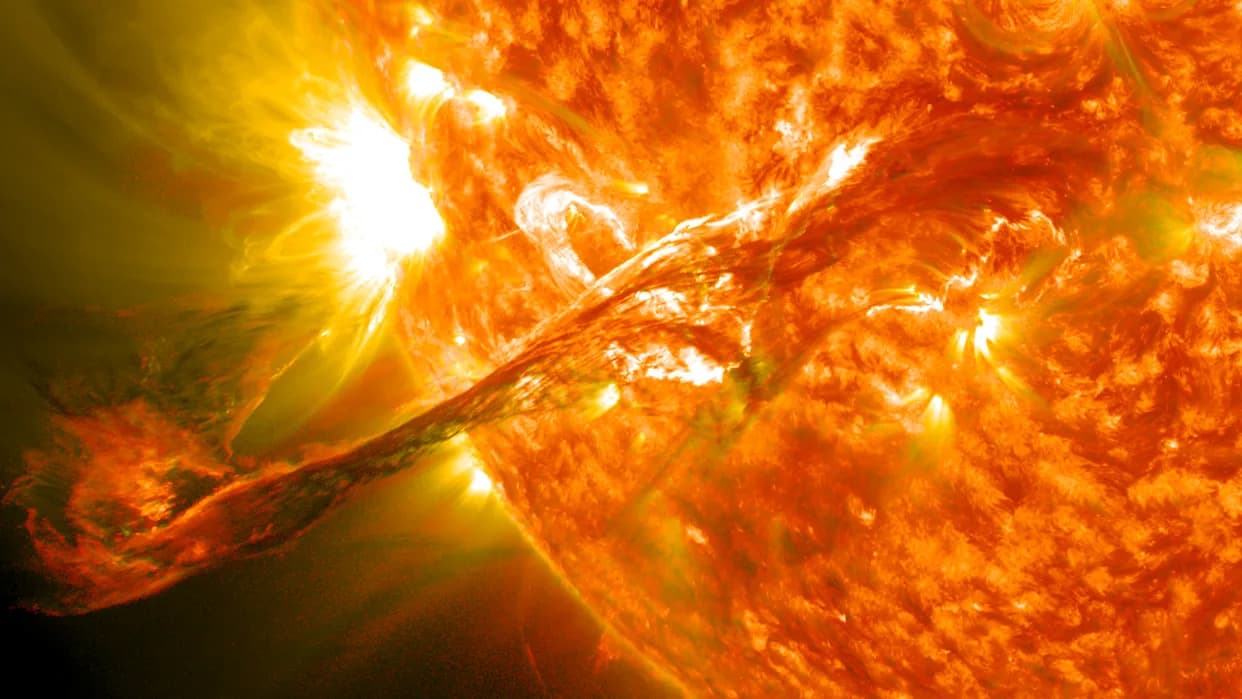
Solar particles from flares and coronal mass ejections can be far more intense than typical cosmic-ray showers; during periods of high solar activity the risk of single-event upsets at flight altitudes increases. Notably, less than two weeks after the JetBlue event, a powerful solar flare produced elevated radiation levels at flight altitudes for several days, underscoring why manufacturers are updating software and hardening systems.
Industry response
Airbus has rolled out a software update to address the vulnerability in affected A320-family systems. Experts emphasize that aircraft electronics must be designed with adequate tolerance for high-energy particles, particularly for safety-critical units. Dyer warns that, with the Sun currently more active, the industry should not be complacent: stronger solar events can raise particle radiation by orders of magnitude and affect many aircraft simultaneously.
At the time of this writing Airbus had not provided additional comment.
Help us improve.