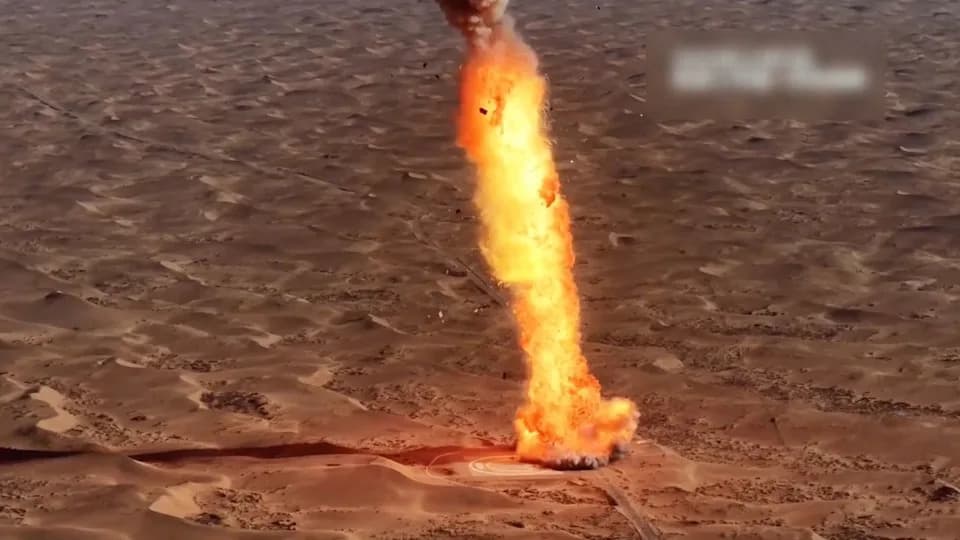
Key points: LandSpace's Zhuque-3 maiden flight on Dec. 3 failed to achieve a controlled landing after what was described as an "abnormal combustion event" during the recovery phase. The company will study flight telemetry and data to diagnose the issue and improve landing procedures. Zhuque-3 is designed for around 20 reuses and an ~18-tonne payload capacity, a capability that could speed China's satellite deployments if mature.
Setback for China's Reusable-Rocket Drive — LandSpace's Zhuque-3 Fails Controlled Landing

China's LandSpace suffered a setback on Dec. 3 when the maiden flight of its next-generation reusable rocket, Zhuque-3, failed to complete a controlled landing after ascent. State media reported that an "abnormal combustion event" during the recovery phase prevented a soft touchdown on the recovery pad.
LandSpace said it will thoroughly analyse telemetry and other flight data collected during the mission to identify the cause and refine its recovery procedures. The company framed the outcome as a learning step and pledged to use the findings to optimise the rocket's landing systems.
If Zhuque-3 reaches full operational maturity, a domestically produced reusable orbital launcher could accelerate China's launch cadence and lower per-launch costs — particularly important as Beijing pursues large low-Earth-orbit satellite constellations to compete with existing operators.
LandSpace has said that, once mature, Zhuque-3 is intended to be reusable at least 20 times and to carry multiple satellites with a combined payload capacity of about 18 tonnes. The design has drawn international attention, and high-profile figures in the sector have publicly commented on its potential.
Reusable booster's routine recovery requires extremely precise, high-energy manoeuvres: after separation the stage must turn, relight engines to slow and guide its descent, survive aerodynamic heating, then reignite engines to land on a pad or droneship. Small errors in timing, attitude or engine performance can cause a loss of control or destruction during re-entry.
SpaceX remains the only company to have demonstrated routine, high-volume booster reuse, achieving its first successful landed recovery in 2015 after earlier failures and subsequently flying some boosters many times. That accumulated experience and production scale present a large gap for new entrants to close.
Despite the failed recovery, Zhuque-3's maiden flight places LandSpace ahead of several domestic rivals developing smaller or less mature systems and represents the closest Chinese attempt yet at a Falcon 9-class reusable vehicle. LandSpace says it will continue testing and iterating until recovery and reuse are reliable.
By Eduardo Baptista and Joey Roulette
Help us improve.