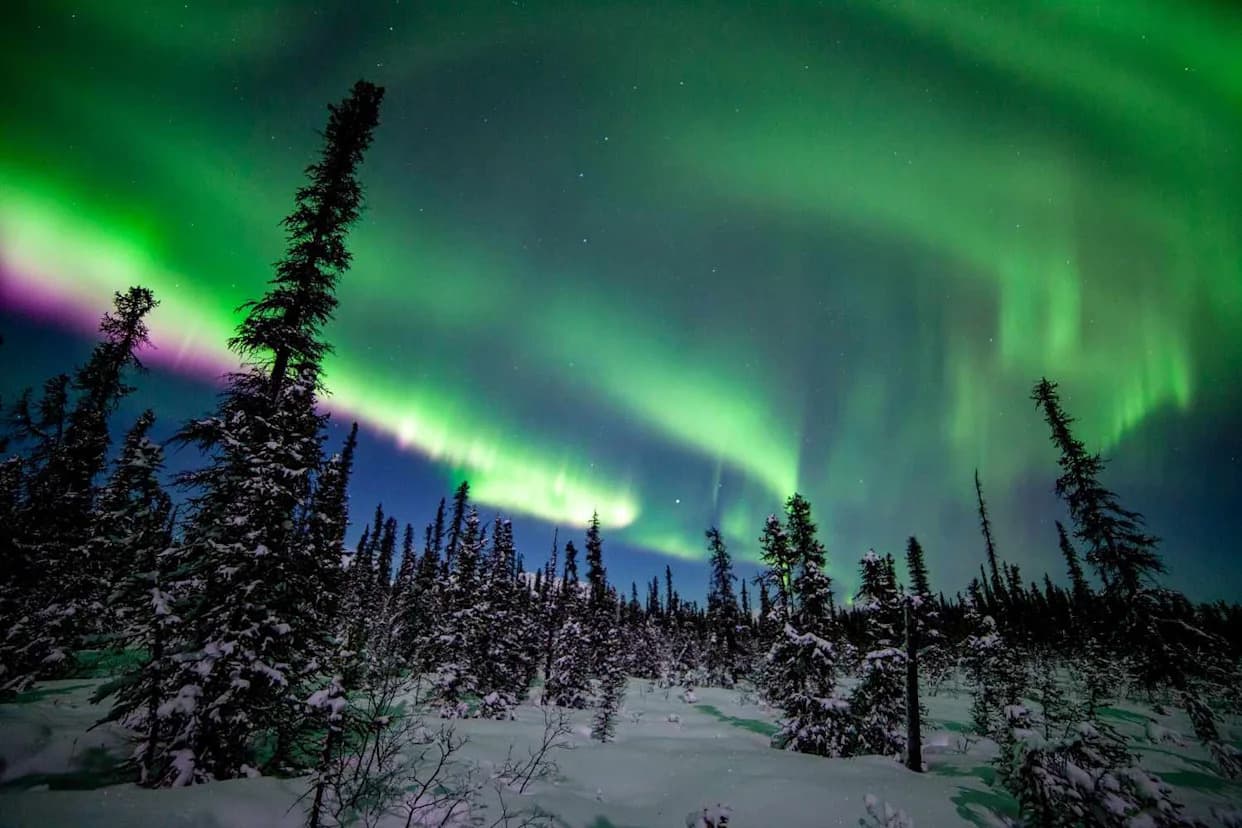
The giant sunspot that produced notable northern lights in November has returned to the Sun’s Earth-facing side. Relabeled from AR4274 to AR4299, it emitted a strong flare on Monday that only grazed Earth. As the region rotates into a more favorable alignment, stronger Earth-directed flares or CMEs could increase aurora chances at lower latitudes over the next one to two weeks. Watch space-weather alerts for updates.
Giant Sunspot AR4299 Returns — Could Spark More Northern Lights in 1–2 Weeks

The supersized sunspot that sparked a rare display of northern lights in November has rotated back onto the Sun's Earth-facing side. Previously labeled AR4274, the active region now carries the designation AR4299.
On Monday the sunspot produced a strong solar flare; Earth experienced only a glancing blow from that eruption. As AR4299 moves into a more Earth-facing position over the coming days, there is a greater chance that future flares — and any associated coronal mass ejections (CMEs) — could be directed toward our planet.
If large, Earth-directed eruptions occur, the odds of visible auroras reaching lower latitudes will rise. Observers and aurora hunters should watch conditions carefully: enhanced activity over the next one to two weeks could produce another memorable show.
How to stay informed: Monitor space weather forecasts from trusted sources (for example, NOAA's Space Weather Prediction Center or NASA updates), check local geomagnetic alerts, and follow real-time aurora maps and alerts from astronomy apps and observatories.
Note: Solar activity is inherently unpredictable. Strong flares can produce effects ranging from beautiful auroras to brief radio blackouts and minor disruptions for satellites and navigation systems. Stay tuned to official space-weather services for the latest guidance.
Help us improve.