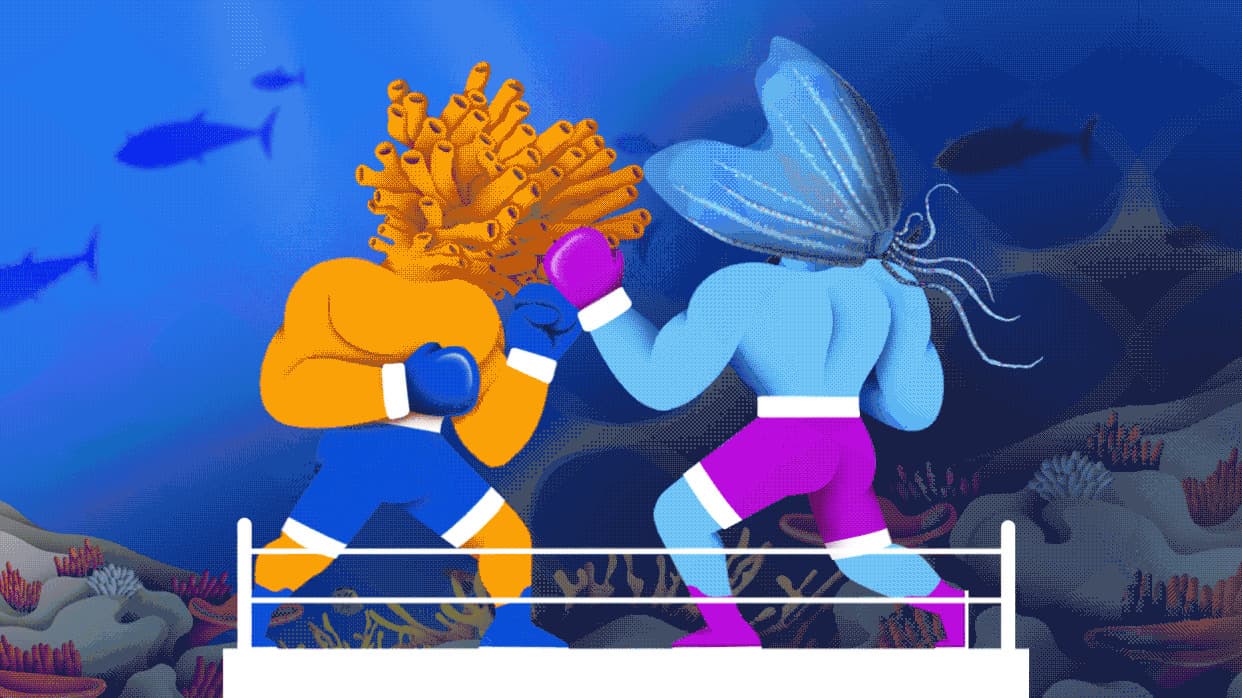
The vampire squid, a deep‑sea cephalopod with features of both squids and octopuses, has had its genome sequenced for the first time. At about 11 gigabases — nearly four times the human genome — its DNA is dominated (62%) by non‑coding repetitive elements. Comparative analysis suggests the ancestral cephalopod had a squidlike chromosome organization; octopuses likely evolved their distinct body plan after chromosome fusion and rearrangement roughly 300 million years ago. The study argues chromosomal reshuffling, not the appearance of many new genes, helped drive octopus evolution.
Vampire Squid Genome Reveals How Octopuses May Have Evolved

Deep in the ocean swims a dark‑red, many‑armed creature known as Vampyroteuthis infernalis — the “vampire squid.” Despite its dramatic name, this rarely seen cephalopod is a detritus feeder that uses its webbed arms to capture marine snow; it is neither a bloodsucker nor a true squid.
For the first time, scientists have sequenced the vampire squid’s genome and published the findings in Science, revealing unexpected insights into cephalopod evolution and chromosome architecture.
“The vampire squid sits right at the interface between octopuses and squids,” said study author Oleg Simakov of the University of Vienna. “Its genome reveals deep evolutionary secrets on how two strikingly different lineages could emerge from a shared ancestor.”
An enormous, repeat‑rich genome
The most striking discovery is the sheer size of the vampire squid’s DNA: about 11 billion base pairs (11 gigabases). Roughly 62% of that sequence consists of non‑coding repetitive elements — DNA that repeats but does not encode proteins. By comparison, the human genome is about 3 gigabases, and known squid genomes are less than half the vampire squid’s size. Octopus genomes are much smaller still, typically between 2 and 3 gigabases.
Chromosomes point to a squidlike ancestor
Comparative analyses show that the vampire squid’s chromosomes more closely resemble those of modern squids. That suggests the common ancestor of cephalopods had a more squidlike chromosomal arrangement. When octopuses diverged from that lineage roughly 300 million years ago, their chromosomes underwent fusion and reshuffling, producing fewer, smaller chromosomes and a reduced genome size.
The researchers argue that these large‑scale chromosomal rearrangements — rather than the sudden arrival of many new genes — were a major driver of the distinctive body plan and the evolution of specialized appendages in octopuses.
Why this matters
Sequencing the vampire squid’s massive genome gives scientists a rare window into the genomic changes that shaped cephalopod diversity. It highlights chromosome architecture and genome structure as powerful evolutionary forces capable of producing dramatic morphological differences from existing genetic material.
As genome sequencing extends to more deep‑sea and cephalopod species, researchers expect to refine this picture of how complex traits and body plans emerge over evolutionary time.
Help us improve.